

With a New-Gen Government in Kathmandu, are India–Nepal Relations Headed for a Reset?
The significance of Shisir Khanal’s visit therefore lies not only in the agreements reached but in the broader message it conveyed. Both Kathmandu and New Delhi are signalling a willingness to move beyond the grievances and suspicions that have periodically defined their interactions. If the emphasis on development diplomacy, economic integration, and pragmatic cooperation is sustained, the current moment could indeed mark the beginning of a new chapter in India–Nepal relations.
 Jun 16, 2026
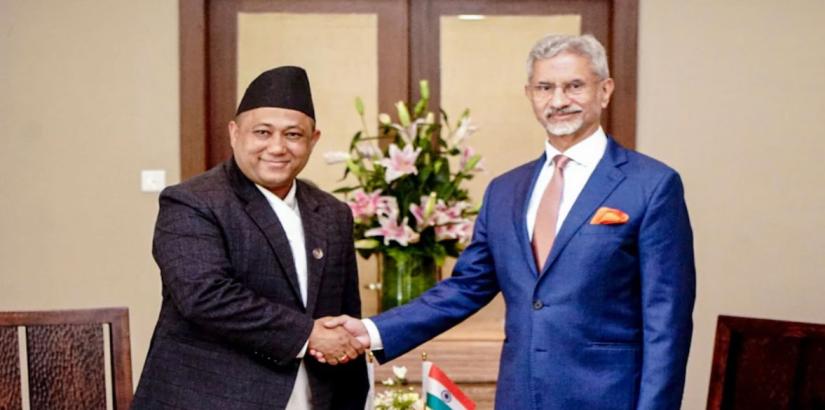
The visit of Nepal’s Foreign Minister Shisir Khanal to New Delhi in June 2026 may well be remembered as more than a routine diplomatic engagement. It was the first ministerial-level visit from Nepal’s new government led by Prime Minister Balendra Shah and came at a time when both countries appear willing to rethink the foundations of their relationship. The rhetoric emerging from both Kathmandu and New Delhi suggests that a significant shift may be underway—one that seeks to move beyond recurring political irritants and focus instead on development, connectivity, and economic transformation. Whether this marks a genuine reset in India–Nepal relations remains to be seen, but the signs are certainly encouraging.
For much of the past decade, India–Nepal relations have oscillated between cooperation and controversy. The 2015 constitutional crisis and blockade, disputes over maps and borders, and periodic accusations of interference created an atmosphere of mistrust. Political actors in Nepal often mobilized anti-India sentiment for domestic gains, while many in India viewed Nepal through a security-centric lens shaped by geopolitical competition with China. Consequently, bilateral ties frequently became hostage to historical grievances and nationalist rhetoric.
'Redefining Nepal’s Domestic and External Priorities'
The political transformation that has taken place in Nepal since the 2025 Gen-Z movement offers an opportunity to break this cycle. The rise of the Rastriya Swatantra Party (RSP) and PM Balendra Shah represents a significant departure from Nepal’s traditional political establishment. Unlike the Nepali Congress, the Communist Party of Nepal (UML), or the Maoist Centre, the new leadership derives its legitimacy from promises of good governance, accountability, meritocracy, and institutional reform. Foreign Minister Khanal’s description of the current administration as a “completely new political reality in Nepal” is not merely political branding; it reflects a broader attempt to redefine the country’s domestic and external priorities.
What is particularly noteworthy is the language employed by Nepal’s new leadership regarding India. Historically, political discourse in Kathmandu often framed India as a challenge to Nepalese sovereignty. By contrast, Khanal described India as Nepal’s “most important partner” and emphasized that the new government carries “no old baggage.” Such statements indicate a conscious effort to move beyond the politics of grievance and pursue what Kathmandu calls “result-driven diplomacy.” The focus is not on revisiting historical disputes for symbolic purposes but on securing tangible outcomes that contribute to Nepal’s economic transformation.
India appears equally receptive to this shift. External Affairs Minister S. Jaishankar’s assertion that the two countries have an opportunity to “decisively shift the trajectory” of bilateral relations is significant. Indian policymakers have long argued that geography, culture, and economic interdependence provide a strong foundation for partnership. Yet these advantages have often been overshadowed by political tensions. By highlighting the “strong complementarities” between the priorities of Nepal’s new government and India’s neighbourhood policies, New Delhi is signalling its willingness to engage with the new political dispensation in Kathmandu on a fresh basis.
Using Technology for Economic Integration
The substance of the discussions during Khanal’s visit reinforces this impression. Rather than focusing primarily on contentious political issues, the agenda centered on development cooperation, connectivity, trade, investment, energy, digital integration, and people-to-people ties. These are areas where both countries possess clear mutual interests. Nepal requires infrastructure, investment, and market access to accelerate economic growth, while India seeks a stable and prosperous neighbourhood linked through economic and physical connectivity. The operationalisation of cross-border digital payment systems between Nepal Clearing House Limited and the National Payments Corporation of India is a particularly important step. It demonstrates how technology can facilitate deeper economic integration and improve everyday interactions between citizens of both countries.
Energy cooperation offers perhaps the greatest opportunity for transforming bilateral relations. Nepal possesses immense hydropower potential, while India’s growing economy requires clean and reliable sources of electricity. Recent years have witnessed increasing electricity trade between the two countries, and discussions during Khanal’s visit suggest that hydropower development will remain a central pillar of cooperation. If managed effectively, energy interdependence can create powerful economic incentives for long-term stability in bilateral relations. Similar possibilities exist in water resources management, infrastructure connectivity, and cross-border transportation networks.
Resolving Disputes Bilaterally
At the same time, it would be premature to conclude that all obstacles have disappeared. The Kalapani-Lipulekh-Limpiyadhura dispute remains unresolved and continues to shape political discourse in Nepal. The controversy resurfaced following India’s announcement of the 2026 Kailash Mansarovar Yatra through the Lipulekh Pass. Nepal reiterated its claim over the disputed territory and lodged diplomatic protests with both India and China. Yet what is striking is not the persistence of the dispute but the manner in which the new government has sought to address it. Khanal clarified that Nepal is not seeking third-party mediation and remains committed to bilateral diplomatic mechanisms. His explanation that references to the United Kingdom and China were related to historical documentation rather than mediation helped reduce tensions that had briefly emerged following PM Shah’s remarks in Nepal's parliament.
This approach suggests a degree of political maturity. Sovereignty concerns remain important for Nepal, and territorial claims are unlikely to disappear. However, the willingness to compartmentalize disputes and prevent them from overwhelming the broader relationship marks a departure from past patterns. Both sides appear to recognize that unresolved boundary issues should not impede cooperation in other sectors where progress is possible.
Importance of Trans-Border Security
Another noteworthy feature of Khanal’s visit was his meeting with India’s National Security Adviser Ajit Doval. The interaction underscores the growing strategic dimension of India–Nepal relations. Security cooperation has often remained understated in public discourse, but issues such as border management, transnational crime, cyber security, and regional stability require closer coordination. The fact that the first ministerial visit from Nepal’s new government included engagement at the highest levels of India’s security establishment reflects the importance both countries attach to strategic dialogue.
The revival of political exchanges also deserves attention. Prior to Khanal’s visit, RSP chairperson Rabi Lamichhane met Prime Minister Narendra Modi, Jaishankar, and Doval during his trip to India. These interactions indicate efforts to establish party-to-party and leader-to-leader relationships that can complement formal diplomatic channels. In South Asia, where personal political equations often influence interstate relations, such contacts can play a valuable role in building trust and reducing misunderstandings.
Ultimately, the prospects for a reset in India–Nepal relations depend on whether both governments can translate diplomatic goodwill into concrete outcomes. Positive rhetoric alone cannot overcome structural challenges. Nepal’s domestic political environment remains fluid, while unresolved border issues and external geopolitical pressures will continue to test the relationship. Nevertheless, the convergence of interests is stronger today than it has been in years. Nepal seeks investment, connectivity, and development; India seeks a stable, prosperous, and friendly neighbour. The priorities of both governments appear aligned in ways that create genuine opportunities for cooperation.
The significance of Shisir Khanal’s visit therefore lies not only in the agreements reached but in the broader message it conveyed. Both Kathmandu and New Delhi are signalling a willingness to move beyond the grievances and suspicions that have periodically defined their interactions. If the emphasis on development diplomacy, economic integration, and pragmatic cooperation is sustained, the current moment could indeed mark the beginning of a new chapter in India–Nepal relations. The opportunity for a reset exists. The challenge now is whether both sides possess the political will and strategic patience to make it lasting.
(The author is an Associate Fellow, Manohar Parrikar Institute for Defence Studies and Analyses (MP-IDSA), New Delhi. Views expressed are personal. He can be contacted at anand_rai@hotmail.com )





Post a Comment