

Why India and Pakistan Must Move From Rivalry to Responsibility: In Fragmenting Global Order, South Asia Cannot Afford Internal Paralysis
The central lesson is simple: unresolved India-Pakistan hostility weakens South Asia from within. It prevents trade, blocks institutions, raises nuclear risk, politicizes water, militarizes borders, and diverts attention from human development. Both countries will continue to disagree on major issues. But disagreement does not require permanent hostility. Strategic maturity means building rules to manage conflict before conflict manages the region.
 Jun 06, 2026
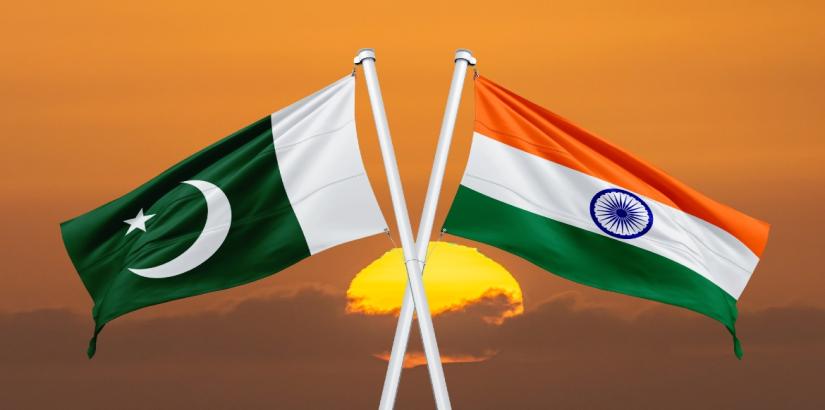
India and Pakistan do not only carry the burden of their own hostility. Their rivalry holds back the whole of South Asia. For nearly eight decades, the region has lived with wars, border crises, terrorism allegations, diplomatic breakdowns, water disputes, nuclear risk, and blocked regional cooperation. This is why India-Pakistan relations need to be settled not as a symbolic peace project, but as a strategic necessity for South Asia’s future.
The latest reminder came in 2025. After the April 22 attack in India's Jammu and Kashmir region that killed 26 people, India blamed Pakistan-backed militants. Pakistan denied involvement. On May 7, India launched strikes across the border, saying it had targeted "terrorist infrastructure". Pakistan responded. In the following days, both sides used fighter jets, missiles, drones, and artillery. The fighting lasted only four days, but it was described as the worst military clash between the two nuclear-armed neighbors in decades. A ceasefire was later reached, but the crisis exposed a frightening reality: South Asia still lives one incident away from a major war.
Economic and Political Costs for Region
This is not an ordinary bilateral dispute. India and Pakistan are both nuclear powers. They have fought several wars since 1947 and have repeatedly faced military crises over Kashmir, terrorism, and border incidents. In 2025, the danger was not simply that they exchanged fire. The bigger danger was that escalation moved beyond Kashmir. Military sites and wider mainland targets entered the crisis imagination. That lowers the threshold of conflict. Once two nuclear-armed neighbors begin to believe that future clashes may not remain limited, the entire region becomes less safe.
The cost of this rivalry is not only military. It is also economic. South Asia is one of the least integrated regions in the world. Intraregional trade accounts for only about 5 percent of the region’s total trade. Trade among South Asian countries is around $23 billion, far below its estimated potential of at least three times that number. Much of this lost opportunity is linked to the frozen relationship between India and Pakistan. A region of nearly two billion people cannot build prosperity if its two largest strategic rivals remain disconnected.
India-Pakistan trade shows the damage clearly. Bilateral trade fell to about $1.2 billion in 2024 from a peak of nearly $3 billion in 2018. After the 2025 Kashmir crisis, trade and transit restrictions tightened further. India closed the Attari check post, while Pakistan suspended trade with India, including routes through third countries. These decisions hurt both sides, but they also damage wider regional connectivity. Pakistan loses access to cheaper Indian goods in important sectors such as pharmaceuticals. India loses a natural western market. Afghanistan, Bangladesh, Nepal, and Central Asia lose potential trade routes that could connect South Asia more efficiently.
The rivalry also keeps SAARC weak. The South Asian Association for Regional Cooperation was created to bring the region together, but it has remained hostage to India-Pakistan tensions. Summits are postponed, agreements remain underused, and regional cooperation shifts to smaller platforms such as BIMSTEC or BBIN. These platforms are useful, but they cannot fully replace a functioning South Asian regional order. No serious regional architecture can emerge while India and Pakistan refuse meaningful engagement.
Military Spending at Social Costs
Water is another reason peace is urgent. The Indus Waters Treaty, mediated by the World Bank in 1960, has long been seen as one of the few durable agreements between India and Pakistan. It survived wars and crises. Yet after the 2025 escalation, the treaty became part of the confrontation. India suspended its participation, while Pakistan said the treaty was essential because the Indus system supports around 80 percent of its farmland. This is deeply dangerous. In an age of climate change, water should be protected from militarized politics. If rivers become instruments of pressure, future crises will become harder to control.
The rivalry also distorts national priorities. In 2025, India became the world’s fifth-largest military spender, with military expenditure rising to $92.1 billion. Pakistan’s military spending also rose to $11.9 billion. Both states have real security concerns, and no country can ignore its defense needs. But permanent hostility creates a cycle where military spending grows while social needs remain immense. Poverty, unemployment, public health, education, climate adaptation, and infrastructure need urgent attention across the region. Every crisis deepens the argument for more arms, more border deployments, and more suspicion.
The Human Costs of Conflict
The human cost is equally important. Border communities in Kashmir, Punjab, Rajasthan, Sindh, and other frontier areas live with fear whenever bilateral tensions rise. Flights are disrupted, borders close, visas are suspended, families are separated, and students, pilgrims, traders, and patients suffer. Ordinary citizens pay the price for decisions made in capitals. Peace is not only about diplomats shaking hands. It is also about allowing people to travel, trade, study, worship, and live without being treated as enemies.
Need for Urgent Settlement
A settled India-Pakistan relationship would not mean instant friendship. It would not erase history, Kashmir, terrorism concerns, or mistrust. The goal should be more practical. India and Pakistan need a stable crisis-management system, regular military communication, protected water dialogue, limited trade reopening, easier humanitarian visas, and a gradual return to diplomatic engagement. Even small steps matter. A hotline that works during a crisis can prevent miscalculation. Trade in medicines and essential goods can build minimal trust. People-to-people exchanges can reduce the political value of hatred.
For India, a stable Pakistan relationship would support its ambition to become a major global power. A country seeking leadership in the Global South and a larger role in world affairs cannot remain trapped in repeated neighborhood crises. For Pakistan, better relations with India would create space for economic recovery, investment, and regional connectivity. For Bangladesh, Nepal, Sri Lanka, Bhutan, the Maldives, and Afghanistan, a calmer India-Pakistan relationship would open possibilities for trade, energy cooperation, climate coordination, and regional diplomacy.
The international context also makes settlement more urgent. The global order is fragmenting. The United States, China, Russia, and regional powers are competing across Asia. China’s influence in South Asia is growing through infrastructure, trade, defense, and finance. The Indian Ocean is becoming more strategic. Afghanistan remains unstable. Climate disasters are increasing. Energy prices remain vulnerable to Middle East shocks. In such a world, South Asia cannot afford internal paralysis.
The central lesson is simple: unresolved India-Pakistan hostility weakens South Asia from within. It prevents trade, blocks institutions, raises nuclear risk, politicizes water, militarizes borders, and diverts attention from human development. Both countries will continue to disagree on major issues. But disagreement does not require permanent hostility. Strategic maturity means building rules to manage conflict before conflict manages the region.
South Asia’s future depends on whether India and Pakistan can move from rivalry to responsibility. The first step is not a grand peace treaty. It is the restoration of dialogue, restraint, and practical cooperation. The region does not need romantic optimism. It needs realistic peace. Without that, South Asia will remain a region of great potential and repeated crises. With it, the region may finally begin to act like the connected, powerful, and prosperous neighborhood it should have become long ago.
(The author is a Research Assistant at the Centre for Governance Studies (CGS), Dhaka, Bangladesh. Views expressed are personal. He can be reached at md.saiful.stu2018@juniv.edu/ LinkedIn )








Post a Comment