Whether Bangladesh is involved in the Indo-Pacific Strategy or Belt and Road, it must maintain peace and rule of law to reap maximum economic benefits from the Bay of Bengal, writes Pathik Hasan for South Asia Monitor


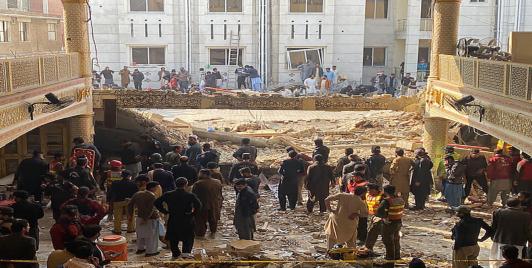
India must also recognise that Pakistan's internal security crisis has wider regional implications. Escalating Pakistan–Afghanistan tensions could create additional uncertainty along the western frontier, while attacks on Chinese projects could affect regional connectivity and investment.

India has demonstrated that it can develop and manufacture modern artillery systems. What needs reassessment is how quickly we acquire, integrate and field them, and how effectively we ensure that new technologies communicate and operate together.

If India says the security of its Northeast, border management, trade and connectivity matter, Bangladesh can equally say that water sharing, deaths at the border, market access, energy security, river management and sovereign equality matter to it.
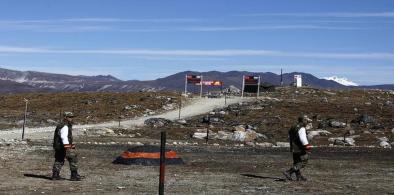
The Indian military views no disengagement in Arunachal Pradesh as part of a wider strategic recalibration, prompting India to match Chinese force rebalancing by shifting strike corps and resources equally across both northern and eastern fronts.
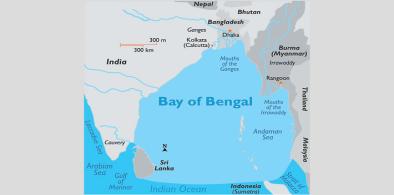
Whether Bangladesh is involved in the Indo-Pacific Strategy or Belt and Road, it must maintain peace and rule of law to reap maximum economic benefits from the Bay of Bengal, writes Pathik Hasan for South Asia Monitor
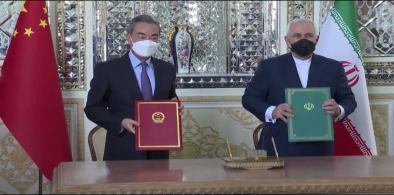
The China-Iran partnership scenario is not a product of coincidental political and trade decisions over the years, but rather a part of a carefully crafted policy, writes Ivaylo Valchev for South Asia Monitor
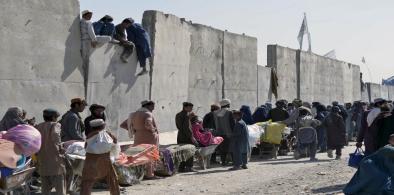
Support to the Pakistan Taliban and Afghan Taliban is rebounding on Islamabad as both Talibans don’t recognize Durand Line and want Pakistan to be Sharia-ruled, writes Lt Gen P. C. Katoch (retd.) for South Asia Monitor

The Killer Squadron traces its genesis to the 1971 war when it took part in operations that enabled the Indian Navy to dominate the Arabian Sea, crippling the Pakistan Navy, writes Col Anil Bhat (retd) for South Asia Monitor
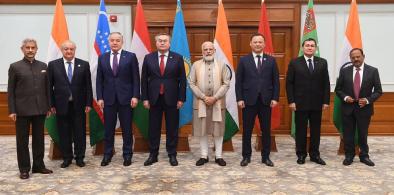
India, as also Eurasia – Russia and the Central Asian Republics (CARs) - have a common adversary in terrorism and need to make it a common goal to work on, writes Mahendra Ved for South Asia Monitor

How does India compare with the South Asian neighbourhood? The World Inequality Lab database indicates that regional disparities are less than India’s, writes N. Chandra Mohan for South Asia Monitor

With some 600 million Indians facing high to extreme water stress, ‘games’ offer vital insights for expanding self-governance to help people manage water more sustainably, write Ruth Meinzen-Dick and Pratiti Priyadarshini for South Asia Monitor

The two countries’ leaders have brought Delhi and Dhaka closer and can together bring economic prosperity to South Asia, writes Pathik Hasan for South Asia Monitor
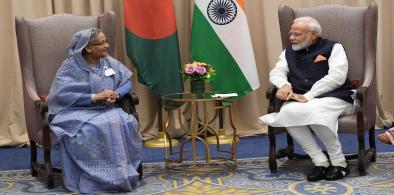
The foremost geostrategic challenge for India vis-à-vis Bangladesh is to counter the machinations of the China-Pakistan axis, writes Amb Pinak Ranjan Chakravarty (retd) for South Asia Monitor
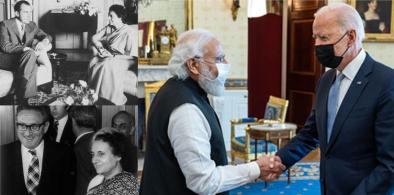
As a result of the Nixon-Kissinger folly that made it an accomplice of the Pakistani crimes in Bangladesh, Washington is now facing a formidable rival in China, writes Arul Louis for South Asia Monitor

The movement in Gwadar under the leadership of Maulana Hidayat Ur Rehman Baloch has attracted a massive number of people across Balochistan, especially from the Mekran region, writes Nizam Hassan for South Asia Monitor

The development of tribal people in the Chittagong Hill Tracts is much better than any remote region of Bangladesh, writes Hafizur Talukdar for South Asia Monitor

This is the story of Ganpat Singh from Pakistan’s Sodha Rajput community. Like him, each member of this half a million strong community has matrimonial linkages across the border in Rajasthan, India, writes Beena Sarwar for South Asia Monitor

The Taliban will soon face internal strife; the Haqqani network and extremist and fanatical factions will revolt against the moderates, splitting the Afghan nationalist struggle, writes Dr Ruhollah Eslami for South Asia Monitor
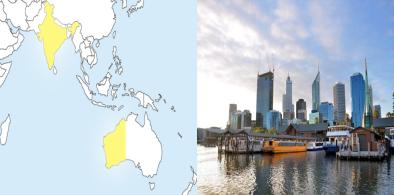
A stronger relationship with India is undeniably in Australia’s – and Western Australia’s – interest, writes Andrew Hunter for South Asia Monitor