

The Mineral Geopolitics of the Bay of Bengal: To Win the Subterranean War, India's Maritime Strategy Needs a Paradigm Shift
The vulnerability for India lies in the asymmetry of technological readiness and the aggressive sub-surface mapping being conducted by external actors, most notably China. Beijing has been able to resource its scientific research vessels, oceanographic mapping devices, and supposed civilian ocean surveys to map the bathymetry and mineral content of the Indian Ocean Region systematically.
 Aug 17, 2026
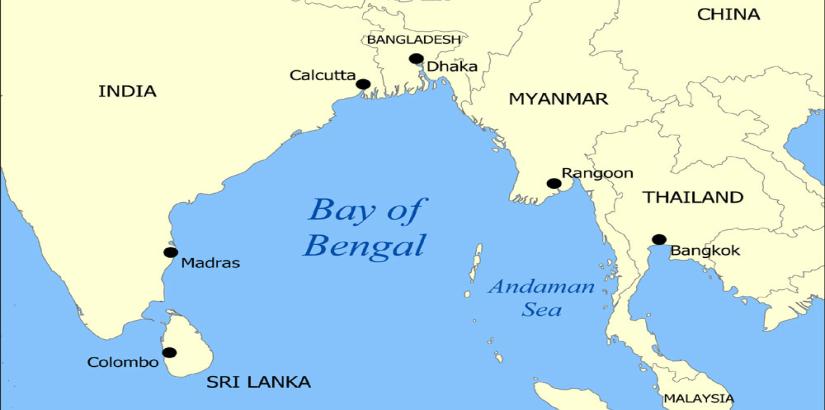
Discussions concerning the security architecture of the Bay of Bengal are almost exclusively dominated by a fixation on traditional chokepoints, naval base competition, and freedom of navigation. Strategic analysts continually map the movements of submarines, track port infrastructure developments under foreign banners, and evaluate maritime lanes carrying West Asian hydrocarbons toward East Asia. Yet, this conventional security lens completely overlooks a far more insidious and quiet vulnerability unfolding beneath the surface.
As global industrial economies accelerate their transition toward renewable energy and advanced manufacturing, the true battleground of the twenty-first century is shifting toward critical submarine resources. Within this context, the Bay of Bengal is rapidly emerging as an unmapped treasure trove of rare earth elements, polymetallic deposits, and heavy mineral sands.
For India, this subterranean wealth presents a profound paradox: it is simultaneously an indispensable frontier for resource sovereignty and a major geopolitical blind spot that threatens to expose New Delhi to unprecedented vulnerabilities.
The Geological Repository and Resource Paradox
To comprehend the significance of this dynamic, one has to analyze the way the geography of the Bay of Bengal operates as a unique geological repository. Contrary to the open abyssal plains of the Central Indian Ocean Basin, which have been the focus of India’s deep sea explorations, the semi-enclosed basin of the Bay of Bengal works as an enormous sediment deposit hub.
Having been transported by several rivers flowing from the Himalayas, particularly the Ganges-Brahmaputra-Meghna delta, billions of tons of silt have been deposited over the centuries, thus keeping numerous reserves of these materials, including monazite sands, rare earths, and other minerals in the process. Such materials have become key components for high-tech industries and are essential in manufacturing electric vehicle batteries, semiconductor parts, and advanced weapons systems.
However, as it turns out these deposits are located in a complicated zone of shallow and deep water borders of several states making such geological phenomenon a security issue.
Asymmetric Mapping and External Encroachment
The vulnerability for India lies in the asymmetry of technological readiness and the aggressive sub-surface mapping being conducted by external actors, most notably China. New Delhi has developed impressive capabilities through its domestic frameworks for deep-sea oceans and indigenous submersible deployment through the Deep Ocean Mission. However, Beijing has been able to resource its scientific research vessels, oceanographic mapping devices, and supposed civilian ocean surveys to map the bathymetry and mineral content of the Indian Ocean Region systematically.
The dual-use of these applications enables nations to obtain very specific information about underwater topography, thermal levels, and sedimentation distribution. Thus, if the geopolitical situation escalates, this data might be used by other countries to map not only submarine path-finding but also to formulate their preemptive claims on important underwater installations and disrupt India’s supply chains right at the source. This way, India’s traditional view of the Bay of Bengal as its strategic asset is being subtly undermined by a new type of quiet digital mineral colonization that bypasses India’s surface-level naval deterrence entirely.
Governance Deficits and the Littoral Dilemma
Compounding this external pressure is the complex web of overlapping maritime boundaries and governance deficits among the Bay of Bengal littorals themselves. Unlike Southeast Asia's structured multilateralism, the South Asian eastern periphery suffers from delayed boundary delimitations, unresolved continental shelf claims, and uneven regulatory mechanisms regarding marine resource extraction.
Smaller neighboring states, grappling with acute domestic economic pressures and foreign debt entanglements, are increasingly susceptible to external financial overtures tied to resource concessions. If a neighboring littoral state grants offshore exploration or seabed mining rights in contested or adjacent maritime sectors to an extra-regional competitor under the guise of commercial blue- economy ventures, India faces a direct security dilemma.
Such maneuvers can establish permanent foreign technical footprints right along India's eastern maritime flanks, turning cooperative marine spaces into forward listening posts and resource extraction beachheads for rival powers.
New Strategic Doctrine for the Blue Economy
Historically, the domestic policy framework relating to India's blue economy has mainly emphasized surface transport, port-based logistics through frameworks like Sagarmala, and traditional fisheries, thereby maintaining the sub-sea mineral regulation in a bureaucratic compartment. The problems of environmental degradation, coastal erosion and lack of a cohesive regional legal framework for deep sea extraction as part of multilateral cooperation agreements like BIMSTEC further exacerbate the risk.
Failure to quickly implement critical mineral security within the overall maritime strategy may lead to India winning the geostrategic battle for surface chokepoints, but losing the subterranean war of survival as an industrial power.
Therefore, in order to maintain security in the Bay of Bengal, there must be an immediate shift of paradigm away from passive naval patrols towards the establishment of active underwater domain awareness, joint scientific marine ventures with friendly neighbours and a comprehensive legal-strategic doctrine interpreting the Bay as not just an ocean floor but a fundamental base of India's technological autonomy in the future.
(The writer is a policy analyst with an M.A. in International Relations from Jadavpur University, Kolkata. The views expressed are personal. She can be reached at hridbina.chatterjee@gmail.com / https://www.linkedin.com/in/hridbina-chatterjee-75a575332





Post a Comment