Main Vaapas Aunga

When Poison Enters the System: Impunity, Vigilantism and South Asia’s Internal Security Failure

Across South Asia, the difference between prejudice and collapse is not the existence of hate. Every society has it in varying shades.  The difference is whether the majoritarian state internalizes hate against the ‘other’,  whether FIRs get diluted, trials get delayed, mobs get garlanded  and impunity driven violence against minorities becomes low-cost. When that happens, the poison is not outside the system. It becomes the system.

In the Quiet Spaces Between Strangers, Sonia Bahl’s Eighteen Inches Apart

And perhaps this is precisely what many readers, particularly South Asian readers navigating fractured contemporary lives, have been missing without fully realising it: fiction willing to slow down long enough to notice the fragile, passing intimacies through which people continue surviving one another.

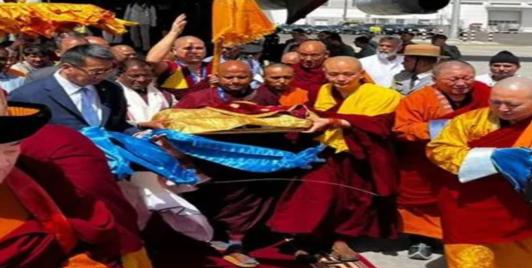
Robert A.F. Thurman, an academic with a Buddhist monk’s soul

Thurman said that Tibet was not an individual nation-state question but something that goes far beyond that. “It is not about a people yearning for freedom from an invading state. It is about a very valuable society struggling to keep its centuries-old tradition of intellectual evolution alive.” He said that while he was hopeful that the problem would be resolved soon, “and during His Holiness’ lifetime,” it was hard to put a timeframe to it.

A White Strip Exposes New Political Faultlines in Cosmopolitan Mumbai

The perceived push from a political leadership that has roots in Gujarat, the split in the locally rooted Shiv Sena that was engineered, the resentment it brewed among ordinary citizens and the history of Maharashtra -- which was born on May 1, 1960 after a bitter struggle that split the erstwhile Bombay State into two distinct linguistic states of Maharashtra and Gujarat -- are all complex and contributory factors to the evolving political unrest in middle-class Mumbai. 

More on Culture and Society

End of an Era in Playback Singing in Indian Cinema

The global music industry, where millions of songs are sung, and billions are spent and earned, is a larger story. But the duo’s role as singers remains iconic in India, and perhaps South Asia, where numerous others have come, stayed to make music,  and gone.

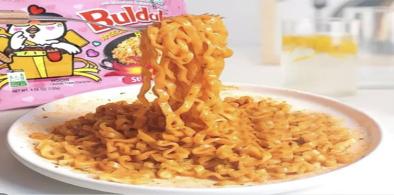
How Korean Noodle Brands Captured the Indian Market

The Korean noodle story is not really about noodles. It is about what happens when cultural influence travels faster than commercial infrastructure and faster than regulatory awareness. India's Gen Z - and possibly that of other South Asian countries - did not wait for brands to tell them what to eat. They watched K-dramas, did spice challenges, and built market demand that brands, regulators, and consumer education campaigns have simply not kept up with.

Sufi, Spirit and Resistance: A Layered Work Grounded in South Asian Storytelling Traditions

The Sufi Storyteller speaks to a wider South Asian moment, where Sufi traditions are increasingly invoked as counterpoints to narrowing religious and cultural orthodoxies. By foregrounding storytelling as both a spiritual and political act, Mansab gestures toward the enduring power of narrative to sustain pluralism, recover marginalized voices, and imagine more expansive forms of belonging.

From Death to Immortality: The Mahabharata is Worth Reading - And Questioning

A young woman reading Draupadi's story today and feeling angry about it is not being irreverent. She is doing exactly what you are supposed to do with a text this old and this serious, which is to feel it in your own body and think hard about what it means for where you actually are. We do not honour the Mahabharata by protecting it from that. We honour it by continuing to argue with it

AI and Children: Proper Teaching of AI in Schools a Must to Fire Creativity

Recent evidence also suggests that AI chatbots are being used by teens to plan violence and other harmful activities. Like all technologies, AI is a double-edged sword. It can either be used for very creative work or destructive activities. Thus, there is a tremendous responsibility for teachers to teach the children and youngsters about the positive aspects of AI.

Unity Without Uniformity: Why Diversity Is the Foundation of Peace

If diversity and unity are to guide the future, education must change.Most schools and universities today serve industrial monoculture and economic growth. They train the intellect — the “left brain” — to produce administrators and managers. Rational analysis is important, but it is only half of human potential. We also have a “right brain”: intuitive, holistic, relational. An education that neglects creativity, empathy and ecological awareness produces imbalance. It strengthens uniformity and weakens diversity.

To Become Better AI Designers, Engineers Should Learn Biology

At present all our robots and AI machines, etc. are being designed based upon the human body design.  We are still struggling to design our computers and processors more efficiently, but they can never come any closer to the brain and human thought. The AI priests feel otherwise

Is Cricket and Nepal Premier League Powering a New Sports Economy?

The Nepal Premier League has undeniably changed the atmosphere in this Himalayan nation. It has brought light to Kirtipur nightlife, sponsors to scoreboards, and pride to fans starved of large-scale sporting events. It has also created pockets of income, moments of possibility, and glimpses of what a sports economy could look like.

Romance of Innovation: How to Live a Meaningful Life in Rural India

It is a matter of shame for all of us that 78 years after independence we still have a major portion of our rural population living in primitive conditions. They lack electricity, clean cooking fuel, potable water and toilets in their homes. Somehow modern technology has not touched their lives.

Snowfall in Kashmir: Beauty, Burden And The Test Of Our Humanity

The biggest victims of heavy snowfall are often invisible in public conversations.They are the daily wage workers. laborers, construction workers, street vendors, load carriers, and small service providers who depend on daily earnings to feed their families.When snow blocks roads and markets shut down, their income stops immediately. There is no work from home for a daily wager. No paid leave. No savings cushion for many. Each snowbound day means an empty kitchen, anxious parents, and children who may go to bed hungry. Winter for them is not scenic; it is a season of survival.

India’s 77th Republic Day Parade: Blend Of Tradition And Modernisation

Breaking from the tradition of only marching columns, the Indian Army showcased a "phased battle array" for the first time, mirroring real combat-zone deployment. This included a sequence of new military, technological, and specialized units, highlighting the country's defence self-reliance and modernization. 

Capturing The South Asian Reality: The Shelter And Storm Of Arundhati Roy’s ‘Mother Mary’

In a world that often tries to simplify what’s complicated, Mother Mary Comes to Me captures the South Asian reality where a woman’s power is often carved out of the very detachment that causes pain. Arundhati Roy’s latest work maps a difficult legacy where a mother’s refusal to be a vessel for others, however costly to those around her, unwittingly clears the path for a daughter to reclaim herself. 

Ikkis: An Ode To A Valiant Indian Soldier

The story of Arun’s role in the Battle of Basantar did not end on that day, or even after the cease fire of this two weeks war, resulting in the demise of East Pakistan and the announcement of the newly liberated Bangladesh. Major Khwaja  Mohammad Nasir, then a Squadron Commander of 13th Lancers, the regiment pitched against Poona Horse, who came bandaged the next day to collect the dead bodies of his fallen comrades, wanted to know more about “ the officer, who stood like an insurmountable rock” and whose troop of three British World War II vintage Centurion tanks  was responsible for decimation of his entire squadron of  fourteen American Patton tanks.

Stop Suffocating Childhood In The Name of Education

Education must be age-appropriate, climate-sensitive, and child-centred.A child rubbing sleepy eyes in the freezing dawn, dragged toward a coaching centre, is not a symbol of discipline. It is a warning. When homework and early classes steal rest and play, education stops nurturing and starts impacting childhood.lets remember that childhood is not a race to be won early. It is a foundation to be built carefully.

Ring Out ABC From Life, To Ring In XYZ In Life

In an age of constant noise and hurry, we can reclaim balance by cultivating positive habits. Dropping ABC can help us in developing an attitude of serenity, contentment, letting go, and gratitude. With this mind, quality time with nature, or other soul-uplifting activities, can heal us. All this, in turn, can create a sanctuary of tranquility, peace, and happiness within us.