



Main Vaapas Aunga

When Poison Enters the System: Impunity, Vigilantism and South Asia’s Internal Security Failure

Across South Asia, the difference between prejudice and collapse is not the existence of hate. Every society has it in varying shades.  The difference is whether the majoritarian state internalizes hate against the ‘other’,  whether FIRs get diluted, trials get delayed, mobs get garlanded  and impunity driven violence against minorities becomes low-cost. When that happens, the poison is not outside the system. It becomes the system.

In the Quiet Spaces Between Strangers, Sonia Bahl’s Eighteen Inches Apart

And perhaps this is precisely what many readers, particularly South Asian readers navigating fractured contemporary lives, have been missing without fully realising it: fiction willing to slow down long enough to notice the fragile, passing intimacies through which people continue surviving one another.

Robert A.F. Thurman, an academic with a Buddhist monk’s soul

Thurman said that Tibet was not an individual nation-state question but something that goes far beyond that. “It is not about a people yearning for freedom from an invading state. It is about a very valuable society struggling to keep its centuries-old tradition of intellectual evolution alive.” He said that while he was hopeful that the problem would be resolved soon, “and during His Holiness’ lifetime,” it was hard to put a timeframe to it.

A White Strip Exposes New Political Faultlines in Cosmopolitan Mumbai

The perceived push from a political leadership that has roots in Gujarat, the split in the locally rooted Shiv Sena that was engineered, the resentment it brewed among ordinary citizens and the history of Maharashtra -- which was born on May 1, 1960 after a bitter struggle that split the erstwhile Bombay State into two distinct linguistic states of Maharashtra and Gujarat -- are all complex and contributory factors to the evolving political unrest in middle-class Mumbai. 

More on Culture and Society

The Untold Story Of Sweet Sorghum: Needs To Be Promoted As Food And Fodder Source

Sweet sorghum is also an excellent fodder crop, and we feel that leafy and high-sugar yielding varieties like Madhura-2 can be very suitable for this purpose. India has a serious green fodder production deficit. What is needed is good R&D to evaluate and market sweet sorghum in this segment. This may  help position sweet sorghum as an industrial crop and may provide the necessary incentive to grow it. The Indian government has to make a policy decision on promoting sweet sorghum as an excellent food and fodder source. It is already promoting millet as a healthy food and with better support price, sweet sorghum can flourish.

When The West Lost Face - And Afghanistan Collapsed Like A House of Cards

Afghanistan had become an example of what an ever-increasing number of Americans were referring to as endless wars. The Taliban - not the US and NATO - would come to represent the strongest military might in Afghanistan, Stoltenberg said in a candid admission. In a phone conversation  with Stoltenberg after the withdrawal announcement then Afghan President Asraf Ghani expressed his  disappointment and gave the phone to his vice-president  Amrullah Saleh  who thundered that “We have been abandoned. Jihad has defeated NATO.”

Ancient Indian Philosophers Understood Primacy Of Time Like Modern Physicists

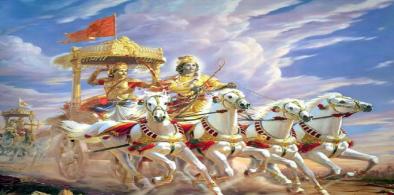
In Bhagwad Gita also the primacy of time is shown when Lord Kishna shows Arjun his Virat form and utters the famous words “I have become the Mighty Time - the creator and destroyer of the worlds”. Interestingly, this shloka was misinterpreted by Robert Oppenheimer after the atomic bomb blast in 1945 when he quoted Gita stating “I have become Death”, instead of "I have become the Mighty Time".

Remembering Dr. Richard Cash: A Heroic Figure Whose Legacy Pioneered A Road Safety Model In Bangladesh

The evolution of this grassroots initiative in Bangladesh offers a model for other nations seeking to better address the crisis of road traffic injuries. It also provides insights into the vital importance of the collaborative process in creating broad support for the development and sustenance of such national programmes. While technology is often seen as the remedy for all our problems, the success of such community-based programmes is an important reminder to focus first on people, using technology as a tool, not as an end in itself.

JNU: A Bastion Of Resistance Against Ideological Conformity

JNU has stood against authoritarianism, market-driven education policies, and ideological conformity for decades, serving as a defiant emblem of resistance. The JNUSU election results last week by virtue of scale and impact on student and larger national politics may be deemed as extraneous. However, in spatial understanding of power dynamics, it metaphorically stands as a symbol of resistance at the heart of the nation’s capital.

Cultural Reflection: Celebrating the aesthetics of everyday Indian images

Even coffee-table books, despite their visual focus, rarely abandon text altogether. They rely on commentary to contextualize the images. Goyal takes the opposite approach. Her photographs, painstakingly gathered from her travels across India, are not documentation but an invitation to look, to remember, to imagine. The result is a deeply personal journey for each reader, or rather, viewer.

The Art Of Living: How To Live A Good And Meaningful Life

Spirituality is not religion.  It is the state of mind that makes it understand that the truth is beyond the barriers of worldliness, religion, caste, creed, race, or geographical boundaries.  It connects us to marvels of nature in a deep way, and subsequently to Universal Consciousness or the mind of God.

Unraveling The Threads of Grief, Love, And Womanhood: Complexities Of Daughter-Father Relationships In South Asian Contexts

By the end of the book, what lingers is not just sorrow, but a quiet insistence that women’s inner worlds deserve to be witnessed. Mohua invites her readers, especially women, to stop apologizing for their contradictions, to speak even when their voices tremble.  

Death Of A Singer: Zubeen Garg's Songs Will Unite, Inspire and Embolden

In 2006, the popularity of Zubeen’s song “Ya Ali” in the film Gangster brought him fame and told the people of Assam that their native son was an honoured figure on a much wider stage. This is the song a Pakistani band sang recently in Karachi in tribute to their late Indian colleague, a move embraced across borders, prevailing over the current tensions between the two countries.

How Vivid Illustrations Shaped Bengali Folklore Down The Ages: Creative Process Began 175 Years Ago

In the present era of AI and simulated visual and audio-visual graphic representations, the contributions of the first Bengali illustrations remain pivotal as they underscore the significance of a long history of various thought processes and diligent efforts which went behind shaping a path for generations of graphic artists in the decades to come to explore imagination and a world of fantasy.

Journey Of A Celebrated Pakistani Architect: Balancing Between Modernity And Tradition

Rising demand for housing and infrastructure, coupled with environmental challenges, remain primary issues around the world. These issues are exacerbated in countries like Pakistan where millions still live at or below the poverty line, in flimsy dwellings on the outskirts of cities, on river flood plains or near refuse sites.

'You Can Kill a Person, But Not an Idea'

“This was a film that needed to be made, so thank you,” said award-winning Indian filmmaker Anand Patwardhan, who helped bring After Sabeen to Indian audiences and whose own film ‘Reason’ highlights such killings in India.

Is The Equilibrium Lost? Need For Humanity To Reawaken Its Humaneness

Ultimately, it comes down to standing firm for what is pure and ethical, and standing against what is impure and unethical in our society today. Such conflicts can be resolved only at the level of higher understanding — the very foundation of what may be called Higher Morality.

English as agency: Language Provides Pathways Of Mobility For Marginalized Communities

What makes the book powerful is its refusal to romanticize either side of the debate. It acknowledges that local language education, when disconnected from global opportunities, can also reproduce exclusion. But it also warns against treating English as a silver bullet, instead framing it as one tool among many for dismantling structural inequalities. The book’s central contribution is to show, through stories and analysis, how subaltern learners themselves are redefining English, not as a colonial burden but as a means of agency, solidarity, and leadership.

Keeping India's Cultural Legacy Alive: Heritage Preservation In A Digital Age

India’s museums and heritage institutions are at a crossroads. The digital age offers incredible tools to preserve and promote culture, but it also demands clarity, intention, and collaboration. The future lies in building a community of professionals who understand both the value of tradition and the power of technology.