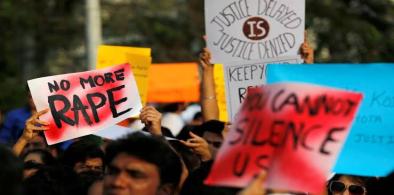

Representational Photo

Why Sinhalese Buddhist Nationalists Adore Israel? An Alternative Reading

These myth-based narratives reveal a deeper psychological impulse: the desire to anchor Sinhalese Buddhist identity within a framework of global uniqueness and divine purpose. While Sri Lanka’s diplomatic relations with Israel have fluctuated since independence, Sinhalese Buddhist nationalist sentiment continues to exhibit a strong emotional affinity toward Israel.

A Distracted Generation And The Erosion Of State Capacity In India

India’s youth are growing up in an ecosystem defined by continuous stimulation and accelerated consumption of information. Attention is fragmented, patience for complexity is declining, and long-form engagement—essential for policy, administration, and strategic thinking—is increasingly marginal. This is not a cultural lament. It is a structural shift with direct consequences for how future administrators, policymakers, and institutional leaders are formed.

India’s outreach to West Asia and Africa: Strengthening Global South Leadership

By engaging Jordan, Ethiopia and Oman, India demonstrated its capacity to operate across geopolitical divides while remaining anchored in Global South solidarity. These visits were not isolated diplomatic events but part of a sustained effort to reshape international engagement through inclusivity, responsibility, and shared growth. As global uncertainties persist, India’s outreach to West Asia and Africa strengthens its claim to leadership rooted in partnership and a collective vision for a more equitable world order.

Growing Mistrust, Fragile Sunni-Shia Political Balance Deepen Gilgit-Baltistan Unrest

The security situation deteriorated further in 2025. A terrorist attack on a Gilgit-Baltistan Scouts checkpost resulted in two fatalities and one injury, heightening tensions. Protests later resumed in Sost, disrupting trade between Pakistan and China via the Khunjerab Pass. The year culminated in two high-profile attacks on October 5, when unidentified gunmen ambushed Maulana Qazi Nisar Ahmed, Ameer of the Ahl-e-Sunnat wal Jamaat in Gilgit-Baltistan and Kohistan, near the police headquarters in Gilgit, injuring him and several others. On the same day, Malik Inayat-ur-Rehman, the Chief Court Judge of Gilgit-Baltistan, narrowly escaped an assassination attempt near the City Hospital.

More on Perspective

Sri Lanka’s fuel crisis threatens its prized tea industry; 400,000 jobs at risk

For Sri Lanka, which is in dire need of foreign exchange reserves, tea is among a few commodities offering an assured income in dollars. The industry faced immense hardship during the last year’s ban on chemical fertilisers

India establishes a tentative diplomatic presence in Taliban-ruled Afghanistan

The move isn’t a recognition of the Taliban regime which remains internationally isolated. The emphasis on people-people and civilizational connections underscores New Delhi’s attempt to retain its soft power in the country

The clock is ticking for Pakistan to secure an IMF deal

From withdrawing the fuel subsidies, hiking electricity tariffs and reducing expenditure to increasing tax rates, Prime Minister Shehbaz Sharif’s government has gone all out at the expense of its own political capital to get the IMF programme running

Nepal in a cleft stick: Another US programme stirs domestic politics with Beijing watching

Notwithstanding the Deuba’s government push to strengthen ties with the US, Nepal is still far from signing any security pact with it. Further, China, despite suffering a relative pushback in Nepal, is unlikely to take such a deal kindly

Amid ruling party infighting, a former Maldivian president waits in the wings

If Yameen returns to power in the Maldives, it would have repercussions on the present close strategic ties with India

The significance of India’s relations with Gulf and Muslim countries

India needs strong and friendly relations, be they diplomatic, economic, social or cultural, with the countries of GCC. And some of these arguments carry over for relations with members of the OIC too

Pakistan’s 5.9 % GDP growth comes with ‘landmines’, fears of ‘overheated’ economy and Imran Khan's 'biggest protest'

Challenges are compounded by the almost unaffordable prices of global commodities and fuel—factors beyond the government’s control. “I cannot control this but cannot leave people without food and fuel, either,” Ismail said.

No place in Hinduism for intolerance of other faiths

Denigration of another faith is not the act or practice of a true Hindu. Every Hindu must condemn such acts., writes Amb Sarvajit Chakravarty (retd) for South Asia Monitor 

What two WHO tales say about India's health system

While ASHAs make us proud, the state of the health management system makes us hang our heads in shame.  Is this where India should be in the 21st century?

Unchecked communal rhetoric will have implications for India’s foreign policy

Messages, and communal narratives - and even state-sanctioned actions - targeting Muslims reach audiences in the Muslim countries in real time and will produce resentment against India and its diaspora community living there. These sentiments will eventually make it a bit harder for their governments to embrace New Delhi and do business with it, at least in the open.

The Indian Navy's three-dimensional capabilities

“Today, Indian Navy is counted among the frontline navies of the world. Today, the world’s largest maritime forces are ready to work and cooperate with India,” Singh said and described INS Khanderi as a shining example of the ‘Make in India’ capabilities of the country.

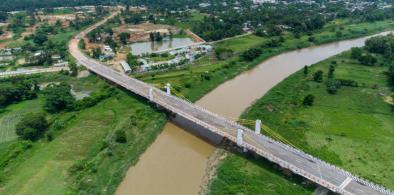
A bridge over the river Padma: Bangladesh's passage to a developing nation

The decision to build the much-awaited Padma Bridge, which is set to open for traffic on June 25, through its own finances has brightened Bangladesh's image in the world, writes Dr Malika-e-Abida Khattak for South Asia Monitor. 

Boosting rail connectivity between India and Bangladesh is a win-win for both

While air remains a major mode of transportation for tourists—almost 77 percent, around 80 percent of Bangladeshi tourists used the land as the mode of transportation. Thus, an integrated, cross-border railway network as a faster mode of transport could bring enormous benefits to the region, including boosting regional trade.

Progress in India’s warship building, but not enough except in surface ships

There are not many developing countries like India having the capability to produce such a wide variety of warships ranging from fast-attack craft to aircraft carriers, writes Col Anil Bhat (retd) for South Asia Monitor

How to make a better India

India is the only country in the world that was ruled by Muslims for nearly 1,000 years and yet never become a Muslim country. A probable answer lies in the higher quality of Indian spiritual thought, writes Anil Rajvanshi for South Asia Monitor