

Trump’s Tariff Shock and India’s Export Reset: A Tech-Led Turn in the Making
The structural transformation of India’s export basket is no longer incremental—it is systemic. Technology-driven industries with higher value addition are steadily outpacing traditional sectors. If managed strategically, external tariff pressures could accelerate this transition. Rather than viewing tariff hikes solely as a threat, India can leverage them as a catalyst for deeper integration into global supply chains and stronger positioning in high-technology manufacturing. The reshaping of India’s export architecture is already underway. The tariff shock may simply fast-forward the process.
 Feb 27, 2026
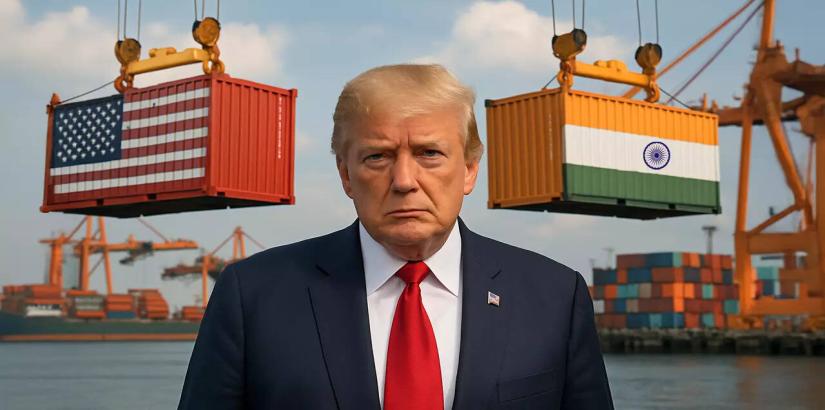
Amid concerns over former US President Donald Trump’s proposed tariff hikes, a new opportunity may be emerging for India. Rather than merely disrupting trade flows, higher US tariffs could accelerate structural reforms in India’s export basket—shifting it decisively toward technology-oriented industries with higher value addition and away from traditional, low-value segments.
In this evolving trade calculus, calibrated relaxation of import tariffs on select US products—particularly in non-cereal agriculture and wines—in exchange for lower reciprocal tariffs on India’s electronics and pharmaceutical exports may not be a bad bargain. The challenge, however, lies in balancing domestic sensitivities with strategic trade gains.
From Traditional Strengths to High-Value Exports
Historically, India’s export basket has been dominated by labour-intensive and traditional sectors such as textiles, garments, leather, cut and polished diamonds, and agricultural products including spices and cashew. While these industries have generated employment and foreign exchange, they have largely been characterized by lower value addition.
The emerging trend, however, tells a different story.
New-generation industries—electronics, engineering goods, automobiles, and drugs and pharmaceuticals—are increasingly shaping India’s export profile. Significantly, these sectors have been relatively insulated from the brunt of Trump’s tariff escalation.
India currently enjoys a lower reciprocal tariff rate (18 percent) compared to several Asian competitors such as China (35 percent), Bangladesh (20 percent), Vietnam (20 percent), Thailand (19 percent), Malaysia (19 percent), and the Philippines (19 percent). This differential strengthens India’s competitive edge in technology-driven exports.
Numbers Behind the Structural Shift
The transformation of India’s export basket over the past decade is striking.
Excluding petroleum refinery products, exports from electronics, engineering, and pharmaceuticals together accounted for 41.3 percent of total exports in 2024–25, up from 29.7 percent in 2014–15. In contrast, traditional sectors—including agriculture and allied products, textiles, garments, and cut and polished diamonds—saw their combined share decline from 31.7 percent in 2014–15 to 24.9 percent in 2024–25.
The shift is even more pronounced in exports to the United States—India’s largest export destination. In 2024–25, electronics, engineering goods, and pharmaceuticals accounted for 50.2 percent of India’s exports to the US, up sharply from 21.9 percent in 2014–15. Meanwhile, traditional sectors’ share declined from 41.9 percent to 25.1 percent over the same period.
These figures underscore a clear structural reorientation toward higher-value, technology-intensive exports.
Policy Push: PLI, FDI and Manufacturing Depth
Government initiatives have played a pivotal role in this transformation. The Production Linked Incentive (PLI) scheme, infrastructure upgrades, digital transformation, and a thriving start-up ecosystem have strengthened India’s manufacturing base and export competitiveness.
Electronics manufacturing illustrates this shift vividly. Production increased nearly sixfold over the past decade—from US$ 29 billion in 2014–15 to US$ 101 billion in 2023–24. India is now the world’s second-largest mobile phone manufacturer.
Crucially, mobile phone manufacturing in India has moved beyond basic assembly or “screwdriver technology.” High-end smartphones, including iPhones, involve sophisticated processes such as System-in-Package (SiP) and Surface-Mount Technology (SMT), integrating semiconductor devices, display modules, and advanced camera systems. Companies such as Foxconn represent this high-technology manufacturing shift.
Foreign Direct Investment (FDI) has reinforced this trajectory. FDI in electronics manufacturing rose sharply, registering a 193.7 percent increase in 2024–25 over the previous year.
India has also leapfrogged in automobile manufacturing, emerging as the world’s fourth-largest vehicle producer. The sector contributes 7.1 percent to GDP and nearly half of manufacturing GDP, reflecting deep industrial linkages.
US Market: Strategic Dependence and Opportunity
The United States remains central to India’s export growth strategy. It is the top destination for electronics, engineering goods, auto components, and pharmaceuticals.
In 2024–25, the US accounted for:
37.4 percent of India’s total electronics exports
16.2 percent of engineering exports
34.6 percent of pharmaceutical exports
22.5 percent of auto component exports
More than one-fourth of India’s global exports from new industries depend on the US market. This dependence makes trade negotiations with Washington strategically important.
Balancing Concessions and Sensitivities
India is reportedly considering tariff reductions or quota-based access for selected US agricultural products such as almonds, walnuts, pistachios, soybean oil, red sorghum (for animal feed), fresh fruits, and wines and spirits.
However, India continues to protect sensitive sectors such as foodgrains, dairy, poultry, meat, soy, and genetically modified (GM) products, citing environmental and public health concerns.
Given the structural gains in high-value exports and the importance of the US market, limited tariff concessions in non-cereal agriculture and select consumer segments may represent a pragmatic compromise. Such calibrated soft-pedalling could help ease trade tensions while preserving India’s core agricultural safeguards.
A Tech-Oriented Export Future
The structural transformation of India’s export basket is no longer incremental—it is systemic. Technology-driven industries with higher value addition are steadily outpacing traditional sectors. If managed strategically, external tariff pressures could accelerate this transition. Rather than viewing tariff hikes solely as a threat, India can leverage them as a catalyst for deeper integration into global supply chains and stronger positioning in high-technology manufacturing.
The reshaping of India’s export architecture is already underway. The tariff shock may simply fast-forward the process.
(The writer is an Indian trade consultant and analyst. Views expressed are personal. He can be contacted at subratamajumder0604@gmail.com)





Post a Comment