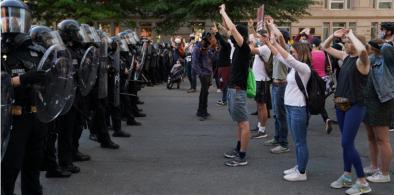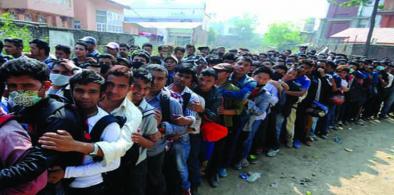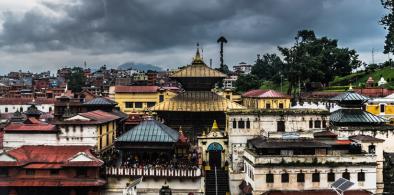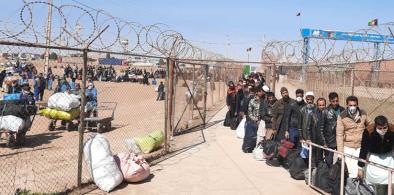
Representational Photo

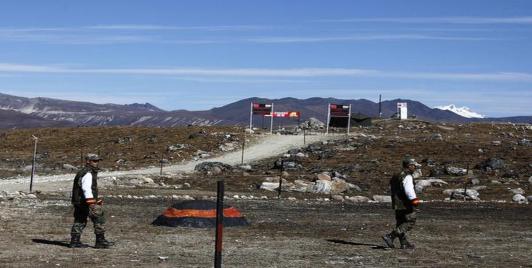
PLA’s Partial Pullbacks from Ladakh Frontier: More Tactical Than Operational Move by China

The Indian military views no disengagement in Arunachal Pradesh as part of a wider strategic recalibration, prompting India to match Chinese force rebalancing by shifting strike corps and resources equally across both northern and eastern fronts.

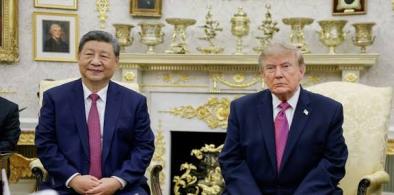
China-US: Rivalry, Restraint, a New Equilibrium - and an Emerging Geopolitical Order

BRICS is acquiring greater visibility, while countries of the Global South continue to seek a greater voice in the international system. The desire for a more multipolar world is becoming increasingly evident. Over the next decade, this could produce a geopolitical configuration rather different from the one we have known since the end of the Cold War.

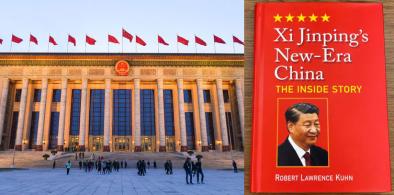
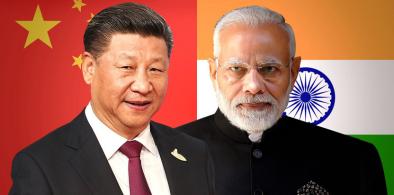
Xi Jinping's China: A Scholarly Look at a Nation Driven by a Sense of Destiny

Kuhn says if the first half of this century is being defined by USA-China relations, the second half may well be defined by India-China relations and, in the New World Order, "India-China relations will likely become the most pivotal.....for the entire world".

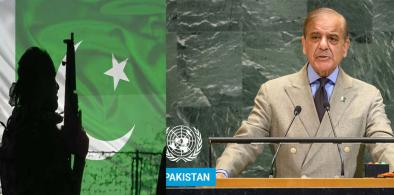
Mask Drops in Islamabad: How Pakistan’s Terror Calculus Came Undone

The strategic equation has irrevocably shifted. Pakistan’s long-standing attempt to separate itself from its proxies has failed, replaced by the reality of a state struggling with the infrastructure it created. As these groups operate with increasing autonomy, the world community is left with a clear conclusion

More on Geopolitics, Security and Strategic Affairs

India-China dynamics in turbulent times: Civilisational ties and border dispute (Part I of three-part series)

 While India never had hegemonistic tendencies, China the ‘middle power’ always wanted to restore its past glory by any means, which included grabbing/occupying land and maritime zones based on its perception of past ownership, writes Lt Gen P R Kumar (retd) for South Asia Monitor

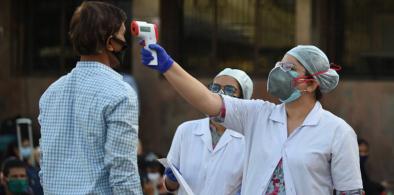
India’s battle against COVID-19: Response efficiency has varied from state to state

The efficiency of response has varied across India. Kerala, Karnataka, Odisha, Andhra Pradesh, Rajasthan, Punjab, Haryana and the Northeastern states responded well, with strong public health measures combined with empathetic social services, writes Prof. K. Srinath Reddy for South Asia Monitor

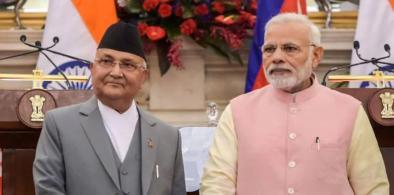
Souring India-Nepal ties

China has made all-out efforts to draw Nepal into its strategic sphere and has stoked anti-India feelings,  writes Lt Gen P. C. Katoch (retd) for South Asia Monitor
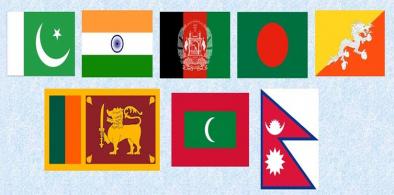
Cooperative security in South Asia: Subregional groups can show the way

In SAARC political agenda always dominated social and economic issues, whereas in successful regional organizations like ASEAN and EU, socio-economic issues prevailed over politics, writes Aneek Chatterjee for South Asia Monitor

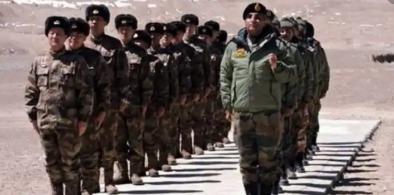
India-China border dispute: Is a give and take possible now?

The immediate task is to get the PLA to leave Galwan without loss of face. On the other hand,  could this just be the opportunity for the two sides to settle new LACs in the three sectors? writes Mohan Guruswamy for South Asia Monitor

Afghan media working under constant threat

The militants and various violent groups want to suppress the 'voice of reason' and in doing so they target the media with utmost force and hatred. The factor of impunity is one of the main reasons for continued atrocity towards Afghan journalists and media, writes Dr. Sanchita Bhattacharya for South Asia Monitor

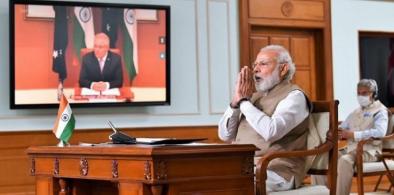
India–Australia summit: A meeting of minds

With shared concerns over Chinese hegemony, the time is right for a closer engagement between New Delhi and Canberra, writes Amit Dasgupta for South Asia Monitor

Is America’s middle class more sensitive than India’s?

What racism is in the world’s oldest democracy, communalism unfortunately is in its largest version in India. It is no secret that sizeable sections of India’s largest community, the Hindus, are communal,  writes Amulya Ganguli for South Asia Monitor

Aftermath of COVID-19: Rise of a new social class in Nepal

After the pandemic, migrant workers, including the semi-skilled and skilled labour and small-scale business people, and private job holders, who are returning from abroad, will form the neo-lower class - a new working class - that will constitute a significant population in Nepal, writes Roshan Chirag for South Asia Monitor 

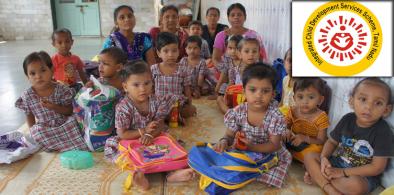
ICDS can become a model for South Asia to improve lives of children

South Asian countries can use ICDS as a blueprint and further formulate their respective policies following a tailored and local approach depending on the domestic factors pertaining to their region, writes Vishwajeet Singh Raghav for South Asia Monitor

Nepal needs a comprehensive pandemic law to battle coronavirus

It is advisable for the governments - of both Nepal and possibly India - to take a leaf from the UK Coronavirus Act, 2020 which was enacted for defeating COVID-19, writes Jivesh Jha  for South Asia Monitor

Why biodiversity conservation is necessary for dealing with the pandemic

On this Environment Day, let us commit ourselves to protect the biodiversity, for our own existence, writes Pradeep S. Mehta, George Cheriyan & Simi T. B.for South Asia Monitor

Are we observing World Environment Day or World Emergency Day on June 5?

State of the environment today is certainly in a state of emergency. Many would call June 5, 2020, as World Emergency Day. In reality, today environment and emergency have indeed become synonyms, writes Rajendra Shende for South Asia Monitor

Nations should not discriminate against refugees, migrants during pandemic

This outbreak and the requirements of precautionary measures have emerged as an extra health threat to migrants who work abroad to keep their families well and also to asylum seekers. These people play a crucial role both in the economy of the countries they live in and in their countries of origin too,  writes Abdul Alim for South Asia Monitor

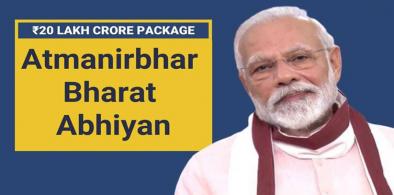
India's COVID-19 stimulus package: Will it revive the economy?

There seems to be a strong argument that the singular focus of the stimulus package should have been a fiscal stimulus, which would have increased public spending in physical or human capital, raised money in the hands of residents by direct cash transfers and subsidies and provided safety nets like job guarantee and unemployment benefits, writes Partha Pratim Mitra for South Asia Monitor