
Representational Photo

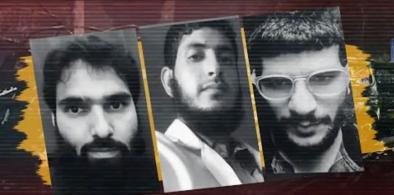
Jaish-e-Mohammed's Female Brigade: ISI-Backed New Jihadi Units Intensify Counterterrorism Challenges in South Asia

Unlike earlier jihadist cells dominated by Pakistani nationals, this unit deliberately recruits women from Indonesia, the Philippines, Uzbekistan, and other foreign countries. Reason behind recruiting non-Pakistani nationals serves a dual purpose: it complicates attribution and shields Pakistan’s security apparatus from direct accountability. Such operational sophistication reflects ISI’s continued role not merely as a passive enabler but as an active architect of jihadist adaptation.

Securing The Digital Frontier: A Unified Call For Cybersecurity In South Asia

South Asia has the potential to be a global digital leader. It has a young population and a booming tech industry. However, this potential will only be realized if the region is secure. We must treat cybersecurity as a pillar of national security, just like border defense. This requires better technology, smarter laws, and stronger regional ties. The digital threats of 2026 are fast and complex. To meet them, South Asia must be faster and more united. The time to build a collective digital shield is now, before the next major crisis occurs.

Aid, Ports, And The Limits of Incrementalism: What India’s Budget Says About Its Foreign Policy

Yet the strategic costs are real. Reduced engagement in Bangladesh risks ceding influence at a moment when Dhaka is actively diversifying its partnerships. Hesitation over Chabahar weakens India’s leverage in Iran and Central Asia and underscores its vulnerability to US pressure even as it seeks a more multipolar foreign policy. The 2026–27 Budget does not signal a dramatic shift in Indian foreign policy. There is no abandonment of neighbours-first rhetoric or of connectivity-led diplomacy. What it reveals instead is a narrowing circle of feasible economic action.
 

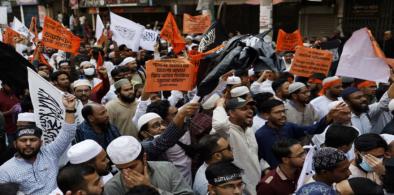
Mob Rule As Political Strategy: Reshaping Bangladesh's Secular Memory And Pluralistic Bengali Culture

The ideals of 1971 represent inclusivity, human dignity, and resistance to oppression. Baul and Sufi traditions reject radical views and promote humanism and coexistence. Islam in Bengal arrived largely through Sufis—from Persia, Arabia, and Central Asia—who emphasized spirituality, tolerance, and accommodation. These traditions resonated with local Hindu practices and gave rise to syncretic forms such as Baul philosophy. Rabindranath Tagore and Nazrul Islam embodied this civilizational synthesis.     
 

More on Spotlight

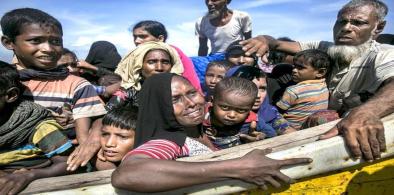
South Asian refugee crisis: Political scapegoating and interstate conflicts hinder institutional mitigation

South Asian states have steered clear of accepting formal responsibilities in addressing refugees, with only Afghanistan being a curious signatory to the 1951 Refugee Convention. South Asian states have sought a more voluntary approach to taking in refugees, with geopolitical considerations driving the select acceptability of refugee communities.

Transacting with Trump: Can Modi turn Trump's climate denialism into an opportunity?

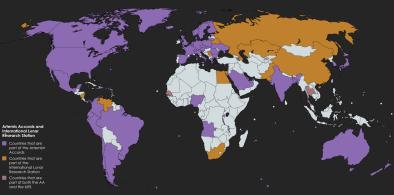
Modi can invoke Trump’s language and highlight business and economic opportunities along with market mechanisms that are available almost on platter while pursuing a non-fossil fuel future.  Particularly,  Modi could showcase employment generation by promoting solar energy through the International Solar Alliance. He and Trump can strike bilateral and multilateral ventures as well as research programmes with BRICS on solar energy, modular nuclear plants, windmills, biofuels and green, grey and blue hydrogen.

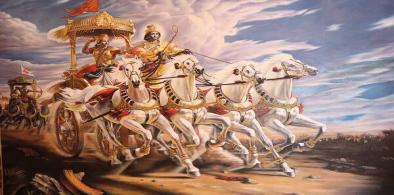
How India is drawing inspiration from its ancient treatise to strategise national security

On October 21, 2023, India launched ‘Project Udhbav’ during the inauguration of the Indian Military Heritage Festival to synthesize ancient wisdom with contemporary military practices, forging a unique and holistic approach to address modern security challenges. It is tempting to draw a correspondence between India’s and China’s initiatives just 17 days apart.

Nuclear is the way to go: A transformative shift in India's energy landscape

India has 24 nuclear reactors in operation in 8 nuclear power plants with a total installed capacity of 8,180 MW nuclear power produced a total of 48 TWh in 2023, contributing around 3% of total power generation in India.  Due to earlier trade bans and lack of indigenous uranium, India has uniquely been developing a nuclear fuel cycle to exploit its reserves of thorium. India is actively pursuing the development of nuclear energy using thorium as its primary fuel source

South Asian countries must adopt Colombo Process to safeguard migrant labour interest

Since the Colombo Process Ministerial Consultation in Bali, 2005, member states have taken concrete steps to improve the management of labour migration. There has been significant progress in areas of revised policies and regulations. There is greater cooperation between Colombo Process countries and key destination countries. Several initiatives are now in place including awareness-raising campaigns, orientation training, recruitment drives, remittance investment and welfare programmes.

India’s rise a force for good in the Indo Pacific region

India’s rise provides positive ripple impact to the region and the world, from economic and trade spillover effects to the larger equation of helping to secure and preserve the rules-based order that has been the main bedrock of global trade and maritime capacity, maintaining the sanctity of international law and global norms, and in securing the freedom of navigation and overflight in international waters

Value-neutral journalism a threatened ideal in South Asia

Economic considerations surrounding media ownership in South Asia amplify the difficulties of conducting value-neutral journalism. People and businesses with a strong desire to keep things amicable between governments and public institutions own a lot of big media outlets. Journalists are unable to objectively critique powerful entities due to their reliance on advertising, government contracts, or political patronage. 

India In a challenging neighbourhood: Need to reach non-confrontational equilibrium with China

China’s pervasive and growing economic (finance, infrastructure, trade, and energy sectors), diplomatic, and overt/covert military influence, in Pakistan, Nepal, Bhutan, India’s northeastern states, Bangladesh, Myanmar, Sri Lanka and Maldives, and back to Gwadar in Pakistan is amply evident. The recent bonhomie between Bangladesh and Pakistan, both under China’s influence, raises fresh challenges for India’s security.

Hidden hand behind opposition to Adani wind power project in Sri Lanka?

While a Chinese-backed coal power project in Sri Lanka is being carried out without opposition, Adani’s eco-friendly energy project, which the world is looking to as the energy of the future, is being opposed.

What Trump 2.0 means for Asia: Need to balance national priorities with collaborative efforts

South Asia, home to nearly two billion people, stands at a crossroads as Trump’s policies reshape regional dynamics. India’s growing prominence within the QUAD strengthens its strategic position, but smaller economies like Bangladesh face vulnerabilities.

Trump makes unlikely return to White House - chaos and unpredictability may be new normal for world

The mass deportations - which will potentially affect hundreds if not thousands of South Asians - are not logistically or financially possible and have been pared down by his nominees, limiting it to criminal migrants. 

An Alliance of IITs to tackle the global climate crisis?

A number of leading universities and institutes around the world have initiated net-zero hubs in their campuses but India is the first country to initiate a  collaborative national movement supported by government and industry.  Integrating 23 IITs in this movement will be a groundbreaking concept that can elevate India as the world leader in clean technologies and of skilled human capital.

Politics in the digital abyss: How 'liquid modernity' is shaping populist discourse, particularly in South Asia

Imran Khan’s political journey in Pakistan highlights the transformative power of cyberspace in a liquid modern world. Initially dismissed by critics, Khan leveraged social media to build a narrative of hope and change.  Khan’s PTI has consistently outperformed traditional parties in digital engagement, mobilizing urban youth and the diaspora.

Decolonising the mind: South Asia yet to come out of its British colonial-era laws

If one analyzes the contemporary South Asian legal landscape, one can still see the influence of colonial-era laws and these laws are largely being used to oppress the common people. In Bangladesh, India, and Pakistan one has seen some colonial laws and their oppressive acts being changed and, in some instances, more oppressive ones taking their place. 

Manmohan Singh had an innate vision of India’s greatness

It was an extraordinary speech delivered in the midst of a crisis that had brought India to the precipice of insolvency. Laying out an exhaustive prescription for how he would go about fixing a sick economy, Dr. Singh was sensitive enough to give it a highly optimistic and sanguine touch.