
With geopolitical rivalry in the Indian Ocean Region intensifying, China and Turkey are exploiting Pakistan’s troubled relations with India to push forward their own strategic interests, writes Niranjan Marjani for South Asia Monitor
The revival of SAARC will not come from dramatic diplomatic breakthroughs. Instead, it will emerge through incremental cooperation in education, digital infrastructure, disaster response and trade facilitation. Crucially, the future of South Asian regionalism may depend on a generation that increasingly experiences the region not through borders but through shared digital, economic and cultural networks.
Trade adjustments between major economies inevitably reverberate beyond bilateral channels. Bangladesh’s potential tariff advantages in textiles could redirect labour-intensive supply chains. Pakistan, operating within the China-Pakistan Economic Corridor framework, may use India’s perceived alignment with Washington to advance its own strategic narratives. China itself will interpret these developments within the broader context of great-power competition and recalibrate its economic and strategic posture accordingly.
A more comprehensive lesson about 21st-century youth politics can be learned from the story taking place between Kathmandu and Dhaka. Gen Z has extraordinary mobilization skills. Protests can grow quickly and upend established power structures thanks to social media networks. But mobilization is insufficient on its own. Successful political transformation requires organization, leadership, and institutional strategy. Nepal’s youth built those structures quickly. Bangladesh’s did not.
The move by Pakistan in the Security Council is an indicator of increased apprehension among developing countries about the fact that the fruits of energy transition need to be shared more equitably. The Global South has many mineral-rich countries which usually do not get much economic benefit from extraction while bearing its environmental and social costs.
With geopolitical rivalry in the Indian Ocean Region intensifying, China and Turkey are exploiting Pakistan’s troubled relations with India to push forward their own strategic interests, writes Niranjan Marjani for South Asia Monitor
The Indian foreign minister’s statement still does not convey the strength that a bully like China would appreciate, writes Lt Gen Prakash Katoch (retd) for South Asia Monitor
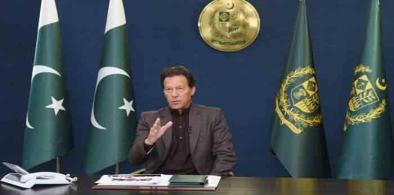
Imran Khan’s move, like the Kartarpur Corridor, is bound to have the blessings of the powerful Pakistan Army, writes Mahendra Ved for South Asia Monitor
Colombo’s biggest source of China-dependence is to service its external debt; it already owes China over $5 billion in past loans, writes N. Chandra Mohan for South Asia Monitor
Becoming carbon-neutral by 2070 will not only help the world but will also make India a new industrial power, writes Anil K. Rajvanshi for South Aisa Monitor
As Islamabad embraces hardline Islamists, life for minorities in Pakistan is becoming tough, writes Mahendra Ved for South Asia Monitor
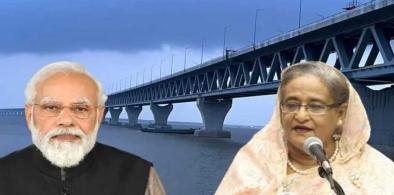
From extending aid to Sri Lanka to building mega projects, Bangladesh is transforming its image to emerge as a South Asian miracle, writes Pathik Hasan for South Asia Monitor
Kangana Ranaut is just one offshoot of an ecology where fact and truth have been systematically torn away from the national discourse to be replaced by ideologically tailored half-truths and lies, writes Mayank Chhaya for South Asia Monitor
A Pakistani film looks at the 1971 war anew and wants Islamabad and Dhaka to bond, writes Mahendra Ved for South Asia Monitor
In India, festivals have an interesting blend of representation through dolls, especially during the agricultural season of autumn, writes Dr. Lopamudra Maitra Bajpai for South Asia Monitor

With Pakistan's built-in political dominance of Afghanistan, the economic control can only get stronger, writes Hamayun Khan for South Asia Monitor

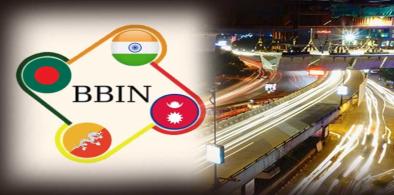
Pakistan and India should work together to revive SAARC to maximize regional interests, writes Pathik Hasan for South Asia Monitor

Having adopted hardcore Islam over the years, and using it to enact terrorism as a state policy, the Pakistan government can hardly afford all-out confrontation with the TLP, writes Lt Gen P. C. Katoch (retd.) for South Asia Monitor
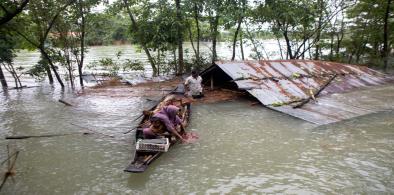
Conclusion of bilateral arrangements on sharing common water resources will banish a constant source of misunderstanding and mutual suspicion between India and Bangladesh, writes Amb Sarvajit Chakravarti (retd) for South Asia Monitor
The Rohingya crisis is the result of a long-smoldering problem that may become the catalyst for new sources of conflict in the region, writes Kazi Mohammad Jamshed for South Asia Monitor