
Photo: UNICEF

Reimagining a Cooperative South Asia: A Next-Gen Agenda to Revive SAARC

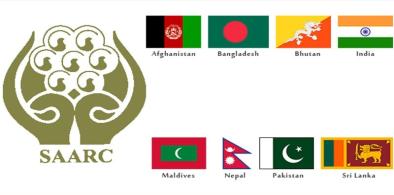
The revival of SAARC will not come from dramatic diplomatic breakthroughs. Instead, it will emerge through incremental cooperation in education, digital infrastructure, disaster response and trade facilitation. Crucially, the future of South Asian regionalism may depend on a generation that increasingly experiences the region not through borders but through shared digital, economic and cultural networks.

US–India Tariff Framework: Trade Concessions Should not Dictate Foreign Policy Choices

Trade adjustments between major economies inevitably reverberate beyond bilateral channels. Bangladesh’s potential tariff advantages in textiles could redirect labour-intensive supply chains. Pakistan, operating within the China-Pakistan Economic Corridor framework, may use India’s perceived alignment with Washington to advance its own strategic narratives. China itself will interpret these developments within the broader context of great-power competition and recalibrate its economic and strategic posture accordingly.

Why Nepal’s Gen Z Succeeded Where Bangladesh’s Failed

A more comprehensive lesson about 21st-century youth politics can be learned from the story taking place between Kathmandu and Dhaka. Gen Z has extraordinary mobilization skills. Protests can grow quickly and upend established power structures thanks to social media networks. But mobilization is insufficient on its own. Successful political transformation requires organization, leadership, and institutional strategy. Nepal’s youth built those structures quickly. Bangladesh’s did not.

Competition for Critical Minerals can be a New Arena for International Conflict

The move by Pakistan in the Security Council is an indicator of increased apprehension among developing countries about the fact that the fruits of energy transition need to be shared more equitably. The Global South has many mineral-rich countries which usually do not get much economic benefit from extraction while bearing its environmental and social costs.
 

More on Spotlight

Why Bhutan quit the BBIN motor vehicle pact

Prime Minister Dasho Lotay Tshering has said that if Bhutan’s infrastructure, economy and trade improves, the country will undoubtedly want to be part of BBIN-MVA, writes Rinchen Kinznag for South Asia Monitor 

With Russian help, Bangladesh set to enter the age of nuclear power generation

The Roppur nuclear power plant is expected to be a model of clean energy in Bangladesh and provide affordable, reliable and quality electricity in the long run, writes Pathik Hasan for South Asia Monitor

Rhetoric and reality: Pakistan must wake up and smell the coffee

The coming weeks pose a serious challenge to the Pakistani government to deal with the TLP’s threats and increasing pressure, writes Shantanu Mukharji for South Asia Monitor

Are Japanese investors losing interest in India?

India's withdrawal from RCEP resulted in India losing out on the opportunity of re-shoring of Japanese investment from China, writes S. Majumder for South Asia Monitor

How climate change is linked to the continuing tragedy of Pakistani and Indian fishermen callously ignored by both nations

India and Pakistan’s toxic official relations continue to take a human toll and hold South Asia hostage even as the region deals with the crisis of climate change which includes fish migration patternswrites Beena Sarwar for South Asia Monitor

Bangladesh PM Hasina's meeting with Pakistani envoy has a message for India

China and Pakistan are always scouring for opportunities by utilizing any kind of strain in Bangladesh-India ties, and would obviously try to exploit the present regional political scenario, writes Pathik Hasan for South Asia Monitor

Afghan women - and not Western 'civilizing missions' - will lead the path to change and their emancipation

Being oblivious to the history and traditions of Afghanistan, misreading the local culture, or a sickening obsession with 'Islamic terrorism' has always clouded the reality for the West, writes Anondeeta Chakraborty for South Asia Monitor

With SAARC in limbo, BBIN governments should energize grouping for regional growth and development

The Bangladesh-Bhutan-India-Nepal  (BBIN) sub-regional group has the potential to multiply the prosperity of its members, writes Amb. Sarvajit Chakravarti (retd) for South Asia Monitor

Annoying the gods: Trouble lies ahead for Pakistan Prime Minister Imran Khan

Pakistani analysts say the civil-military 'hybrid arrangement' has been severely dented and mutual mistrust has set in, writes Mahendra Ved for South Asia Monitor

A case for a Western Leg of the Quad for the Indian Ocean

A potent Western Leg of Quad in partnerships with Russia, France, Japan and possibly Oman, South Africa, Indonesia and Singapore remains a must to craft, writes Lt Gen Yash Malhotra (retd) for South Asia Monitor
Regional ferment: Questionable US moves as Turkey moves closer to China-Russia-Iran-Pakistan bloc

A US drone base in Pakistan will adversely affect Pakistan-China relations;  it will arouse Taliban anger with whom Islamabad is negotiating to curb the Tehrik-i-Taliban Pakistan (TTP), writes Lt Gen P. C. Katoch (retd) for South Asia Monitor
Behind the attacks on Bangladesh's Hindus: A battle for a nation's identity

Attacks on Hindu localities and places of worship, like temples and Durga Puja mandaps, are aimed at terrorizing Hindus so that they don't assert politically, stay away from voting and even vote against Awami League in frustration at lack of protection, writes Subir Bhaumik for South Asia Monitor 

Soft power rivalries: Imran Khan backs Turkish-Pakistani co-production to diminish 'Hollywood-Bollywood influence'

The Turkish actors are immensely popular in Pakistan, even as the women actors, glamorous and without any veils, even sporting swimwear in real lives, have drawn criticism from the Pakistani conservatives, writes Mahendra Ved for South Asia Monitor

Minorities under assault in Bangladesh: Can civil society turn the tide?

While the ruling Awami League remains committed to protecting the minorities, the administration has been often unable to prevent Islamist rampages, writes Tapas Das for South Asia Monitor

India’s philosophical, spiritual traditions can give a new direction to global sustainable development

Instead of following the unsustainable growth example of the US and China, which is based on extreme greed and a very materialistic outlook, we should give the world a new direction of development where high technology is guided by spirituality, writes Anil K. Rajvanshi for South Asia Monitor