Representational Photo

The Quiet Unraveling Of The Global Nuclear Order And Its Dangerous Implications

According to realist paradigms, nuclear weapons can be seen as the ultimate guarantee of national security and when there will be no restrictions, states will strive to dominate or achieve parity. Lapse of New START can thus create worsening security dilemmas, where efforts of any state to enhance its deterrent value is seen as a threat, and the state retaliates. The position of nuclear weapons as power projectors will, therefore, be more intense. 

Back-To-Back Visits And Differential Access: Sri Lanka’s Clever Foreign Policy Balancing Between India And China

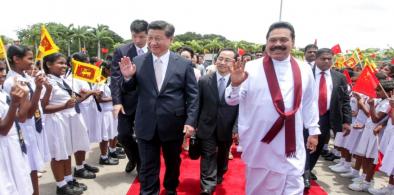
Some analysts are of the view that Sri Lanka’s differential access — full executive level for India versus foreign ministry level for China — may reflect Sri Lanka’s carefully calibrated foreign policy. Sri Lanka is leveraging India for urgent, high-impact assistance and wider policy coordination and engaging China for strategic reassurance and medium-to-long-term cooperative alignment that is less intertwined with immediate executive decisions.

Power In A Fragmented World: India Needs To Master Torque

India’s challenge, and opportunity, lies in mastering torque rather than seeking a mythical centre of gravity. In a world defined by flux, leverage matters more than alignment, and agility matters more than allegiance. Strategic autonomy will not be preserved through rigid doctrines, but through continuous recalibration anchored in national interest, economic resilience, and confidence in India’s civilisational depth.

Iran's Crisis Has Repercussions Beyond Borders: Will Sovereignty Survive Only By Permission?

India’s response to Iran’s crisis illustrates the dilemmas facing middle powers navigating a polarised global order. While reaffirming principles of sovereignty, non-intervention and dialogue, New Delhi has largely confined itself to cautious diplomacy. For a country that positions itself as a voice of the Global South and a defender of strategic autonomy, such restraint invites scrutiny. Silence at moments of legal strain is never neutral. It contributes to the gradual normalisation of coercive precedent. 

More on Spotlight

Dependence on tourism devastates Maldives; need to look for sustainable revival strategy

India’s timely help to the Maldives is not without detractors, especially the political opposition that has been protesting the presence of the Indian military, writes N Chandra Mohan for South Asia Monitor

Human rights a matter of concern in South Asia; time to bring about positive changes

Despite recurrent political chaos, often fuelled by cultural and religious clashes, there are some human rights organisations that are working for the welfare and dignity of each individual in South Asia, writes Reeti Prakash for South Asia Monitor

Quad needs to transform into an Indo Pacific Collective against a belligerent China

It would be prudent for Quad to organize itself as a coherent force in an early timeframe to counter the increasing Chinese aggressiveness, writes Lt Gen Prakash Katoch (retd)  for South Asia Monitor

China factor will continue to impact India-US relations

With both India and the US worried about Chinese designs in Asia and the world, both will be eager to forge strong political, security and economic relations, writes Aneek Chatterjee for South Asia Monitor

Whoever wins the US election, Earth is the loser

Whoever is the winner, the planet would be the loser. The margins of the defeat of the planet would depend on who wins the American presidential race, writes Rajendra Shende for South Asia Monitor

EU must use its moral weight to put Pakistan on the blacklist of FATF

Indeed the time has come when the question should not be whether Pakistan deserves GSP+ privileges, but whether it is time to impose tough economic sanctions on the country, a failed state that has only served to provide a safe haven to tens of thousands of global terrorists and whose only raison d’etre is to kill and harm innocent civilians all around the world and destabilise the peaceful democracies like the European Union and India, writes Sunil Prasad for South Asia Monitor 

Is Pakistan really concerned about a safer environment?

Pakistan is good at making policies but very bad at implementing them. The negligence of the Pakistan government in making development and business entities follow the EMP procedure has neither been debated nor discussed nor followed by strong laws, writes Furqan Hyder Shaikh for South Asia Monitor

Is Pakistan on the cusp of a revolution?

The likelihood of more rebellions against the Imran Khan government and army threatens to tear asunder the fragile religious and societal fabric of Pakistan, writes Pranay Kumar Shome for South Asia Monitor
 

Remembering Indira Gandhi: Repression and partisan goals lead to chaos

Many lessons could be learned from Indira's murder. The first is that there will be repercussions for repression and authoritarian tendencies; and second, political power should not be used for partisan goals, write Dr Vineeth Mathoor & Sunil Kumar for South Asia Monitor 

With growing US interest in South Asia, can Bangladesh reduce its dependence on China?

For the first time, Biegun made it clear through his visit that Bangladesh has strategic importance. This is for the first time an attempt has been made by the US to engage Dhaka directly since China took several proactive measures to help Bangladesh deal with COVID-19, writes Swadesh Roy for South Asia Monitor

Pakistan Army in growing political storm: Risks of umpire becoming a player to shield 'proxy' PM

Even during the rule by earlier ‘proxies’ of which Nawaz was certainly one, the military was not exposed to attacks like the ones at the three back-to-back opposition rallies through October at Gujranwala, Karachi, and Quetta. This is an unprecedented situation. The Army has lost some of its image as the nation’s ‘saviour,’ writes Mahendra Ved for South Asia Monitor

India should take steps like the US to sustain its artists in COVID era

Given the enormity of the challenge - there are nearly a dozen classical and more than 150 folk dance forms in India - efforts to support artists need to be scaled and replicated throughout the country, writes Frank F. Islam for South Asia Monitor 
India, US draw strategically closer in shifting global geopolitics

Most major Asian  nations have deep concerns about Chinese assertiveness and hegemonic orientation under President Xi Jinping, writes Cmde C Uday Bhaskar (retd) for South Asia Monitor

Pakistan on the boil: Political instability will impact economic revival

The attention of the current regime in Pakistan will be diverted to firefight for survival and inevitably delays the implementation of crucial reforms to strengthen the economy, writes N Chandra Mohan for South Asia Monitor

Sextortion a growing trend in South Asia; needs to be tackled globally

According to the Bangladesh National Woman Lawyer Association, every year an average of 11 women in the country commit suicide due to cybercrime, writes Monira Nazmi Jahan for South Asia Monitor