The nation, and especially Hindus and Muslims, will be waiting with bated breath to see what impact the RSS supremo’s advice has on the ruling BJP, writes Amulya Ganguli for South Asia Monitor


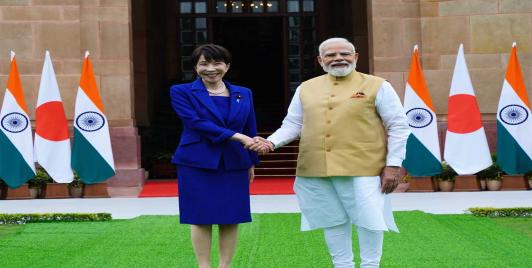
India and Japan should conduct regular stress tests involving scenarios such as disruption to an energy route, a cyberattack on logistics infrastructure, loss of an undersea cable or the unavailability of a specialized defense component.
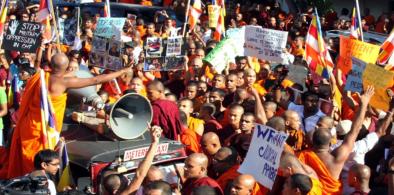
Sri Lanka’s Constitution gives Buddhism a special position under Article 9 while also protecting freedom of religion under Article 10 and related constitutional provisions. The government therefore has responsibilities both to protect Buddhist traditions and to ensure that the law is applied fairly across religious communities.

Some observers wrongly assume Europe's current crises will lead to a retreat from Asia. The opposite may occur. The EU's internal turmoil is accelerating a fundamental redefinition of its external priorities. South Asia is becoming increasingly important

Air power will remain central to national security. Whether India has enough of it, in the right form, and can afford it in scarce dollars, is still an open question. ACM Singh is to be commended for his distinguished service and stellar leadership – and more importantly – rendering objective professional advice to the apex leadership, an increasingly rare trait in the current times.
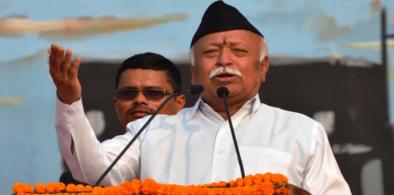
The nation, and especially Hindus and Muslims, will be waiting with bated breath to see what impact the RSS supremo’s advice has on the ruling BJP, writes Amulya Ganguli for South Asia Monitor

Dilip Kumar suffered during the phases when neighbors Pakistan and India went to war, but his popularity and the run of his films remained unaffected, on both sides of the border, writes Mahendra Ved for South Asia Monitor
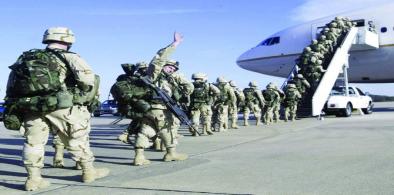
Pakistan fails to realize that with US troops exiting Afghanistan, Washington will no longer overlook the generation of terrorism and recruitment of child soldiers by Pakistan, especially when it is wedded to Beijing against the US, writes Lt Gen P. C. Katoch (Retd) for South Asia Monitor
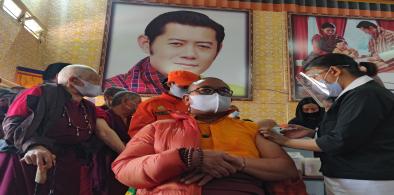
Although Bhutan will succeed in its vaccination drive, the scramble in the South Asian region for doses underscores the highly iniquitous access to vaccines to fight Covid-19, writes N. Chandra Mohan for South Asia Monitor

The Chinese Communists were never shy in shaking hands with insurgents and rebels from India. In contrast, the Dalai Lama has never wielded a weapon. In that sense, he is also a Mahatma Gandhi, writes M.R. Narayan Swamy for South Asia Monitor
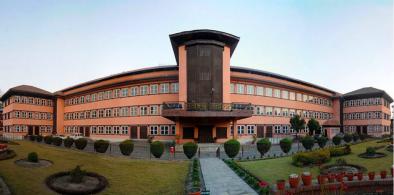
The Supreme Court of Nepal issued 246 verdicts in 2019-2020 to be implemented by the various ministries, The government, in most cases, didn’t comply with the court orders, writes Ravi Nayak for South Asia Monitor
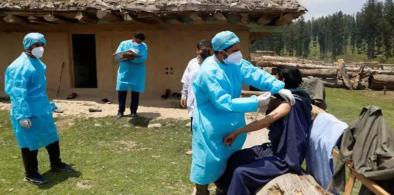
The government’s vaccination outreach to remote border areas, in Kashmir and the Northeast, and the local people's smiling embrace of these efforts was an indication of their comfort level and confidence in the Indian system, writes Nilova Roy Chaudhury for South Asia Monitor
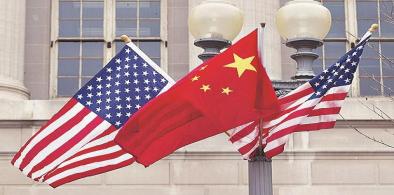
In the long run, if tactically implemented, the B3W initiative can also help India and its allies balance China’s String of Pearls strategy in South Asia and beyond, writes Pradeep S. Mehta for South Asia Monitor
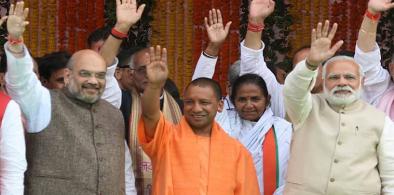
A defeat in Punjab or in Goa will not bother the BJP too much. But UP is different not only because its location in the heartland has always provided significant pointers about political trends, writes Amulya Ganguli for South Asia Monitor
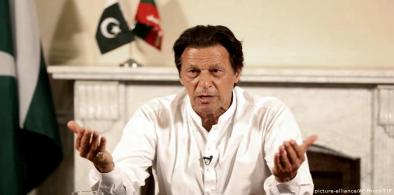
“Hollywood-Bollywood vulgarity” has been one of Imran Khan’s pet peeves for long and he has ordered the drafting of a new nationalist, culturally-centred film policy for Pakistan that is yet to be made public, writes Mahendra Ved for South Asia Monitor

Public health experts believe that Bangladesh, despite having a good record of conducting vaccination programs, has failed in the case of the Covid jabs because of its earlier reliance on a single vaccine, writes Rakib Al Hasan for South Asia Monitor
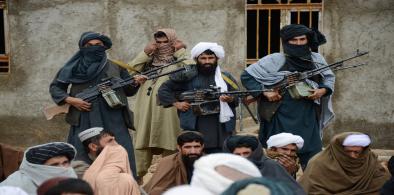
If the Afghan government can accurately manage the spontaneous movements of the people and prevent them from becoming mere tools for the warlords, not only can it create a new front against the Taliban, but also mobilize public opinion to a large extent, as it is already doing to some extent, writes Saleem Payenda for South Asia Monitor
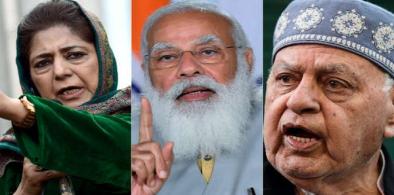
Unless Kashmir moves towards democratic governance - and New Delhi is able to reach some kind of modus vivendi over it with Islamabad - it will remain vulnerable to extremist influences and spillovers from the notorious AfPak terror sanctuaries, writes Tarun Basu for South Asia Monitor
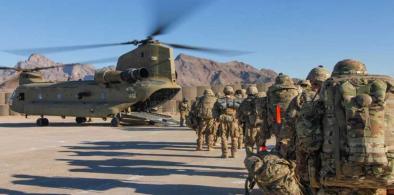
The US will realize its strategic blunder of surrendering Afghanistan to the Taliban after the entire Af-Pak-Iran region comes under Chinese influence, writes Lt Gen Prakash Katoch (Retd) for South Asia Monitor

Hamstrung by the shortage of digitally skilled hands, Japan needs to rope in digital talents from India that constitutes one of the biggest digital talent pools, writes S. Majumder for South Asia Monitor