India's Prime Minister Narendra Modi meets Bangladesh's interim government head Muhammad Yunus

Bangladesh–India Relations at a Crossroads: Needed Recalibration, Not Rupture

The current strains in Bangladesh–India relations should therefore be seen not as an inevitable deterioration, but as a test of diplomatic maturity. Bangladesh and India share more than geography and history; they share a responsibility to ensure that temporary political frictions do not harden into structural mistrust. In a time of regional uncertainty, neither country benefits from a relationship defined by grievance or miscommunication. 

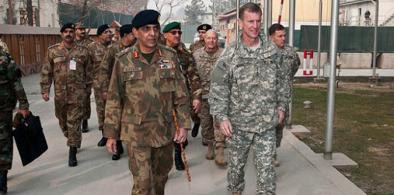
A Dangerous Power Grab in Pakistan; Unpredictable Consequences For Region

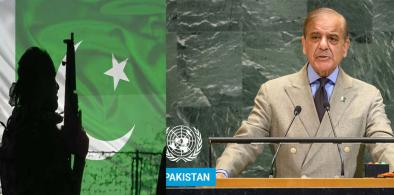
The 27th Amendment, celebrated by its proponents as a security reform, is in reality a political coup executed through constitutional means. It marks not only Munir’s personal triumph but the institutional victory of the military over all other state authorities. As history warns, empowering any unelected institution above the republic’s elected will invites instability—not strength. Pakistan may soon discover that consolidating military power does not secure the nation’s future, but instead places it at greater risk

How Foreign Digital Influencers Are Tarnishing India’s Global Image

India must now transition from conventional soft-power thinking to visibility governance—the systematic management of how the country appears, circulates, and is emotionally interpreted across global platforms. Failure to do so will leave India’s global image increasingly shaped by commercial incentives outside Indian control.  

Afghanistan Should Not Get Caught In The India-Pakistan Strategic Rivalry

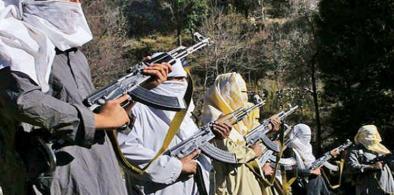
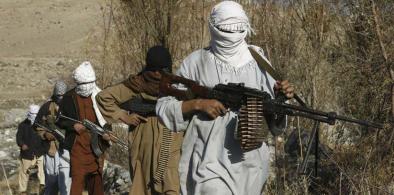
The strengthening of Taliban-India ties runs counter to Pakistan’s interests. The more border clashes intensify between the Taliban and Pakistan, the more secure the Kashmir region and the Line of Control (LoC) become for India. Under such conditions, Pakistan will remain preoccupied with its northwestern border, giving India a unique opportunity to consolidate its control over Kashmir and potentially weaken, drive out, or eliminate Kashmiri militant groups 

More on Spotlight

Cooperative security in South Asia: Subregional groups can show the way

In SAARC political agenda always dominated social and economic issues, whereas in successful regional organizations like ASEAN and EU, socio-economic issues prevailed over politics, writes Aneek Chatterjee for South Asia Monitor

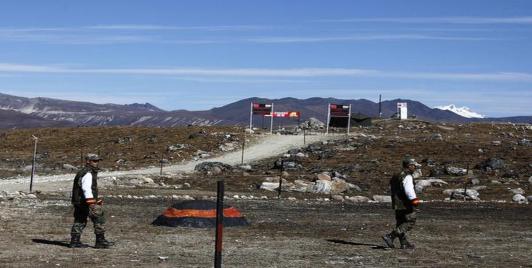
India-China border dispute: Is a give and take possible now?

The immediate task is to get the PLA to leave Galwan without loss of face. On the other hand,  could this just be the opportunity for the two sides to settle new LACs in the three sectors? writes Mohan Guruswamy for South Asia Monitor

Afghan media working under constant threat

The militants and various violent groups want to suppress the 'voice of reason' and in doing so they target the media with utmost force and hatred. The factor of impunity is one of the main reasons for continued atrocity towards Afghan journalists and media, writes Dr. Sanchita Bhattacharya for South Asia Monitor

India–Australia summit: A meeting of minds

With shared concerns over Chinese hegemony, the time is right for a closer engagement between New Delhi and Canberra, writes Amit Dasgupta for South Asia Monitor

Is America’s middle class more sensitive than India’s?

What racism is in the world’s oldest democracy, communalism unfortunately is in its largest version in India. It is no secret that sizeable sections of India’s largest community, the Hindus, are communal,  writes Amulya Ganguli for South Asia Monitor

Aftermath of COVID-19: Rise of a new social class in Nepal

After the pandemic, migrant workers, including the semi-skilled and skilled labour and small-scale business people, and private job holders, who are returning from abroad, will form the neo-lower class - a new working class - that will constitute a significant population in Nepal, writes Roshan Chirag for South Asia Monitor 

ICDS can become a model for South Asia to improve lives of children

South Asian countries can use ICDS as a blueprint and further formulate their respective policies following a tailored and local approach depending on the domestic factors pertaining to their region, writes Vishwajeet Singh Raghav for South Asia Monitor

Nepal needs a comprehensive pandemic law to battle coronavirus

It is advisable for the governments - of both Nepal and possibly India - to take a leaf from the UK Coronavirus Act, 2020 which was enacted for defeating COVID-19, writes Jivesh Jha  for South Asia Monitor

Why biodiversity conservation is necessary for dealing with the pandemic

On this Environment Day, let us commit ourselves to protect the biodiversity, for our own existence, writes Pradeep S. Mehta, George Cheriyan & Simi T. B.for South Asia Monitor

Are we observing World Environment Day or World Emergency Day on June 5?

State of the environment today is certainly in a state of emergency. Many would call June 5, 2020, as World Emergency Day. In reality, today environment and emergency have indeed become synonyms, writes Rajendra Shende for South Asia Monitor

Nations should not discriminate against refugees, migrants during pandemic

This outbreak and the requirements of precautionary measures have emerged as an extra health threat to migrants who work abroad to keep their families well and also to asylum seekers. These people play a crucial role both in the economy of the countries they live in and in their countries of origin too,  writes Abdul Alim for South Asia Monitor

India's COVID-19 stimulus package: Will it revive the economy?

There seems to be a strong argument that the singular focus of the stimulus package should have been a fiscal stimulus, which would have increased public spending in physical or human capital, raised money in the hands of residents by direct cash transfers and subsidies and provided safety nets like job guarantee and unemployment benefits, writes Partha Pratim Mitra for South Asia Monitor

As corona rages in Bangladesh, opposition eyes opportunity

Leaders of the BNP and Jamat-E-Islami are thinking that the corona pandemic will totally change the political situation in the country and will help them seize power once again, writes Swadesh Roy for South Asia Monitor 

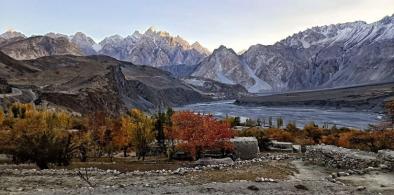
Will Gilgit-Baltistan become a new regional flashpoint?

With India–China military tensions already high in parts of eastern Ladakh, the construction of the Diamer-Bhasha dam will add to new security challenges for India, writes Nilova Roy Chaudhury for South Asia Monitor

India-Bangladesh waterway project will herald a new chapter in bilateral cooperation

This inland waterway route looks all set to ensure efficient and effective cargo movement between the two neighbours and herald a new chapter in bilateral cooperation in South Asia, writes Sreeradha Datta for south Asia Monitor