
India must look to improve the quality of education and make it affordable equally to all irrespective of religion or caste. Else, we will continue to feel safe in “reservations” and never ever look at improving the quality of the society
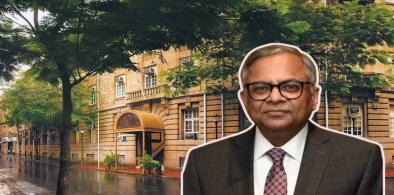
Companies that align what they earn with what they stand for can transform industries, drive innovation, and actually leave things better than they found them. They build trust that lasts. They attract talent that stays. They create customers who come back. The future belongs to businesses that figure out how to balance purpose and profit. Indian founders face a choice: build like Tata, with purpose woven into the foundation, or chase short-term efficiency like IndiGo and Micromax until the wheels come off.
The emphasis on Vikisit Bharat (Developed India) is to be welcomed. Who would not want India to be developed fully but there remain huge questions in terms of the direction of this development and what the nature of development ought to be in an India where inequality remains high, health services are poor, and education poses many challenges that have been highlighted time and again. Consider that the total percentage on education (Centre and State expenditure on education combined) is merely 3.3% of the GDP, and on health it stands at just 1.5%. This is a shockingly low number
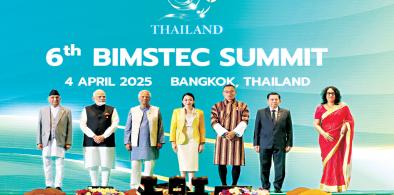
It may be argued that invoking the Bhutanese king’s principled stance as a reference point for a country as vast and diverse as India is deeply flawed—or, at best, a theoretical abstraction. Yet the fact remains: the ethos of good governance knows no geographical boundaries. If the highest leadership of a small, landlocked nation with limited resources could believe in, and strive towards, such ideals, why should our country fall short of visionary leadership, especially when it is far larger and endowed with greater capacities, opportunities, and strategic advantages?
In this backdrop, opening up India fully to Chinese, including inviting the Chinese delegations, is akin to arranging visits of KFC owners to poultry farms! The hubris that this was to familiarize two big political parties and two economic powers with each other must have amused Beijing endlessly. Finally, insecurity is palpable in India’s handling of China and the US. About time we get over this.
India must look to improve the quality of education and make it affordable equally to all irrespective of religion or caste. Else, we will continue to feel safe in “reservations” and never ever look at improving the quality of the society
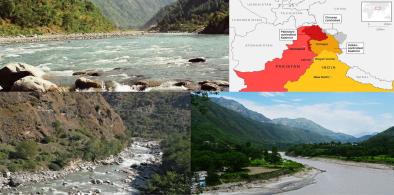
China was miffed with Hasina giving the Teesta project to India but why China gave $11 million to Bangladesh instead of earlier promised $3 billion during Hasina’s visit is because it perhaps knew regime change in Dhaka was coming?
How quickly a country which was coasting along for a decade of strong, export led growth with improvements in poverty as well as human development indicators and social capital, can crumble.
There are any number of disasters happening in India, with the sad conclusion that the elected representatives of the people are failing in their duties and remain indifferent to pressing local issues and the needs and grievances of the people.
Such behavior from the Pakistani State is a concern for the future of Balochistan. Pakistan needs to thoroughly review its policies in Balochistan; otherwise, it may not be long before another Bangladesh is born.
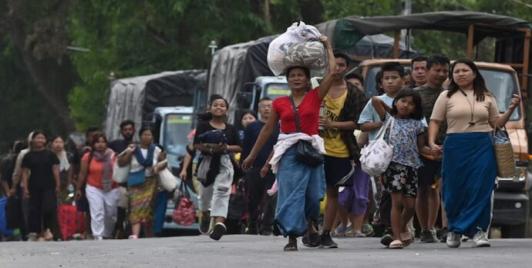
The rise of ethnic violence in Manipur has had a devastating impact on the state. Thousands of people have been killed and displaced from their homes. The violence has also crippled the economy and disrupted the development of the state.
The government’s answer is to keep the pot boiling as it lives a Rip Van Winkle story – almost as if it slept through the election results and now wants to live an old reality in a new world.
The proceedings of the recent parliamentary session create doubts as to whether our MPs are capable of setting up such standards. By their behavior as seen currently, they are setting up a very bad example for the younger generation and are doing great harm to the fiber and fabric of a resurgent India.
There should also be no doubt that these protests are being fueled by China and Pakistan to depose the pro-India Sheikh Hasina Government and install a pro-Islamist anti-India government like the erstwhile BNP-led government in Bangladesh.
The reality is that communal politics of the kind played by the BJP, led by Prime Minister Modi, has stopped paying dividends of the kind that it once did.
As the world watches the unfolding drama in the United States, the implications for South Asia, particularly India, Pakistan, and China, are profound
The Baloch resistance movement faces an unprecedented threat in the form of deepfakes and propaganda propelled by 5GW tactics. The strategy aims to destabilize and discredit the movement, paving the way for a tightened grip on the region.
This need got a number of us doctors working in different parts of India to come together as a group. We post our questions in the group, or call up an expert for guidance: How do you manage fluctuating blood sugar in a young woman with diabetes? How do you treat malaria in a pregnant woman? We meet online once a week - to share new knowledge, case studies, and also ask questions.
The US needs to acknowledge that it needs India more than the vice versa. It would be good for the Biden Administration to get off the high horse and not issue “warnings” that can adversely impact the existing bilateral relationship.
While leaders like Mahatma Gandhi to Rahul Gandhi have expounded on the humane aspect of Hinduism, the Hindutva fraternity are seen by its critics to have treaded the path of hate and violence.