Representational Photo

This Is Not The Road To A Developed India

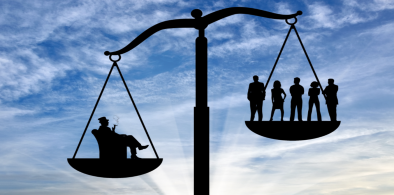
The emphasis on Vikisit Bharat (Developed India) is to be welcomed. Who would not want India to be developed fully but there remain huge questions in terms of the direction of this development and what the nature of development ought to be in an India where inequality remains high, health services are poor, and education poses many challenges that have been highlighted time and again.  Consider that the total percentage on education (Centre and State expenditure on education combined) is merely 3.3% of the GDP, and on health it stands at just 1.5%. This is a shockingly low number

India Needs A Strong Political Culture That Upholds Democratic Values

It may be argued that invoking the Bhutanese king’s principled stance as a reference point for a country as vast and diverse as India is deeply flawed—or, at best, a theoretical abstraction. Yet the fact remains: the ethos of good governance knows no geographical boundaries. If the highest leadership of a small, landlocked nation with limited resources could believe in, and strive towards, such ideals, why should our country fall short of visionary leadership, especially when it is far larger and endowed with greater capacities, opportunities, and strategic advantages?

India Needs To Get Real With The US and China

In this backdrop, opening up India fully to Chinese, including inviting the Chinese delegations, is akin to arranging visits of KFC owners to poultry farms! The hubris that this was to familiarize two big political parties and two economic powers with each other must have amused Beijing endlessly. Finally, insecurity is palpable in India’s handling of China and the US.  About time we get over this.

Somnath Temple: Instrumentalizing History As A Political Tool

History is not a tool to divide society and perpetuate the injustices of the past. It is there to show us what wrongs have happened in the past which should not happen again. We need to march towards a just society where all live the life of dignity and respect, a society where all of us enjoy equal citizenship rights.

More on Perspective

Institutional arbitration in India remains a non-starter

Four years after the passage of the law, the promised Arbitration Council of India to authorise and regulate arbitration institutions has yet to be operationalised. Save for a small number of arbitration institutions established and funded by well-known law firms,  some state governments do not support professionally established arbitration institutions.

The Bangladesh-Bhutan trade and transit agreement is a shot in the arm for regional cooperation

This transit agreement will pave the way for energy imports from Bhutan. A Free Trade Agreement (FTA) was signed between the two countries in 2009. After last month's agreement, the FTA will gain momentum. The agreement will enable Bhutan to use Bangladesh's air, railways, river ports, land and sea ports since Bhutan is a landlocked country and has no river or sea ports of its own.

The US Democracy Summit is an instrument of power politics: A Bangladeshi perspective

India, Pakistan, Nepal, and the Maldives are the four countries from South Asia among 120 countries at this year's Democracy Summit. Bangladesh, Sri Lanka, and Afghanistan were not invited, but Pakistan, one of the most authoritarian and corrupt countries in South Asia with scant respect for human rights, was invited.

A stress test for Indian democracy, a turning point for India?

India has some deep soul-searching to do as we explore the question: Are we truly a democratic nation? Or is democracy the story we sell to ourselves and the world when the nation and its people know that we are not what we think or claim to be?

After giving a clean chit on human rights, US should lift sanctions against Bangladesh's RAB

Bangladesh still has a terrorism problem and cross-border drug cartels pose a significant threat to its national security. And the elite force remains one of the important agencies to curb terrorism and narcotics control. 

Need to understand the invisible economics of nature

The reason we are losing nature boils down, in my mind, to one basic problem: our inability to perceive the difference between public benefits and private profits.

Bangladesh has a resilient economy, will not collapse like Pakistan; is streets ahead of it in all-round development

Pakistan will never catch up with Bangladesh in the race for economic development. The GDP growth rate of Bangladesh increased gradually to 8.13 percent in the fiscal year 2018-19. In 2020-22, the impact of the novel coronavirus pandemic and the Russia-Ukraine war slowed down the growth rate of Bangladesh, but it was much higher than that of Pakistan and the growth rate is estimated to exceed 6.5 percent in the fiscal year 2022-23.

S. Jaishankar and George Soros: Politically at odds, but both speak up for the Global South

Another result of Jaishankar’s active advocacy for the Global South is the recently held “Voices of Global South Summit” which was hosted by India. Jaishankar led the summit with participation from 120 developing countries.

IMF‘a call to regulate cryptocurrencies a necessary step to ensure global financial stability

I believe that the increased regulation of cryptocurrencies is a necessary step to ensure the stability of the financial system and protect consumers, and can be achieved through collaboration between governments and industry participants.

A crying need for empathy and equity in India's education system

There is a culture that refuses to understand the pain of an entire class of population subjugated over the centuries, a harshness that translates in general to every other aspect of Indian life, superimposed on which is the ever-present threat of violence (State and non-State) that makes the claim of a nation that stands for non-violence hollow.

Giving poor easier access to welfare benefits: Need to develop citizen experience-focused policies

Across India, accessing the correct eligibility documents is many times harder for the poor than an average privileged caste and a class person. If we add complex digital interfaces for application to paperwork ordeal, then the experiences of the poor worsened. This burdensome citizen experience either dampens the confidence of citizens in welfare policy or reduces the net benefit access due to the cost borne by the citizen.

Elections in Meghalaya: A paragon of civility in India's coarse democratic politics

It was interesting to observe how focused party representatives and voters in this small northeastern state bordering Bangladesh were on basic development issues; and how vocal voters are in seeking their basic rights at the local level, perhaps showing what genuine grassroots democracy should reflect. 

Clean up the mess: A case for action in the Adani saga

The government has a choice it can sit back and do nothing, or it can choose swift regulatory action and full-fledged investigations into what has been alleged to be, in the words of Hindenburg Research, “the world’s 3rd richest man pulling the largest con in corporate history.”

Oil magnet to lead the global conference to phase out oil? UAE has a unique opportunity to show the way: An Indian perspective

Dr Al Jaber has been awarded the Champion of the Earth award from UNEP.  Indian Prime Minister Narendra Modi conferred on him a lifetime achievement award for his contributions to energy security, building bridges to emerging Asian economies, and reshaping traditional energy business models.

Lessons from the Adani stock crash: Indian regulator must restore faith in the market

No doubt that the Adani Group will do its utmost to bounce back, but regulators and policymakers must ensure that investors’ trust in the markets is not dented. India’s stock markets are world leaders in terms of technology and surveillance systems. The regulators and exchanges must match that in terms of excellent governance and strengthening the foundation of trust.