Wangchuk was arrested - he has since been released - obviously to allow allotment of land to corporates without engaging with the locals. Under the circumstances, how much trust of the Ladakhis the government can regain, remains questionable.


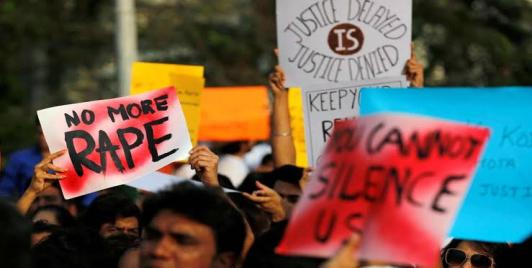
The Chopra siblings' murder in 1978, the Nirbhaya case of 2012, R.G. Kar Kolkata in 2024 and Kalkaji in 2026 belong to different historical contexts. Yet they reveal a recurring difficulty in Indian governance: we are capable of extraordinary mobilisation after extraordinary violence, yet less consistent at converting that mobilisation into permanent institutional practice.

The Tata group is a national icon, a picture of enterprise, growth and service packed in a business model that many Indians cherish and hold as an exemplar. That model, in which the bulk of a great enterprise’s profits flows to charitable trusts for the public good, is rare anywhere in the world.

Aggressive migration of youth and workers to metro cities in search of better opportunities is common across the region. And so is the response deficit by local and central governments in providing them with basic, dignified lifestyles. The time has come for the elected representatives to think differently and narrow the gap between government schemes and results on the ground.

These achievements have positioned India as a digital governance exporter. Singapore, Nepal, Bhutan, France, Mauritius, Sri Lanka, and the United Arab Emirates have already established UPI connectivity, and more than 50 countries have expressed interest in replicating aspects of India Stack’s open digital infrastructure.
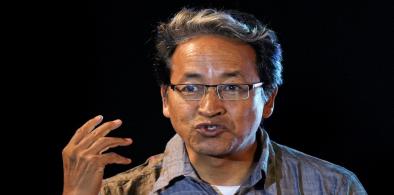
Wangchuk was arrested - he has since been released - obviously to allow allotment of land to corporates without engaging with the locals. Under the circumstances, how much trust of the Ladakhis the government can regain, remains questionable.
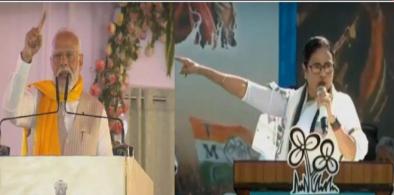
As owners of the republic—not merely beneficiaries of electoral inducements timed for political gain—electorates must act as empowered, assertive and demanding citizens, carefully examining party positions on substantive issues. They must insist on time-bound job creation strategies and measurable improvements in key sectors such as education and healthcare, rather than settling for vague manifesto assurances.
What has gradually been lost is not faith, but the culture of debate that once accompanied it. Public debate – śāstrārtha - was once central to intellectual life. Ideas were examined, challenged, and defended through reasoned argument. Today much of that space has been replaced by shouting matches, where volume often substitutes for thought - unfortunately even within our legislatures. Questioning, once considered an essential part of the search for truth, is now too easily mistaken for disrespect.
Dias promoted civil–military cooperation on an unprecedented scale, facilitating the large-scale settlement of Sinhalese populations in the dry zone as a bulwark against Tamil separatism. In some respects, this approach resembled the Jewish settlement policies in the British Mandate of Palestine, which may have influenced Dias’s thinking.
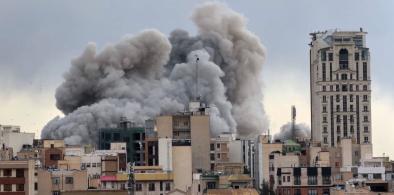
Ray Takeyh, senior fellow for Middle East studies at the CFR believes that the West could have got much better dividends without this war. He says that Araghchi had tabled proposals that called for the suspension of uranium enrichment for several years before allowing it to then resume at low levels. Linda Robinson, CFR’s senior fellow, also feels that there will be mass American casualties if special forces are deployed. Already Arab States are upset with these joint operations with Israel. The consensus among CFR experts is that Trump’s ambitious objectives cannot be achieved merely with joint assaults by air or sea.

Was this the legacy that the great freedom fighters from Punjab – or extend that logic to rest of India and Pakistan where custodial deaths are common – would have wanted their land and its future generations to inherit? As if the breakdown of the country and its gory partition with a divided Punjab were not enough to torment them in their graves, wouldn’t this thought leave them completely shattered and desolate: this divided land is united in its conviction to perpetuate the very colonial mindset they fought.
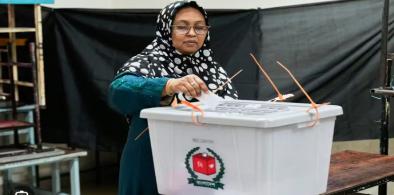
The Interim Government arranged extensive state protocol and privileges to the government-sponsored party, National Citizen Party (NCP), parties close to IG like Jamaat e Islami (JI) and their alliances, almost as if they were the government themselves. Similar privileges were given to the BNP and its allies. But no such facility was extended to the JP.
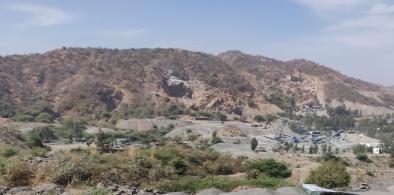
A democracy that is cutting down forests for votes risks mortgaging its ecological future for an electoral present. Welfare is essential; appeasement is corrosive. The difference lies in fiscal discipline, transparency and respect for citizens, who are not beneficiaries, but are owners of the republic. If we do not draw that line now, next year’s burden will demand another forest.
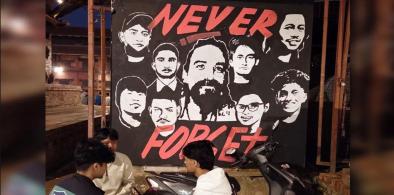
The smartphone that freed a generation is now being used against it. The platforms that carried the protest are now carrying the smears. The digital spaces where young Nepalis found their political voice are today flooded with manipulated images, fake audio, and AI-generated lies targeting the very candidates their movement made possible. The weapon and the wound are the same object.
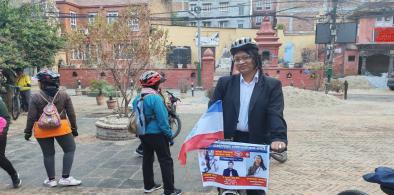
Politicians, who were silent, complicit, or even instigative during last September’s tragedy, are trying to rebrand themselves on social media to be palatable to “Gen Z” - Nepal’s youth population that was instrumental in overthrowing the last government, leading to comparisons with Bangladesh’s ‘Monsoon Revolution’ of 2024 and Sri Lanka’s Aragayala of 2022.
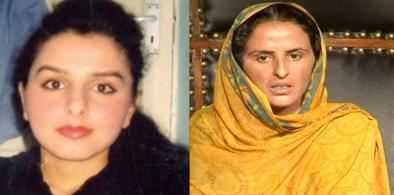
What links these cases — Pakistan, Britain, India, the Netherlands — is not geography or faith, but backlash. ‘Honour’ is used as a pretext to kill not because women are obedient, but because they are not. It is activated when women seek education, choose partners, leave abusive homes, testify in public, or simply insist on being treated as full human beings.

How do our regulators allow a university to function with almost every leadership position, academic and administrative, occupied by a member of the promoter family? How does patent filing become a game, as alleged in this case, or how does a paper authored under the university on banging vessels to kill the coronavirus get written? The incident brought to sharp light how India has slipped into an education system run on high fees by private institutions with questionable credentials.
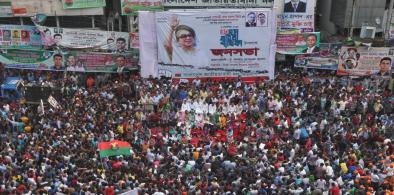
Under the BNP, particularly during Khaleda Zia’s rule, four major anti-India terrorist camps were being run in the Chittagong Hill Tracts. Notably, these terrorist training camps had Al Qaeda and Pakistan ISI/military instructors. As a young officer, Pervez Musharraf (later president of Pakistan) also served as an instructor in these terrorist training camps. To assume that the radical elements of the BNP will not be in league with the JeI will be the height of naviete.
India needs to evolve a comprehensive and integrated strategy for the defence of the LAC, one that brings together military preparedness, diplomatic engagement, infrastructure development, technological surveillance, economic resilience, and informed public communication. Such a strategy cannot remain confined to closed institutional silos; while operational specifics must remain confidential, the broad contours of national intent and preparedness should be placed in the public domain. Transparency at the strategic level strengthens public confidence, builds national consensus, and signals clarity of purpose to adversaries.
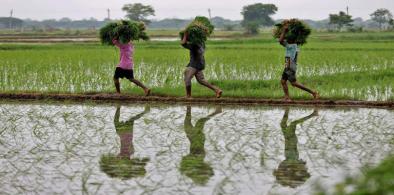
This is not a level playing field. American agriculture is industrial-scale, capital-intensive, and backed by massive state subsidies. Indian agriculture, on the other hand, survives on small and marginal farmers, fragmented landholdings, and minimal state support that often arrives late or not at all. Cheap imports don’t merely compete; they crush.