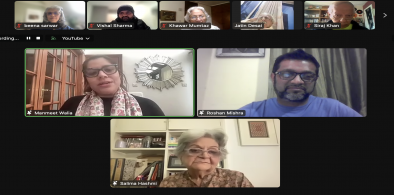


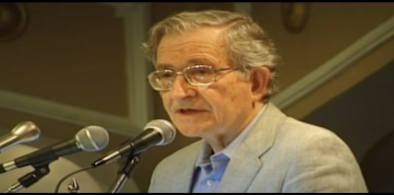
During the conversations that took place afterward, the journalists discussed why Nepal’s government, press, and civil society have not been more vocal about what they termed as a genocide being enacted by Israel in Gaza.
It is a neat division and the first part of 70 pages is the Kotia-Ketaki memoir. In the second section, Chandana picks up the narrative and weaves the micro family history of the Jonas family with the macro events of the late 19th century and her grandmother's journey that brought her to Santiniketan in the 20th century.
Today, the tape-jama survives on the margins of a rapidly changing marketplace. It is still found in local bazaars, though no longer a default festive purchase for children. Yet its significance lies beyond its material presence. The garment endures as a symbol of memory—of simpler times, of long summer afternoons, and of a cultural ethos shaped by resourcefulness and tradition. Its soft cotton folds carry stories of Bengal’s textile heritage, its artisanal practices, and its ability to absorb and reinterpret external influences. In doing so, the pinny becomes more than a childhood dress—it is a living archive of history and identity.
According to the latest (2024) survey by the International Mother Language Institute, 45 languages have been identified as existing now in Bangladesh out of which there are 11 indigenous languages including Lushai (Mizo)—that have become critically endangered. Based on UNESCO data, a handful of languages which have made it to the endangered list in Bangladesh are in such a forlorn state that only 5-12 older folks from respective communities can still converse in them.
And perhaps the greatest truth is this: when veterinarians do their work properly, the world stays normal. People drink milk without fear. Farmers sleep without panic. Markets remain stable. Outbreaks do not explode into disasters. Children grow up safer. Communities remain healthier. The world continues smoothly, unaware of how close it often stands to crisis.
During the conversations that took place afterward, the journalists discussed why Nepal’s government, press, and civil society have not been more vocal about what they termed as a genocide being enacted by Israel in Gaza.
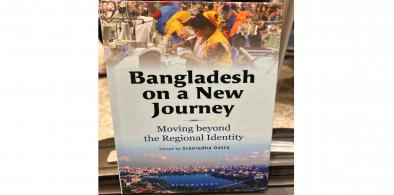
The essays cover distinct areas, exploring minority experiences and a wider Bengal, including, inevitably, West Bengal.
A democratisation of art, drawing from folk culture that is in direct contact with the realities of those who live close to the cycles of nature, represents a modern outlook that draws inspiration from contemporary reality.
The hyped technology has led us into a frenzied time where we either switch between TV channels or move our fingers on our smartphone screen for the next reel or newsfeed. Stuck within the labyrinth of visual images we are yet to find a new strategy to recover the lost humanity.
Against this backdrop, the staging of Dr Ahmed’s “Gandhi and Jinnah Return Home” in the Washington D.C. area offered a rare opportunity to witness peacebuilding at play. In one of the play's scenes, Jinnah and Gandhi resurface to debate the costs of partition alongside contemporary Indians and Pakistanis. After many rounds of dialogue, the two embrace one another.
The chemistry between Dharmendra and Shabana Azmi in the latest Karan Johar film ‘Rocky aur Rani’ suggests that Indian audiences are beginning to recognise that older people don’t just have a pulse, they actually have a heart!
Any serious conversation about AI also needs to take into consideration the role of deep fake using AI to wreak havoc among society and even intruding into private spaces for monetary and other gains.
Today the distance between the vision and way of life of Tagore and Gandhi and current perspectives is growing. And though the effort and work done with fervour in their names continue, most of that energy is outside India.
Ironically, the forced migration also laid the seeds of a diaspora in countries where Indians of another generation looking for better economic opportunities would not have normally settled.
What had started as unrest – in response to decades of failed promises, nepotism – had been reduced to a mob seeking revenge. The question remains on how to preserve the spirit of the former whilst recognising the nature of the latter.
A well-connected and bonded youth of the region can ensure a much happier, more creative society and contribute to a better future.
After all how objective or desirable can the Nobel Prize for Peace be if Mahatma Gandhi, the greatest messenger of non-violence the world has seen for centuries, never got it? His name was nominated several times but Sweden did not want to annoy Britain.
I am thrilled that Pakistan will be playing in India. I’m thrilled that this format allows an India-Pakistan encounter. Obviously, it’s something any cricket fan would look forward to. This is the World Cup and not a bilateral series, so it’s extra special.
And now Rita’s idea for a Tasveer Art Center, a progressive, secular, and inclusive safe place that would house a state-of-the-art auditorium, filmmaker's studio, art gallery, and a hall to hold up to 300 people among other cutting-edge facilities, is her latest dream project.
As we think of the relevance of ashram ideals in the thought of both Tagore and Gandhi, we realise that they were ecologically inspired. Gandhi Jayanti 2023 may help us consider the importance of an education engaging with our natural environment.