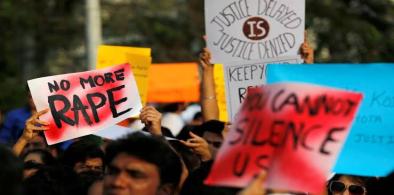
While leaders like Mahatma Gandhi to Rahul Gandhi have expounded on the humane aspect of Hinduism, the Hindutva fraternity are seen by its critics to have treaded the path of hate and violence.
The only way out for Bangladesh, the only way forward, the only way to deliver us from the current instability is to hold the elections as scheduled. This is what the Bangladeshi people want and this is what the country needs. We must all come together to make sure that it happens. The only people who benefit from elections being delayed are the enemies of the Bangladeshi people.
The Indian freedom struggle was inherently multi-religious, multilingual, and multi-ethnic, with women and men participating across communities to forge a united nation. While the Muslim League demanded Pakistan in Muslim-majority areas, the Hindu Mahasabha and RSS pursued the idea of a Hindu nation. The Constituent Assembly, however, embodied the collective will of an inclusive India and resolved symbolic questions such as Vande Mataram and Jana Gana Mana through dialogue and compromise.
The airline brought national disaster. The nightclub hotel was a more localised story. But both mock the nation and its growth story in their own ways, highlighting the hidden costs of a faster growth that has beaten the “Hindu rate of growth” but has brought us a disaster that unfolds at periodic intervals to shock the nation and ridicule its governance structures.
In such a world, the greatest danger is not that AI becomes alien. The danger is that humans start behaving less humanly by outsourcing thinking, surrendering responsibility, and hiding behind the machine while letting it make decisions we should be making ourselves. Leaders may find it convenient to blame the algorithm. Companies may find it profitable to exploit it. Ordinary citizens may find it easier to trust AI’s shortcuts than to cultivate patience and understanding.
While leaders like Mahatma Gandhi to Rahul Gandhi have expounded on the humane aspect of Hinduism, the Hindutva fraternity are seen by its critics to have treaded the path of hate and violence.
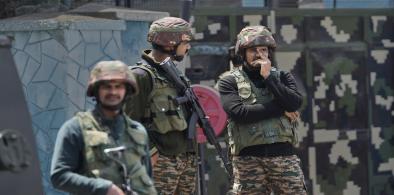
There is always resistance to any change and in a democracy with free media and freedom of expression, varied views on all matters are only to be expected and welcome. In this fast-developing world, an army can’t be static - or traditional - and frozen in an era of the past.
Babar Ali, a senior TTP commander, says, “Entire country (Pakistan) is now under our control; we are present in every corner of Pakistan.” Some 200 TTP fighters are located close to Pakistan’s largest nuclear facility in Dera Ghazi Khan in Pakistan’s Punjab
As the world turns more careful and looks to build with caution and care, the Indian State is going berserk in multiple directions with the goal of showing its strength outside India while ordinary Indians are getting the rough end.
Taking stock of the Kargil War 25 years later, what unfortunately emerges is that most of the important lessons have not been learnt, at least by India’s politico-bureaucratic establishment.
This also means unshackling the education sector, allowing greater freedom and autonomy to institutions of higher education in deciding curricula, courses, faculty hiring and salaries, student fees and programs. Otherwise, millions of our youth are wasting the prime years of their youth with a psychological burden, and grueling study with repeated attempts, to crack exams, where the odds of winning are worse than a lottery.
In that light, the words of Mohan Bhagwat signal discomfiture. But his hesitation to name Modi and call him out indicates that the RSS is caught in a trap of its own making.
There has to be a common thread holding the weave of a multidimensional diverse nation like India. The thread is definitely not how or to which God your pray (or not), what dress you wear (or wear no dress at all!), what you eat or not.
Without these reforms, the laudable objective of “India a Developed Nation by 2047” may remain a distant dream.
If India's states seek to compete with each other in a spirit of competitive federalism and use their political clout constructively for economic progress and welfare as several states have done there is nothing wrong.
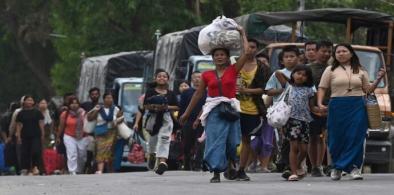
The rather curious silence on the part of the government regarding Manipur might have also led to the BJP losing in the state as well as suffering a decline in the overall seat share in the Northeast.
Now Angoncha Bimol Akojam, newly elected MP from Meitei-predominant Inner Manipur, has lashed out at the deliberate lawlessness and communal violence induced in Manipur, with both the state government and the Centre abdicating their responsibilities of governance in utter disregard of the Constitution.
When he came to power, Hyderabad was a backward city with dirty roads, Naidu had his vision of development. Taking a cue from neighboring Bangalore, Naidu began promoting hi tech industries and software skills in Hyderabad. He established Cyberabad and to express his seriousness travelled to Seattle and waited outside the office of Bill Gates of Microsoft for an hour to get an audience with him.
The tri-nation hydroelectricity corridor between India, Nepal, and Bangladesh will likely continue. Given that Modi has pushed for “Neighborhood First” in his interactions with South Asian countries, India’s collaboration with Nepal will be essential to the revival of the SAARC mechanism and the advancement of regionalism in South Asia.
The path toward progress does not reside in appending supplementary provisions to existing personal laws. Instead, it hinges on the establishment of progressive, gender-neutral, monogamous practices that are devoid of religious distinctions, achieved through the implementation of a uniform civil code.