Bangladesh's triumph in off-grid renewable energy, epitomized by the SHS program, serves as a global benchmark. The collaborative efforts of government, private sector, and public entities have ushered in a new era of sustainable energy.


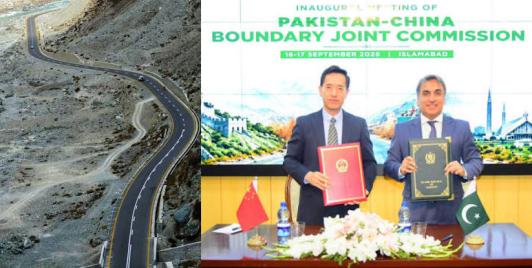
The Pakistan-China Boundary Joint Commission needs to be viewed in backdrop of the fast-changing geopolitics of South Asia and its military implications. The Shaksgam Valley sits immediately north of the Siachen Glacier and just west of Aksai Chin under China's control. By controlling Shaksgam, China can jointly monitor Indian military movements from the north while Pakistan does so from the south.

The question, therefore, is not whether Bangladesh could have secured a particular agreement simply by attending. There is no guarantee that participation in a summit automatically produces investment or diplomatic breakthroughs. The question is whether Bangladesh benefited by being absent.
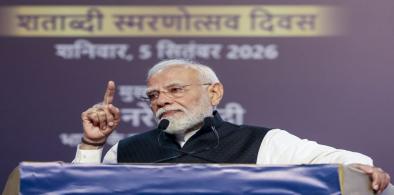
For China to achieve its hegemonic ambitions in Asia, weakening democracies is essential. India, therefore, stands as an iron wall against illiberal encroachments, positioning itself as both a regional hegemon and a defender of democratic order.
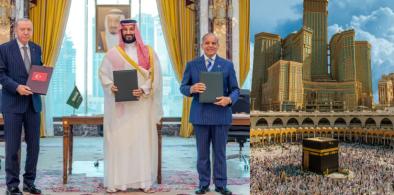
The Mecca Pact, barely a month old, has already been discredited. Its authenticity is in question, its efficacy doubtful. The very notion of an “Islamic Nato” has been exposed as a mirage. Collective defence requires not just declarations but capabilities, coordination and political will. None of these are evident in the pact’s functioning.
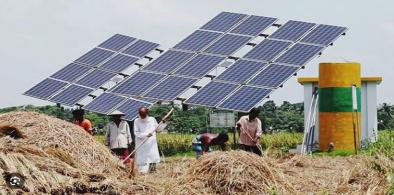
Bangladesh's triumph in off-grid renewable energy, epitomized by the SHS program, serves as a global benchmark. The collaborative efforts of government, private sector, and public entities have ushered in a new era of sustainable energy.
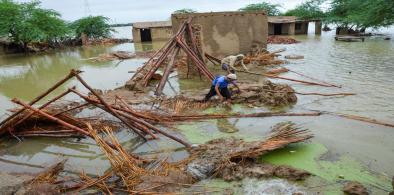
Pakistan's climatic catastrophe requires a global response. Developed countries must fulfill their pledges to provide financial and technological assistance to developing countries like Pakistan so that they can effectively mitigate and adapt to climate change.
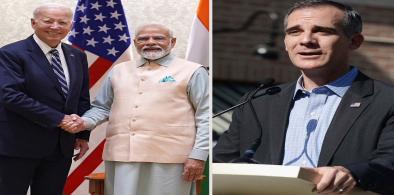
Quite unequivocally, strategic autonomy would be a hallmark of India’s foreign and security policy allowing it to oscillate between strategic proximity and strategic distancing depending on the circumstances and need of the hour. New Delhi would certainly not be guided by the script the US, or its Western allies prescribe.
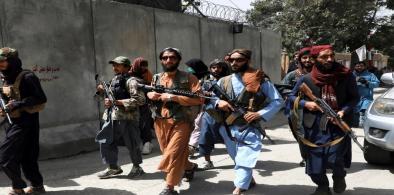
Madrassas in Pakistan and Afghanistan, often funded by Gulf states, have spread extremist ideologies. Saudi-financed madrasas in Pakistan taught Wahhabism, fostering a transnational network of militants using Afghanistan as a base. The U.S. and Saudi Arabia provided substantial aid and funding to these madrassas and the Mujahideen, promoting jihad against the Soviets.
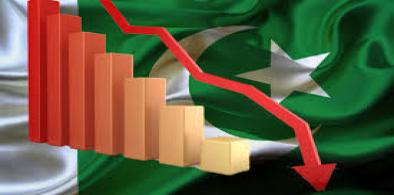
Pakistan's continuous political turbulence, characterised by infighting and power rivalries, poses a serious threat to the country's economic development.
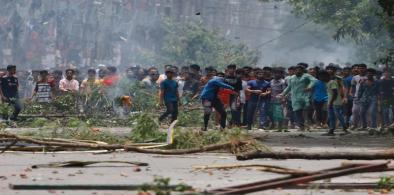
The violent conflicts have caused infrastructure damage, supply chain disruptions, and industry closures that have cost Bangladesh billions of dollars in lost revenue and negatively impacted essential industries like clothing, steel, ceramics, and pharmaceuticals. Its ramifications went beyond short-term financial losses.
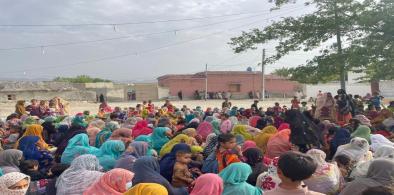
The whole Baloch nation has faced the worst form of oppression by the Pakistani State: they have been abducted, received mutilated bodies of their loved ones, confronted illegal raids, illegal detention, and bogus cases. They have not been allowed peaceful protests; they have been totally censored by mainstream media.
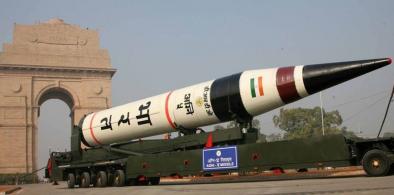
It is crucial for India and Pakistan to establish new confidence-building measures (CBMs) to mitigate the potential destabilizing effects of advanced technologies. Key elements of effective CBMs include robust communication channels, bilateral discussions on emerging technologies and their implications for regional peace, and strict adherence to missile test notification protocols.

In this newly revived spirit of amity, PM Gunawardena travelled from Jaffna to Kilinochchi by road. There were no protests and he was received at both venues with warmth and cordiality.
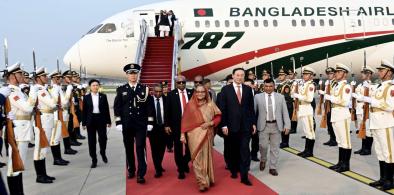
Hasina sees no contradiction in maintaining equity in ties with China and India as she is able to adeptly navigate the conflicting interests of China and India. Analysts feel that Dhaka will continue to have a balanced approach to ties with Beijing and New Delhi since Bangladesh depends on both for stability and growth.

The Moscow meeting was to understand each other's priorities and concerns according to the evolving geopolitics and reassure each other of their commitment to deepening their relationship in the coming years.

A credible, viable, and sustainable foreign and security policy needs to see relationship building, collaboration, and cooperation as part of its education policy and driven by an aspiration for global good and human welfare.
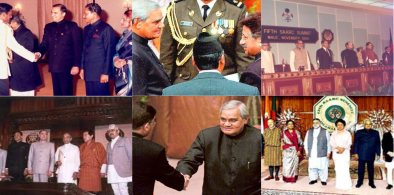
Today, the lack of regional cooperation in South Asia impedes development and has long-term negative economic, social and security ramifications. Over-reliance on foreign powers for partnerships and financial support can have adverse economic effects as seen in Sri Lanka and Pakistan.
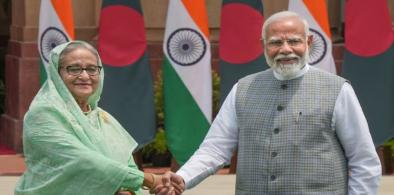
India was keen to welcome PM Hasina before her China trip to ensure bilateral consensus on sensitive issues. Over the last several years, strategic ties have grown, with cooperation in science and technology, defence and security, energy, trade, commerce, and maritime issues. The goal of the visit was to strengthen these bonds.

China, Russia and the US, however, give little value to international laws. They accept them only if they suit their own interests. They reject them if they conflict with their interests.