
Representational Photo

Jaish-e-Mohammed's Female Brigade: ISI-Backed New Jihadi Units Intensify Counterterrorism Challenges in South Asia

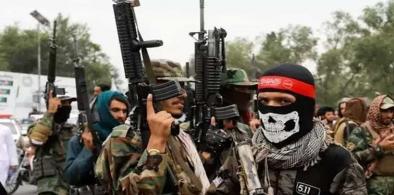
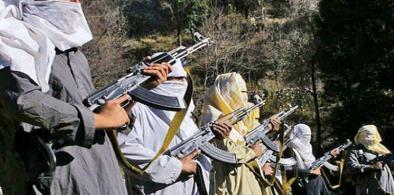
Unlike earlier jihadist cells dominated by Pakistani nationals, this unit deliberately recruits women from Indonesia, the Philippines, Uzbekistan, and other foreign countries. Reason behind recruiting non-Pakistani nationals serves a dual purpose: it complicates attribution and shields Pakistan’s security apparatus from direct accountability. Such operational sophistication reflects ISI’s continued role not merely as a passive enabler but as an active architect of jihadist adaptation.

Securing The Digital Frontier: A Unified Call For Cybersecurity In South Asia

South Asia has the potential to be a global digital leader. It has a young population and a booming tech industry. However, this potential will only be realized if the region is secure. We must treat cybersecurity as a pillar of national security, just like border defense. This requires better technology, smarter laws, and stronger regional ties. The digital threats of 2026 are fast and complex. To meet them, South Asia must be faster and more united. The time to build a collective digital shield is now, before the next major crisis occurs.

Aid, Ports, And The Limits of Incrementalism: What India’s Budget Says About Its Foreign Policy

Yet the strategic costs are real. Reduced engagement in Bangladesh risks ceding influence at a moment when Dhaka is actively diversifying its partnerships. Hesitation over Chabahar weakens India’s leverage in Iran and Central Asia and underscores its vulnerability to US pressure even as it seeks a more multipolar foreign policy. The 2026–27 Budget does not signal a dramatic shift in Indian foreign policy. There is no abandonment of neighbours-first rhetoric or of connectivity-led diplomacy. What it reveals instead is a narrowing circle of feasible economic action.
 

Mob Rule As Political Strategy: Reshaping Bangladesh's Secular Memory And Pluralistic Bengali Culture

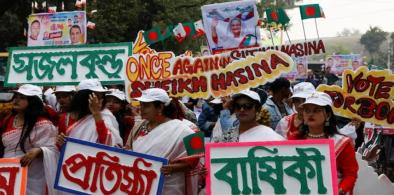
The ideals of 1971 represent inclusivity, human dignity, and resistance to oppression. Baul and Sufi traditions reject radical views and promote humanism and coexistence. Islam in Bengal arrived largely through Sufis—from Persia, Arabia, and Central Asia—who emphasized spirituality, tolerance, and accommodation. These traditions resonated with local Hindu practices and gave rise to syncretic forms such as Baul philosophy. Rabindranath Tagore and Nazrul Islam embodied this civilizational synthesis.     
 

More on Spotlight

India badly needs a refugee policy: Harsh treatment of Rohingya goes against international principles

For a country that embraces the principle of Vasudhaiva Kutumbakam (“The World is One Family”), and is often referred to by Prime Minister Narendra Modi as Vishwaguru (“Teacher of the World”), the discriminatory and hostile treatment meted out to the Rohingya is not only against its ethos but also makes for bad optics on the world stage. 

From Kingsway to Kartavya Path: India comes of age

Resurgent and dynamic, a young nation, old in history and culture is finally coming to terms with the painful legacy of slavery, colonialism and the pain of partition

Economic integration of South Asia: India must seize the day

India may consider quickly extending lines of credit to Sri Lanka and Bangladesh on softer terms than IMF loans as we have enough forex reserves at present to cope with their small needs to prevent economic collapse. This will result in consolidation of South Asian economies around the Indian one and allow us as Big Brother to lift our smaller siblings out of trouble

India and Bangladesh: Taking neighbourhood diplomacy to the next level

India's provision of tariff-free transit facilities to Bangladesh for exports to Nepal and Bhutan is considered a major step in bilateral cooperation. Also, since India can use Chittagong seaport, not only the "Seven Sisters" of Northeast India will benefit from it, but Dhaka will also benefit

As Imran Khan duels the army, political turmoil, floods, inflation paint a grim picture for Pakistan

Political instability is a perennial phenomenon in Pakistan but the present one appears to be more damaging as it has occurred at a time when the country is also experiencing one of the worst economic crises in decades

Chinese disengagement in Ladakh is a small lollipop to India!

It is quite possible that the Indian side conveyed to Beijing that with China’s rigid stance on the border standoff, Prime Minister Narendra Modi may consider it difficult to attend the summit, and more importantly, a one-to-one meeting between PM Modi and Chinese President Xi Jinping may not be possible unless Beijing shows some progress on further disengagement

Sheikh Hasina’s India visit will take close India-Bangladesh ties to newer heights

Cooperation during the visit extended to all fields, including trade and commerce, power and energy, transport and connectivity, science and technology, rivers, and maritime affairs

Kashmir’s image problem persists - despite visible changes on the ground

These fault lines can be repaired by greater societal interaction – holding roadshows to attract tourists is one thing, but arranging inter-community interactions between Kashmiris and social groups in the rest of the country to dispel the mutual distrust is quite another one. The work is yet to begin on this front

Climate change hits home in Pakistan, causes disastrous floods

Climate experts opine that climate change has caused unpredictable and inconsistent weather conditions in Pakistan resulting in excessive monsoon rains, cloudbursts and extreme melting of glaciers which have finally swelled the rivers which are the genuine cause behind destructive floods across Pakistan

UK-India ties under PM Truss: Promise of stronger business and bilateral trade outcomes

India’s reluctance to ink comprehensive FTAs contrasts with the enthusiasm of the UK to stitch up such deals with the bustling Indo-Pacific region, especially with the 11-member Comprehensive and Progressive Agreement for Trans-Pacific Partnership that includes the fast-growing Vietnam, Malaysia and Mexico, by the end of 2022

China's growing economic engagement in South Asia is a warning to India

China has already surpassed India in its volume of trade with Bangladesh and is fast catching up to replace it as the top trading partner of Sri Lanka and Nepal. It has extended aid and financial assistance to these states that surpass India’s aid to them

Sheikh Hasina: A profile in courage and emotional bonds with India

With her Awami League in power since 2009, Bangladesh has seen the army keeping away from a political role, has witnessed relative political stability and rapid economic strides, marking higher human development indicators better than most others in South Asia

Rising interest rates and looming dangers for South Asia

South Asia will require at least another decade to recover from the sociological maladies of the post-pandemic global transformations. The looming economic crisis in South Asia may also cause multiple regime changes in the region, potentially producing greater political instability

India-Bangladesh summit: Interlinked destinies, great expectations

Therefore, to create greater understanding between the civil societies of South Asia, we must encourage far more civil society interaction on B2B and people-to-people basis. 

Sheikh Hasina's visit to Delhi amid shifting geopolitical sands: Can India-Bangladesh ties rise above Asia-Pacific rivalries?

Now India and Bangladesh have to look for a new foundation to take the relationship between the two countries to a higher level. And deepening of economic ties can create that new foundation.