Both Ottawa and Washington have historically been rather lackadaisical, if not downright conniving, in their dealing with India’s decades-long attempts to act against the Khalistan movement’s violent underpinnings in the two countries.


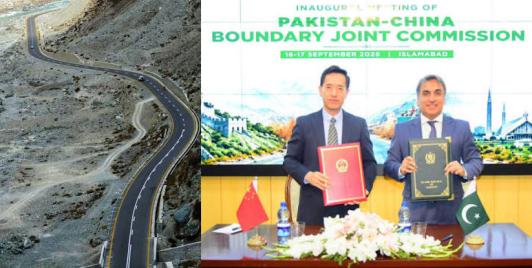
The Pakistan-China Boundary Joint Commission needs to be viewed in backdrop of the fast-changing geopolitics of South Asia and its military implications. The Shaksgam Valley sits immediately north of the Siachen Glacier and just west of Aksai Chin under China's control. By controlling Shaksgam, China can jointly monitor Indian military movements from the north while Pakistan does so from the south.

The question, therefore, is not whether Bangladesh could have secured a particular agreement simply by attending. There is no guarantee that participation in a summit automatically produces investment or diplomatic breakthroughs. The question is whether Bangladesh benefited by being absent.
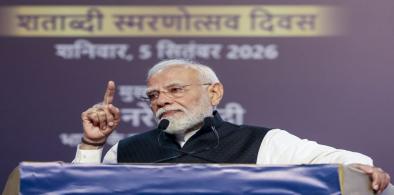
For China to achieve its hegemonic ambitions in Asia, weakening democracies is essential. India, therefore, stands as an iron wall against illiberal encroachments, positioning itself as both a regional hegemon and a defender of democratic order.
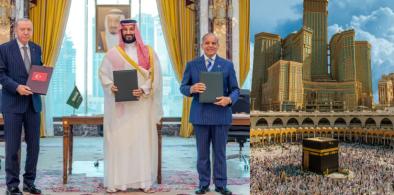
The Mecca Pact, barely a month old, has already been discredited. Its authenticity is in question, its efficacy doubtful. The very notion of an “Islamic Nato” has been exposed as a mirage. Collective defence requires not just declarations but capabilities, coordination and political will. None of these are evident in the pact’s functioning.
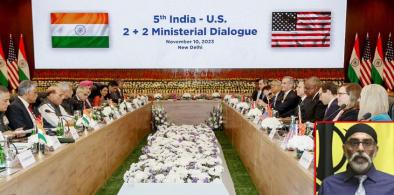
Both Ottawa and Washington have historically been rather lackadaisical, if not downright conniving, in their dealing with India’s decades-long attempts to act against the Khalistan movement’s violent underpinnings in the two countries.

Overall, whether one opts for the casual charm of hi-tea platters or the indulgent variety of hi-tea buffets, Sri Lanka's hi-tea culture seamlessly blends British colonial influences with local traditions, adding a unique and culturally rich touch to this eating-out experience.

The South Asian region is home to an estimated 1.7 billion people, representing around 25 percent of the world’s population and also accounts for 25 percent of the world’s road crash fatalities.
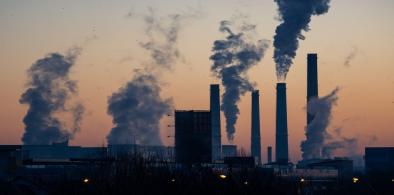
India is one country, but its 28 states are as diverse as the 27 nations of the European Union in language, culture, cuisine and economic development. The 27 nations together put out almost as much emissions as India at 3.1 million kilotonnes with only a population of 448 million, a third of India’s, for a per capita output of 5.5 tonnes.
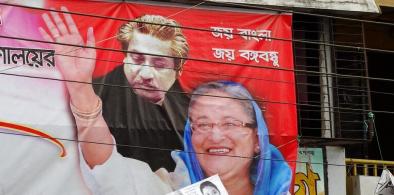
India's position on the upcoming election is consistent with its friendly and good-neighborly relations with Bangladesh, its national interests, and international legal principles. Elections are an internal affair of Bangladesh, and only the Bangladeshi people have the right to decide their future.
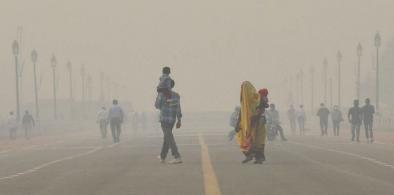
The power plants, cement and fertiliser units, and chemical industries have to be encouraged to utilize the paddy straw for the production of manure, briquettes and ethanol. These units could be provided the responsibility and authority of cutting the paddy straw from the fields after paying a nominal fee to the farmers. The arrangement could be a win-win situation for the paddy growers as well as user industries
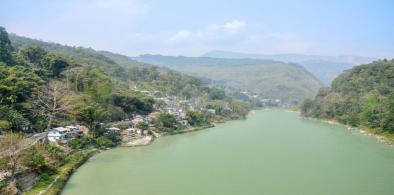
It is imperative that Infrastructural requirements like roads, bridges, tunnels, power plants and other industries should be weighed against their ecological impact by experts and their cost-benefit analysis undertaken before final decisions are taken. The damage done by man to nature can sometimes be irreversible and irredeemable.
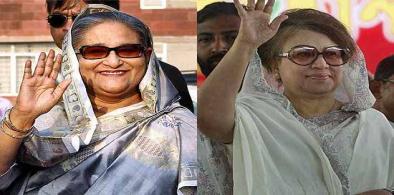
This despite full knowledge that the BNP and its permanent ally Jamaat e Islami are aligned with China and Pakistan. During the earlier BNP regimes in Bangladesh, major state-supported anti-India terrorist camps were running in that country, mainly in the Chittagong Hill Tracts, which also had instructors from Al Qaeda and Pakistan’s army-ISI.
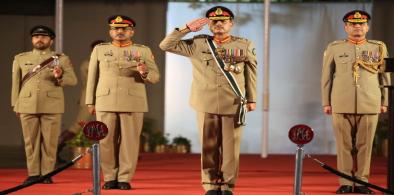
Any facet of the economy one might imagine has the army's hand over it as evidenced in 2016 when the Pakistan Senate reckoned that the army operated more or less 50 commercial entities. Between 2011 and 2015 the Fauji Foundation, which perhaps serves as a facade for the Pakistani military’s commercial wing, grew its assets by 78 per cent.
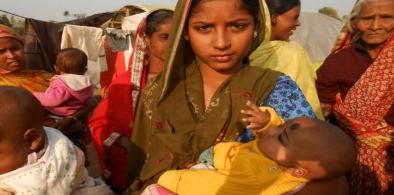
Setting aside all the hullabaloo about the much-debated National Educational Policy 2020, the latter has hardly anything to offer on improving the sexual and reproductive health of women in India. This was unexpected since NEP 2020 aimed at holistic education.
The global political and economic order is beginning to aggressively impact our region. It may effectively alter the balance of power and cordiality, especially within the South Asian neighborhood.
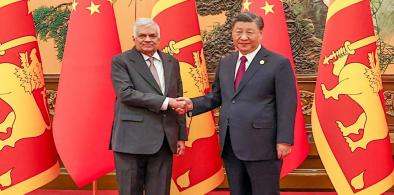
Given its strategic location blended with the old maritime silk route legacy, China places Sri Lanka in the pole position of its maritime strategy.
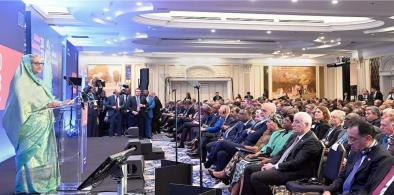
The EU recognises that emerging countries such as Bangladesh have a great need for cash for infrastructure development and it will be hard to turn these states away from Chinese influence unless they are provided with financial tools to meet that demand.

It is indeed intriguing to question how Nepal and India, despite similar cultural realities, have displayed contrasting interpretations.

The world may have witnessed a cricket match, but for Afghans, it was a moment of glory, pride, and unity. Afghanistan once again proves that it is more than just a country; it is a resilient and hopeful nation on the rise.