

How Foreign Digital Influencers Are Tarnishing India’s Global Image
India must now transition from conventional soft-power thinking to visibility governance—the systematic management of how the country appears, circulates, and is emotionally interpreted across global platforms. Failure to do so will leave India’s global image increasingly shaped by commercial incentives outside Indian control.
 Dec 17, 2025
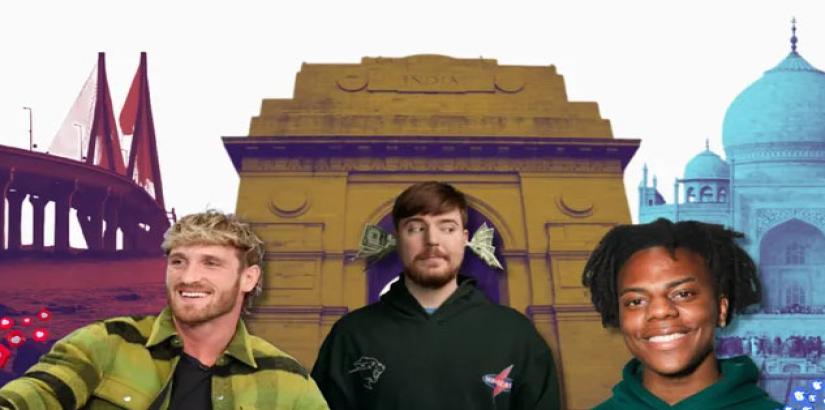
India’s international image is no longer shaped primarily by diplomats, foreign correspondents, or official state narratives. Today, a new class of global narrators exercises disproportionate influence over how India is perceived abroad: foreign digital influencers operating on platforms such as YouTube, Instagram, and TikTok. Their videos reach millions of viewers within hours, often far exceeding the audience of traditional international news media.
A striking pattern has emerged across this ecosystem. A large volume of high-visibility foreign content about India is framed through sensationalism, shock, and visual exaggeration—dirty streets, chaotic markets, dramatic thumbnails, “survival” narratives, and exaggerated reactions of fear or disgust. These portrayals are rarely fabricated. They are built on selective exaggeration, amplified by platform algorithms that reward emotional intensity over contextual accuracy.
The result is a subtle but persistent form of reputational degradation. This is not conventional propaganda or hate speech. It is better understood as digitally generated “soft hate”—algorithmically incentivised negativity that accumulates into a distorted global perception of India without explicit political hostility. For India, this represents a strategic vulnerability in the contemporary information environment.
It Is Platform Power
Most foreign creators do not set out to malign India. Their primary motivation is engagement-driven revenue. Platform algorithms consistently reward content that trigger high-arousal emotions—disgust, fear, outrage, shock—because such emotions maximise watch-time, comments, and sharing.
Three structural mechanisms drive this pattern:
1. Selective Framing
Creators disproportionately film: Open drains and waste sites; Overcrowded slums or markets; stray animals, disorder, poverty, and dirt.
Meanwhile, they systematically avoid: Modern infrastructure; Clean residential zones; Heritage districts and tourist sites; Universities, technology hubs, or middle-class neighbourhoods. India is presented not as a complex society, but as a narrow visual stereotype of disorder.
2. Aestheticised Negativity
Negative scenes are visually intensified through: Dramatic music; Shaky handheld footage; Exaggerated reaction shots; Alarmist thumbnails (“I Survived India”, “Worst Place Ever?”). Ordinary urban density is turned into a survival spectacle.
3. Algorithmic Reward Loops
When a negative video performs well: the algorithm boosts it; the creator gains subscribers and revenue; the creator repeats the same formula; Copycat creators replicate it. This produces a self-reinforcing industry of negative India content, driven not by ideology but by commercial incentives.This is why conventional media regulation or public diplomacy tools struggle to address the problem. The hostility is structural, not intentional.
Strategic Consequences For India
1. Long-Term Reputational Erosion
Foreign audiences unfamiliar with India increasingly encounter the country through: “Filthiest streets” videos; “Dangerous India” narratives; “Extreme poverty” framings. Over time, these images harden into default mental models. Repetition creates perceived truth, regardless of nuance.
2. Tourism Risk Perception
Potential tourists use YouTube as a primary planning tool. Sensational portrayals: Increase perceived personal risk; Reduce confidence in hygiene, safety, and predictability' Channel tourism into narrow “safe zones,” harming local economies elsewhere. Even when tourists do visit, they arrive with heightened fear and cultural suspicion.
3. Diplomatic and Economic Signalling Costs
National image indirectly affects: Foreign investment confidence; Academic exchanges; Student mobility; Cultural diplomacy outcomes. A reputation for chaos and risk—however exaggerated—raises the background cost of engagement with India.
4. Narrative Sovereignty Is Being Outsourced
The most widely circulated global narratives about India are now produced by: External, monetised individuals with no stake in India’s long-term reputation; with no accountability to Indian institutions. This constitutes a loss of narrative sovereignty in the digital domain.
Why Traditional Public Diplomacy Is Failing
India’s public diplomacy machinery is designed for: State-to-state communication; Cultural festivals; Institutional messaging; Diaspora engagement.
But platform-driven reputation warfare operates through: Informal individuals; Entertainment formats; Algorithmic invisibility rules; Emotion rather than argument.
Embassy Twitter handles and cultural programs cannot compete with: Shock thumbnails; Viral outrage; Algorithmic amplification.
The problem is not that India lacks soft power. The problem is that platform infrastructures now mediate how soft power is even perceived.
Policy Gaps That Exist
No institutional monitoring of influencer-driven reputational risk. No strategic engagement framework for foreign digital creators. No counter-algorithmic visibility strategy. No dedicated reputational response unit within India’s information architecture. This leaves India structurally exposed in the global attention economy.
What India Should Do
There can be five concrete policy responses:
- Establish a National Digital Reputation Observatory
1. Create a permanent inter-ministerial unit involving:
- MEA (Ministry of External Affairs)
- I&B Ministry (Information and Broadcasting)
- Tourism Ministry
- Cyber policy experts
Functions:
- Track viral foreign content about India
- Detect emerging narrative risks
- Flag severe distortions early
This is preventive diplomacy for the algorithmic age.
2. Engage creators strategically, not adversarially
India must move from reactive outrage to proactive narrative engagement. Invite high-reach foreign creators through structured media fellowships; facilitate guided access to lesser-known regions; pair creators with local experts and curators; influencers shape perception whether states engage them or not. Strategic cooperation is safer than neglect.
3. Build a Global “Positive Visibility Pipeline”
India already invests in:
- Tourism promotion
- Cultural diplomacy
- Digital India branding
But this content is weakly platform-optimised.
India should invest in:
- High-production short-form video aesthetics
- Platform-native storytelling
- Emotionally engaging positive narratives
- Influencer partnerships in foreign markets
This is not propaganda. It is algorithmic competitiveness.
4. Develop a Rapid Reputational Response Protocol
When a heavily distorted viral video appears:
- Issue quiet clarifications, not public confrontations
- Provide corrected footage and context to secondary outlets
- Activate diaspora creator networks
Silence allows distortions to consolidate.
5. Integrate Platform Governance into Foreign Policy
India’s digital diplomacy must treat algorithms as political infrastructures, not neutral tools. This means:
- Raising algorithmic accountability in bilateral tech negotiations
- Pressing platforms to reflect on asymmetrical reputational harm
- Supporting global governance norms on cross-border digital representation
Platform neutrality is a myth when national reputations are at stake.
The Larger Strategic Lesson
India is entering a phase where reputation is shaped less by national behaviour and more by platform-mediated visibility. This creates a new category of vulnerability:
- No hostile state actor is required
- No disinformation campaign is necessary
- No explicit hate speech is involved
Yet reputational harm accumulates steadily through ordinary monetised content. This is the defining condition of soft hate—a structural, algorithmic form of hostility that bypasses traditional diplomatic defences.
From Narrative Control to Visibility Governance
India can no longer afford to treat foreign influencer content as harmless entertainment or irrelevant tourism commentary. In the contemporary attention economy, such content functions as distributed strategic communication with real economic and diplomatic consequences.
The strategic question is no longer: “Is the content hostile?” The real question is: “How does the platform reward this content, and what perception does it stabilise over time?”
India must now transition from conventional soft-power thinking to visibility governance—the systematic management of how the country appears, circulates, and is emotionally interpreted across global platforms. Failure to do so will leave India’s global image increasingly shaped by commercial incentives outside Indian control.
(The author is a postgraduate researcher in political science focusing on digital media, strategic communication, and India’s international image. Views expressed are personal. She can be contacted at chanchalchaudhary.research@gmail.com )





Post a Comment