

Iran’s State Structure is Designed to Outlast its Leaders: Expectations of Sudden Collapse may be Misguided
Iran’s constitution explicitly anticipates such scenarios. Article 111 provides that if the supreme leader dies or becomes incapacitated, authority transfers immediately to an interim council consisting of the president, the head of the judiciary, and a cleric chosen through the Expediency Council. The aim is continuity, not transformation. While qualifications for the next leader are specified, the constitution leaves room for interpretation rather than imposing a rigid religious pathway.
 Mar 01, 2026
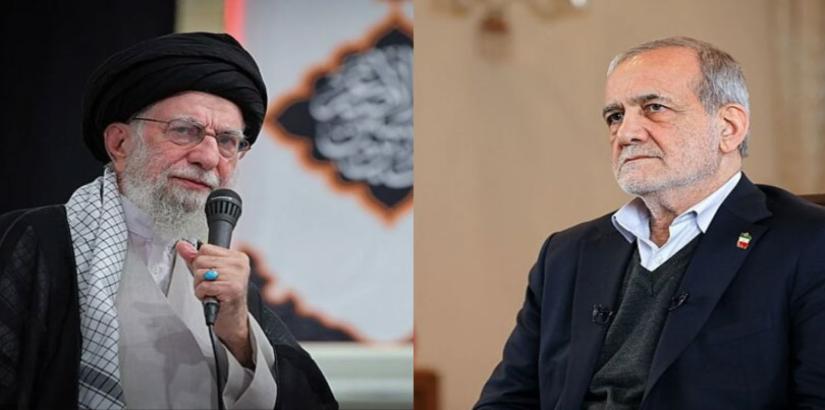
The latest Israeli and US war on Iran reportedly began with airstrikes on the home and offices of Supreme Leader Ali Khamenei. The apparent assumption was that Khamenei’s sudden removal would fatally weaken the Iranian political system. The logic resembled the collapses seen in Libya after Muammar al-Qaddafi and in Syria after Bashar al-Assad, where the state unravelled once the central figure was removed. In those cases, political order was deeply personal and closely tied to a single ruler.
Iran, however, is structured differently. Few contemporary states place as much visible authority in one office as Iran does in that of the supreme leader. Religious legitimacy, command of the armed forces, and final political arbitration converge there. Yet visibility should not be mistaken for fragility. The office sits atop a dense institutional network designed not merely to serve the leader but to constrain, supervise, and if necessary, outlast him.
Preparing for Leadership Disruption
The Islamic Republic is not a personalist regime cloaked in religious language. It is a revolutionary system built with an acute awareness of its own vulnerabilities. It has invested heavily in preparing for leadership disruption. Under pressure, its structure is designed to consolidate rather than fragment.
Iran’s political behavior cannot be understood without appreciating how deeply its ruling elite internalizes history. The Iranian state has experienced repeated periods of political vacuum over centuries, and these episodes continue to shape elite thinking. Crises are instinctively measured against earlier collapses.
Although Jafari Shiite jurisprudence formally rejects analogical reasoning, Iranian leaders routinely use history as a guide. The fall of the Qajar dynasty, the Safavid collapse after the capture of Isfahan, the chaos following Nadir Shah’s death, and the civil wars after Karim Khan Zand’s death all conveyed the same lesson. When leadership disappears without a mechanism for succession, the country risks disintegration.
For the architects of the 1979 revolution, these were not abstract concerns. Ayatollah Ruhollah Khomeini did not abolish the supreme authority. Instead, he institutionalized it. The constitutional debates of 1979 focused intensely on avoiding historical patterns of collapse. Each major body created in the constitution was designed to address a specific risk exposed by earlier failures.
The Guardian Council was established to prevent ideological drift and ensure conformity with Islamic principles. The Assembly of Experts was tasked with selecting and supervising the supreme leader to prevent unchecked concentration of power. The Expediency Council was designed to resolve institutional deadlock so governance could continue during disputes. The Islamic Revolutionary Guard Corps (IRGC) and the intelligence services were created to defend the revolution against both internal and external threats.]
Not Dependent on Single Individual
This overlapping institutional design was meant to provide resilience. If one element faltered, others could compensate. The objective was clear. The survival of the state did not depend on a single individual. Khomeini articulated this logic plainly, preserving the Islamic Republic mattered more than preserving any one person.
The system faced an early stress test. After President Abolhassan Banisadr was impeached, President Mohammad Ali Rajai and Prime Minister Mohammad Javad Bahonar were assassinated within weeks of each other. Yet within fifty days, Ali Khamenei was elected president, demonstrating the regime’s capacity to regenerate leadership quickly under extreme pressure. Eight years later, the same logic applied when Khomeini died. Khamenei, lacking both Khomeini’s charisma and senior religious rank, emerged as supreme leader because institutions converged on him, not because succession was predetermined.
The message within the state was unmistakable. The system must outlast individuals. This principle resurfaced after President Ebrahim Raisi died in a helicopter crash in 2024. Constitutional procedures were immediately activated. Authority transferred smoothly, elections were held on schedule, and political stability was preserved. Rather than triggering disorder, the episode functioned as a rehearsal for sudden leadership loss.
Succession Through Negotiation and Consensus
Iran’s constitution explicitly anticipates such scenarios. Article 111 provides that if the supreme leader dies or becomes incapacitated, authority transfers immediately to an interim council consisting of the president, the head of the judiciary, and a cleric chosen through the Expediency Council. The aim is continuity, not transformation. While qualifications for the next leader are specified, the constitution leaves room for interpretation rather than imposing a rigid religious pathway.
This flexibility allows succession to unfold through negotiation rather than rupture. There is no fixed timeline for selecting a new leader. During wartime, an interim arrangement can persist for an extended period. What may appear externally as a delay often functions internally as risk management.
Formally, the Assembly of Experts votes on succession, but consensus is shaped well before any public decision. Informal filtering narrows viable candidates. The IRGC does not choose the leader, but it exerts influence by defining which risks are unacceptable. Figures perceived as threatening national cohesion or security rarely advance.
During a vacancy, the IRGC Intelligence Organization would likely intensify internal monitoring while ground forces prioritize domestic stability. The organization’s interests are both ideological and material, centered on preserving autonomy and economic influence. At the same time, political legitimacy flows through clerical networks in Qom. Any successor must secure at least tacit acceptance from senior religious figures.
Narrative also matters. The circumstances surrounding a leader’s death shape succession politics. If death occurs during war, martyrdom narratives may elevate candidates associated with strength and continuity.
Will Institutional Capacity Endure?
The most delicate phase is likely after a new leader is chosen. Authority must be demonstrated quickly at home and credibility signaled abroad. In revolutionary systems shaped by uncertainty, legitimacy is established through action rather than symbolism.
During such transitions, external observers may misread Iranian behavior. Moves interpreted abroad as aggression may be intended to reassure domestic audiences that control remains intact. What appears chaotic from a distance may represent an effort to restore normality. Expectations of sudden collapse often overlook how strongly competing factions prefer systemic survival over unchecked rivalry.
Iran is frequently portrayed as a state bound to individuals. Yet its post-1979 architecture reflects a different logic, forged by revolutionary memory and historical trauma. Khomeini captured this hierarchy in a remark often cited by Iran’s political elite, “Preserving the Islamic Republic is more important than preserving any individual, even one of ultimate religious significance.”
Whether the system will always uphold this principle remains uncertain. What is clear is that leadership change in Tehran is treated less as an ending than as a test. It is a moment for the country's institutions to demonstrate their capacity to endure.
(The author is a journalist at MEAWW News who reports on international affairs and global policy, with a particular focus on South Asia and major power competition in the region. Views expressed are personal. He can be reached at rishabwork121@gmail.com or via LinkedIn at https://www.linkedin.com/in/rishab-rathi/. )




Post a Comment