

Mob Rule As Political Strategy: Reshaping Bangladesh's Secular Memory And Pluralistic Bengali Culture
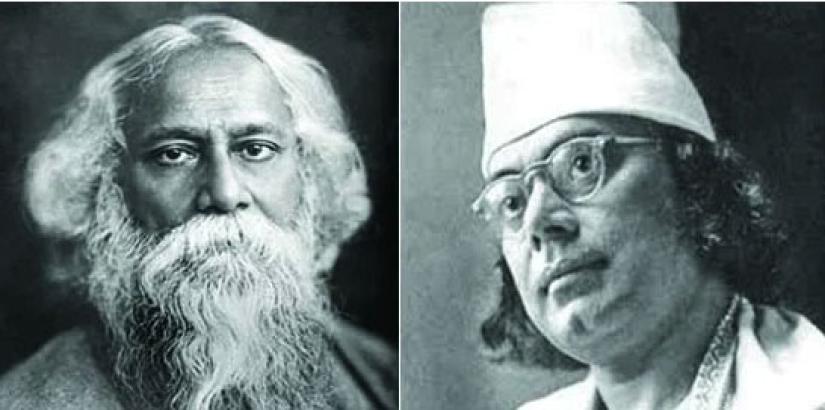
The ideals of 1971 represent inclusivity, human dignity, and resistance to oppression. Baul and Sufi traditions reject radical views and promote humanism and coexistence. Islam in Bengal arrived largely through Sufis—from Persia, Arabia, and Central Asia—who emphasized spirituality, tolerance, and accommodation. These traditions resonated with local Hindu practices and gave rise to syncretic forms such as Baul philosophy. Rabindranath Tagore and Nazrul Islam embodied this civilizational synthesis.
 Feb 03, 2026
The youth-led uprising in 2024 in Bangladesh succeeded as a moment of collective emotional mobilization through the ideals of 1971 and in Bengali cultural pluralism. Mobilization did not evolve through clear leadership or a roadmap. But through a shared political language, shared symbols through graffiti, memes, and images. The graffiti on the walls and the memes on social media painted a picture of pluralism. Most importantly, shared moral roots are driven by freedom, dignity, justice, and resistance to discrimination.
The uprising was held together more by a shared moral imagination. This imagination drew from the Bengali civilizational foundation, and that is the Liberation War and the Bengali tradition of religious coexistence.
It was this moral universe that allowed students to mobilize not only themselves but also workers, mothers, cultural activists, and ordinary citizens. So, the credit for success goes not only to students but also to people from all walks of life. The protesters articulated a vision of a nation free from ethnicity, religion, gender, and class-based discrimination and oppression. At that moment, many believed it could restore not only democracy but also the promise of the Liberation War.
However, in the aftermath, the political forces that have consolidated power dismantled those foundations through anti-secular mobilization and the use of mob rule by establishing fear.
Mob Rule as Political Strategy
What we have been witnessing in Bangladesh should not be understood merely as spontaneous lawlessness or a breakdown of order. Mob rule has functioned as a political strategy designed to disseminate fear and reshape public memory. This strategy operates through selective targeting, the absence of accountability, silence or complicity from authorities, and moral justification.
We have seen constant and consistent humiliation of freedom fighters, systematic attacks on Baul and Sufi shrines, the destruction of Liberation War monuments, shrinking public space for women, and arrests of journalists, academics, and cultural activists.
The Chittagong Press Club, for example, was captured through the mob attacks, and the management committee was pulled out, and a new committee was put in its place. Many journalists were sacked from their positions, and new individuals were replaced. The country’s leading media and newspaper houses, such as the Prothom Alo and the Daily Star, were attacked by mobs and fire.
The government supports those mobs by staying silent and not trying to stop them. What was striking was even that the government was defending the mob by saying that the mob was a "pressure group." When a journalist like Anis Alamgir criticized the government’s silence and support of such mobs, he was arrested under Bangladesh’s Anti-Terrorism Act. And so, through these acts, the goal was to create fear, silence, criticism, and political dissent.
The new political forces that have gained ground in the aftermath of the 2024 uprising mobilize youth through misinformation, fabricated histories of 1971, distorted interpretations of Islam, and narratives of ideological conflict. Youths have been told that 1971 was a religious war meant to separate the Pakistani and Bengali Muslim brothers. They were misinformed about the people’s long struggle for dignity, for economic emancipation, and for cultural freedom.
They are not informed that Pakistani ruling machinery did not treat Bengali Muslims as pure Muslims, but rather discriminated heavily. Pakistani Field Marshal Ayub Khan, head of a military-led government, in his book Friends, Not Masters: A Political Autobiography, defined Bengali Muslims as influenced by Hinduism and Pakistani Muslims as the greatest race.
And these groups mobilize youths through a worldview that perceives secularism, Sufism, Hindu traditions, cultural institutions, and even women’s public presence as obstacles to their political goals.This is why cultural institutions like Udichi are under attack.
Attacks on Hindus, Politics of Fear
One of the manifestations of the mob strategy has been the targeting of Hindu minorities. Muhammad Yunus, the head of the interim government, once claimed that attacks on Hindus were not religious but political. Hindu homes were burned, temples vandalized, and individuals assaulted under accusations of being “Indian agents.” Hindu communities felt intimidated; many went to neighboring West Bengal. Many have been living in constant insecurity and trauma. There was the incident of a 69-year-old Hindu hairdresser, Poresh Chandra Shil, and his son being lynched by a radical Muslim mob who accused them of blasphemy.
One of the most disturbing developments has been the killing of a young factory worker, named Dipu Chandra Das with a false accusation: he was abducted from his job, again in the name of blasphemy, and then lynched by a mob, who set fire to his body in public.
According to the 2022 census, Bangladesh has a population of around 165 million, of which around 13 million are Hindus. Despite being an ethnic Bengali majority nation, Hindus, despite their Bengali ethnicity, are targeted.
In the 1971 liberation war, Hindus were targeted by the Pakistani Army because Hindus were accused of being Indian agents. My parents told me that Hindu neighbors were sheltered inside our homes dressed as Muslims and even taught verses from the Quran so they could survive military inspections. This reflects the Bengali moral universe in which religious difference did not exclude human dignity.
What is deeply troubling is that the targeting of Hindus today has been not by foreign occupiers but by the same ethnic people through domestic political mobilization.
Why Pluralist Traditions Are Targeted
A deeper question is why target shrines, songs, monuments, and cultural institutions? The ideals of 1971 represent inclusivity, human dignity, and resistance to oppression. Baul and Sufi traditions reject radical views and promote humanism and coexistence. Islam in Bengal arrived largely through Sufis—from Persia, Arabia, and Central Asia—who emphasized spirituality, tolerance, and accommodation. These traditions resonated with local Hindu practices and gave rise to syncretic forms such as Baul philosophy. Rabindranath Tagore and Nazrul Islam embody this civilizational synthesis. Nazrul not only emphasized humanism but also wrote many Hindu Shyama Sangeet, and today his songs are sung in Hindu puja festivals. Lalon Shah, a Bengali Baul and mystic poet, rejected religious and ethnic division.
And this is why these traditions are now under attack, because secular memory and pluralistic Bengali culture project structural barriers to religious radical mobilization. In sum, we have seen the power of collective moral imagination in the youth-led uprising, but the post-period has shown how easily that imagination can be captured and inverted.
Bangladesh’s democracy cannot be understood only through elections or institutions. It must be understood through its civilizational roots grounded in pluralism, tolerance, and human dignity. So can Bangladesh reclaim the democratic and pluralist spirit without first confronting the politics of mob rule, fear, and cultural erasure that now dominate the politics?
(The author holds a PhD in political science from Heidelberg University, Germany. Views are personal. He can be contacted at meahmostafiz@gmail.com)
References:
আনু মুহাম্মদ, “গ্রাফিতির চাওয়াগুলো কি তবে ভুল ছিল.” প্রথম আলো, ০৭ মে ২০২৫. (in Bangla) https://www.prothomalo.com/opinion/column/ifx6935prv
“Attack on Bauls: Govt Inaction Risks Fuelling Extremism.” The Daily Star, 24 November 2025. https://www.thedailystar.net/news/bangladesh/crime-justice/news/attack-bauls-govt-inaction-risks-fuelling-extremism-4042921?utm_source=chatgpt.com; The Daily Star. 2025. “80 Shrines, Sufi Centres Attacked in Last 6 Months.” The Daily Star, January 23, 2025. https://www.thedailystar.net/news/bangladesh/crime-justice/news/80-shrines-sufi-centres-attacked-last-6-months-3807006?utm_source=chatgpt.com
“চট্টগ্রাম প্রেসক্লাবে দুর্বৃত্তদের হামলা, ২০ সাংবাদিক আহত.” প্রথম আলো, ১৪ আগস্ট ২০২৪. (in Bangla) https://www.prothomalo.com/bangladesh/1ld1z40564; “চট্টগ্রাম প্রেস ক্লাবের তালা ভেঙ্গে অনুপ্রবেশ- ব্যবস্থাপনা কমিটির তীব্র প্রতিবাদ ও নিন্দা.” ইনকিলাব, ২০ নভেম্বর ২০২৪. (in Bangla) https://dailyinqilab.com/bangladesh/news/705163
Mubashar Hasan. “Why Mobs in Bangladesh Attacked the Offices of Daily Star and Prothom Alo.” The Diplomat, December 29, 2025.
“মব না, এটি প্রেসার গ্রুপ: প্রেস সচিব.” বাংলা ট্রিবিউন, ২৬ জুন ২০২৫. (in Bangla)
“Bangladesh: Journalist targeted with anti-terror legislation must be released.” Amnesty International, 17 December 2025. https://www.amnesty.org/en/latest/news/2025/12/bangladesh-journalist-targeted-with-anti-terror-legislation-must-be-released/
Ayub Khan. Friends, Not Masters: A Political Autobiography. London: Oxford University Press, 1967.
Debarshi Dasgupta. “Under attack from extremists, Bangladesh’s cultural activists fight back with music.” The Straits Times, Jan 02, 2026. https://www.straitstimes.com/asia/south-asia/under-attack-from-extremists-bangladeshs-cultural-activists-fight-back-with-music
Mehedi Hasan Marof. “Our lives don’t matter’: Bangladeshi Hindus under attack after Hasina exit.” Al Jazeera, 12 Dec 2024.
“Mob beats man, son, hands over to police for ‘hurting religious sentiment’, OC makes controversial statement.” Prothomalo, 25 Jun 2025.
Saif Hasnat and Mujib Mashal. “Lynching of a Hindu in Bangladesh Fans Fears of Rising Intolerance.” The New York Time, Dec. 22, 2025.
Population and Housing Consensus 2022, Bangladesh Bureau of Statistics. 2022.
Muhammad Mohar Ali. History of the Muslim Bengal. Riyadh: Imam Muhammad
Ibn Saud Islamic University, 1985
Nasir Raza Khan, Madhubanti Talukdar. “The origin and development of Sufism in the regions of Bengal and Assam in India.” Journal Intellectual Sufism Research (JISR), ISR 4(1), November 2021, 9-21





Post a Comment