From the South Asian Association for Regional Cooperation (SAARC) countries, India is emerging as one of the top alternative manufacturing destinations, writes Dr. Mohammad Rezaul Karim for South Asia Monitor


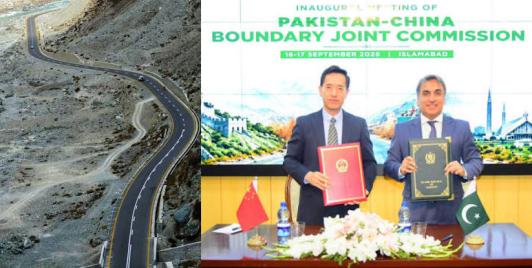
The Pakistan-China Boundary Joint Commission needs to be viewed in backdrop of the fast-changing geopolitics of South Asia and its military implications. The Shaksgam Valley sits immediately north of the Siachen Glacier and just west of Aksai Chin under China's control. By controlling Shaksgam, China can jointly monitor Indian military movements from the north while Pakistan does so from the south.
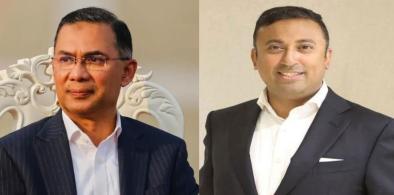
The question, therefore, is not whether Bangladesh could have secured a particular agreement simply by attending. There is no guarantee that participation in a summit automatically produces investment or diplomatic breakthroughs. The question is whether Bangladesh benefited by being absent.
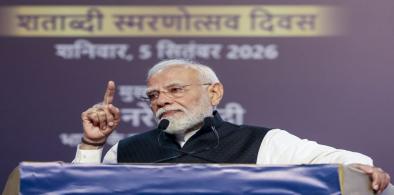
For China to achieve its hegemonic ambitions in Asia, weakening democracies is essential. India, therefore, stands as an iron wall against illiberal encroachments, positioning itself as both a regional hegemon and a defender of democratic order.
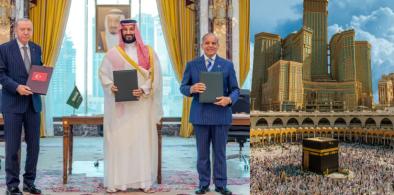
The Mecca Pact, barely a month old, has already been discredited. Its authenticity is in question, its efficacy doubtful. The very notion of an “Islamic Nato” has been exposed as a mirage. Collective defence requires not just declarations but capabilities, coordination and political will. None of these are evident in the pact’s functioning.
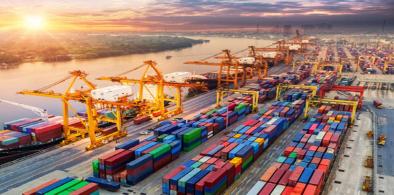
From the South Asian Association for Regional Cooperation (SAARC) countries, India is emerging as one of the top alternative manufacturing destinations, writes Dr. Mohammad Rezaul Karim for South Asia Monitor
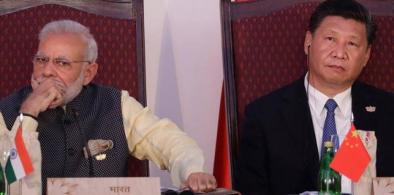
China is sure that India would initiate back-room talks and negotiate some face-saving device to disengage. But, there lies the danger, writes Brigadier Deepak Sethi (retd) for South Asia Monitor
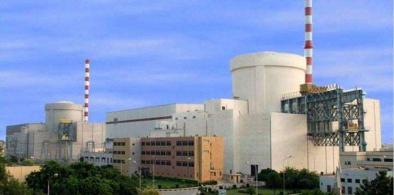
Pakistan has used its Centres of Excellence to promote and share best practices in nuclear security through three affiliated institutes: the Pakistan Centre of Excellence for Nuclear Security (PCENS), the National Institute of Safety and Security (NISAS), and the Pakistan Institute of Engineering and Applied Sciences (PIEAS), writes Rabia Javed for South Asia Monitor
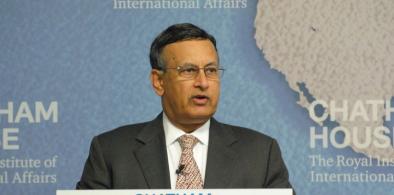
Thirty prominent human rights advocates and peace activists, who disagree with a lot that is happening in Pakistan. Either living at home, but most of them exiled abroad, participated in the conference titled Enforced Disappearances, State-sanctioned killings, & Diminishing Democracy in Pakistan, writes Mahendra Ved for South Asia Monitor
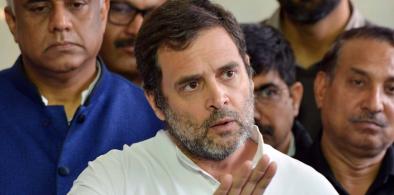
The BJP found itself on the back foot was when Congress leader Rahul Gandhi was pictured sitting on a pavement, talking to a group of migrants. It was a Haroun al-Rashid moment of a privileged person closely interacting with the unwashed masses, writes Amulya Ganguli for South Asia Monitor
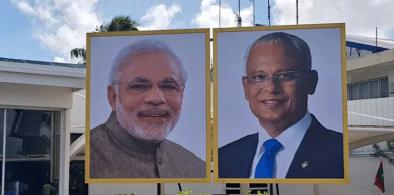
With the support of the United Arab Emirates, the Maldives not only prevented Pakistan from targeting India as Islamophobic during the OIC meeting, but also defended India’s record as a democratic, multicultural society, writes Shubha Singh for South Asia Monitor
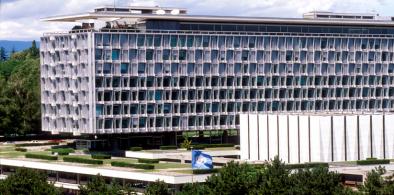
This is a time when India should fashion itself as a new global health hub and provide global leadership in health. Pushing a new agenda for the WHO’s relocation from Geneva to India would make immense sense, writes Ram Krishna Sinha for South Asia Monitor
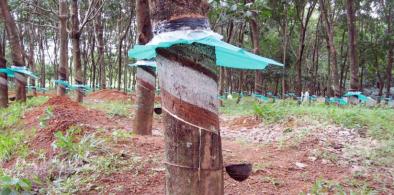
From Bangladesh to India and to Sri Lanka, the natural rubbers producers are getting squeezed under lockdowns and social distancing. It is sounding the death knell of the region’s rubber economy, writes K S Nayar for South Asia Monitor

Banks are generally very traditional in nature even though all the banks and financial institutions are going digital. Traditional nature change is again a challenge. The lockdown has come as a blessing in disguise as the changeover to digital systems can now pick pace, as it becomes the need of the day, writes Ashim Kumar Goswami for South Asia Monitor

Indian policy towards Nepal has been lackadaisical. Belief of mutual Hindu traditions should be viewed in the context of power in Nepal lying with the communists for whom religion is anathema, writes Lt Gen P. C. Katoch (retd) for South Asia Monitor
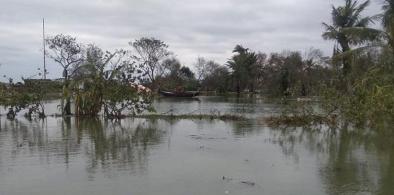
The question that arises uppermost is that are we learning the right lessons from these recurring weather episodes or just concentrating on immediate short-term disaster relief without taking any steps to make the regions ecologically sustainable and disaster resistant, writes Partha Pratim Mitra for South Asia Monitor

The coronavirus outbreak has hit the Maldivian economy hard, as travel restrictions and other preventive measures affected the country’s lucrative tourism industry, which contributes to the bulk of the island nation’s state revenue and foreign reserves, writes Kavita Bajeli-Datt for South Asia Monitor

On April 23, 2020, in a virtual conference ‘Enhancing regional cooperation in South Asia to combat COVID-19 related impact on its economics’ organized by the World Economic Forum, Bangladesh PM Sheikh Hasina placed five-point proposals to combat this global crisis with collective responsibility and partnership from every society, writes Dr. Mohammad Tarikul Islam for South Asia Monitor
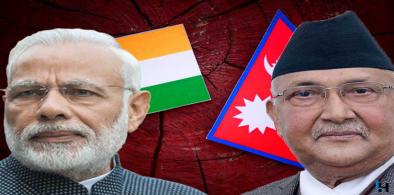
The Kalapani issue first came into prominence in 1997 when the Indian and Chinese governments came to an agreement to open a route for the annual Kailash-Mansarovar yatra through Lipulekh pass. Nepal objected to the use of Lipulekh, writes Shubha Singh for South Asia Monitor
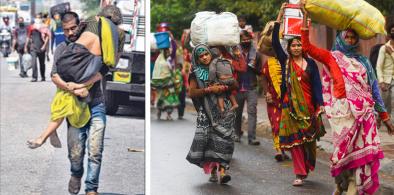
Bihar is the poorest state of the country in per capita terms. Can it find the enormous resources required to fight the virus and its impact on the economy? writes Gulrez Hoda for South Asia Monitor