
ASEAN-Russia Summit in Kazan

Russia’s Bid for a Larger Asian Role; Will Be Closely Watched by Beijing

Russia wants to use the Far East to diversify away from the West, but it risks becoming excessively dependent on China. That is why Southeast Asia, India, Japan and other Asian partners matter to Moscow as they provide Russia with a wider Asian field and fallback and reduces the risk that Russia’s entire eastern pivot becomes a one-way dependence on Beijing.
 

The Architecture of Disruption: Structural Parallels Between Indira Gandhi and Donald Trump

For democracies under pressure, the lesson is sobering. Institutions do not only collapse when attacked from outside; they can also be hollowed out from within by leaders who master the language of mass appeal better than the language of internal restraint. 

Bangladesh's Bid to Clear a US-Wanted Terror Fugitive Raises Troubling Questions

Although the Yunus administration was replaced by an elected government in February 2026, the influence of Islamist groups, jihadist organizations, and religious extremists has reportedly remained largely unchanged. As a result, several prominent leaders of Islamist organizations and militant groups continue to gain strength.

81 Years After Hiroshima: Don't Normalize the Unthinkable

August 6 is not a day for ceremonies alone. It is a day to remember why restraint was carefully created in the first place  and to  prevent another Hiroshima - Nagasaki. A third devastation, deliberate or accidental will  take less than 43 seconds.

More on Geopolitics, Security and Strategic Affairs

SAARC is back, but only to fight COVID-19

The question whether India’s initiative will develop into a SAARC minus Pakistan or lead to a revival of SAARC itself remains open,  writes Amb T P Sreenivasan (retd) for South Asia Monitor

Only a Biden presidency can strengthen Indo-US ties

This inability to get any meaningful trade agreement in place speaks volumes about India’s potential future relations with the US with Trump as president, writes Frank F Islam for South Asia Monitor

Time to review lockdown to stop economic shutdown

Lockdown cannot be an option to exercise indefinitely. We need to progressively lift it so that the economic costs will not overwhelm us, writes Mohan Guruswamy for the South Asia Monitor

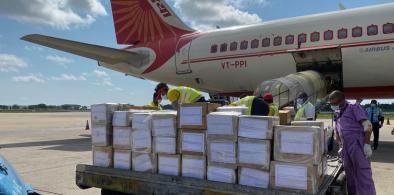
55 years later, India returns favour to US, emerges as humanitarian force

It wasn't only a favour to the US, Brazil or Israel. India also decided to send HCQ  “to all our neighbouring countries who are dependent on our capabilities” and “some nations who have been particularly badly affected" by the pandemic, writes Arul Louis for South Asia Monitor

Is 'temporary' release of prisoners enough to halt spread of COVID-19?

In South Asia, India has, on the directives of its Supreme Court, constituted High Powered Committees in each state to define criteria for release of both sentenced and unsentenced prisoners, writes Madhurima Dhanuka for the South Asia Monitor

India could be staring at a human security catastrophe

India has about 450 million workers in the informal sector and about a third of them are in the migrant cluster. Even if it is estimated that half of this workforce is grappling with hunger, the numbers are mind-boggling, writes C Uday Bhaskar for South Asia Monitor

Pakistan's fate in FATF once again hangs in balance

In order to save itself from being put under a blacklist, Pakistan has to work at least on papers with respect to various terror organisations to address ‘strategic deficiencies', writes Dr. Sanchita Bhattacharya for South Asia Monitor

Kashmiri youth being misled: Myth about 'demographic changes'

Who will benefit from the new rule? It would be the wards of West Pakistan refugees, Balmikis, Gorkhas, Punjabis and migrant labour in the newly created union territory, writes Brig Anil Gupta (retd) for South Asia Monitor
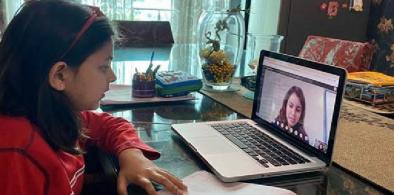
South Asian countries cannot make the same choices as developed nations

The biggest challenge for governments in South Asia is to fight this pandemic like a first-world country but with the limited resources of a third-world country, writes Dr. Jitender Bhandari for the South Asia Monitor

Post-COVID 19: Needed a brave new world, not chasing shadows

The world community reacted tardily and instead of shoring up the defenses, it is now dousing the fires. The world in the future would warrant systems that are more alert to impending pandemics and crises, better prepared and strong leadership writes R Adm Vineet Bakhshi (retd) for South Asia Monitor
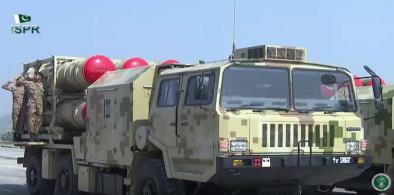
Unorganised workers in India: The COVID-19 crisis has highlighted their utter neglect

The legislation enacted way back in 2008, known as The Unorganised Workers'Social Security Act (mentioned as the Act hereafter) which entered the statute book on December 31, 2008, if implemented seriously, could have come to the rescue of the unorganised workers, which stand to lose enormously both in terms of livelihood opportunities and social security at the present juncture due to the health pandemic, writes Partha Mitra for South Asia Monitor

Leaving Afghanistan's fate to the Taliban

It would not be surprising if American troops are also attacked after part withdrawal has taken place, with blame, apportioned to Islamic State, as was done in the case of the recent attack on Kabul gurdwara, while China and Pakistan laughed all the way home, writes  Lt Gen P. C. Katoch (retd) for South Asia Monitor
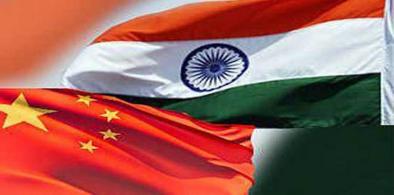
India needs to be fair to its own migrants, the city builders and sustainers

The census data of 2011 reflects that the four states - Uttar Pradesh (UP), Bihar, Rajasthan, and Madhya Pradesh -account for 50 percent of India's total inter-state migrants, write Suresh Kumar Patel, Abhishek Kumar & Noorul Quamer for South Asia Monitor

The Wuhan virus and China's biological warfare: Warnings the world ignored

Launch of China Virus/COVID-19  - which only India had guts to name biological weapon - had decades of preparation to deny/mitigate global response, writes  Lt Gen P. C. Katoch (retd) for South Asia Monitor

COVID 19: South Asian nations must take care of refugees, or we all are vulnerable

The Rohingya refugees staying inside and outside camps in Bangladesh and India are worth mentioning in the South Asian context. Their already slum-like dwellings, lack of fresh water and sanitation, densely-crowded living conditions and hunger puts them in a more perilous situation, writes Sariful Islam for South Asia Monitor