The row between the two nations heated up when Nepal’s Communist Prime Minister K P Sharma Oli on May 20 vowed before the country’s Parliament to reclaim the three “disputed areas” from New Delhi., writes Kavita Bajeli-Datt for South Asia Monitor


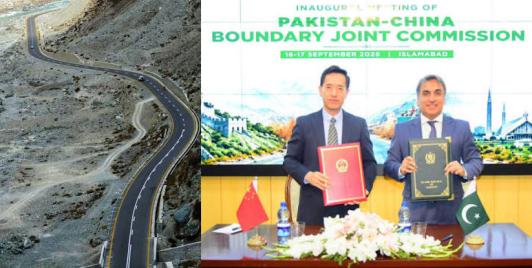
The Pakistan-China Boundary Joint Commission needs to be viewed in backdrop of the fast-changing geopolitics of South Asia and its military implications. The Shaksgam Valley sits immediately north of the Siachen Glacier and just west of Aksai Chin under China's control. By controlling Shaksgam, China can jointly monitor Indian military movements from the north while Pakistan does so from the south.
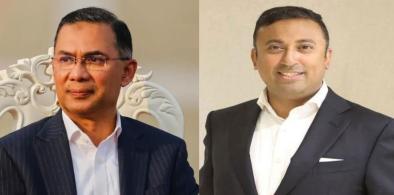
The question, therefore, is not whether Bangladesh could have secured a particular agreement simply by attending. There is no guarantee that participation in a summit automatically produces investment or diplomatic breakthroughs. The question is whether Bangladesh benefited by being absent.
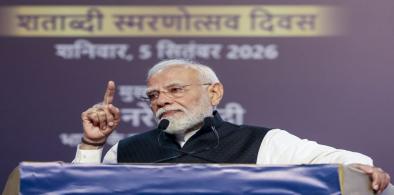
For China to achieve its hegemonic ambitions in Asia, weakening democracies is essential. India, therefore, stands as an iron wall against illiberal encroachments, positioning itself as both a regional hegemon and a defender of democratic order.
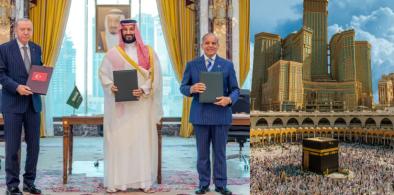
The Mecca Pact, barely a month old, has already been discredited. Its authenticity is in question, its efficacy doubtful. The very notion of an “Islamic Nato” has been exposed as a mirage. Collective defence requires not just declarations but capabilities, coordination and political will. None of these are evident in the pact’s functioning.
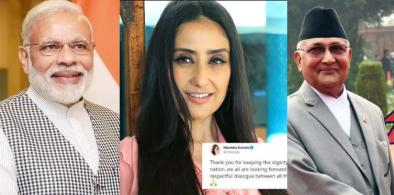
The row between the two nations heated up when Nepal’s Communist Prime Minister K P Sharma Oli on May 20 vowed before the country’s Parliament to reclaim the three “disputed areas” from New Delhi., writes Kavita Bajeli-Datt for South Asia Monitor
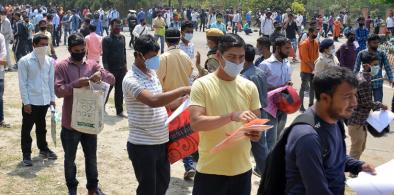
South Asia is home to over 1.8 billion people and houses half of the world’s impoverished communities, writes Aashish Kiphayet for South Asia Monitor

Honour killing has been part of social traditions in Pakistan’s deeply conservative tribal society, but not confined to it. Killings have been reported in Lahore, Karachi and other places as well, writes Mahendra Ved for South Asia Monitor
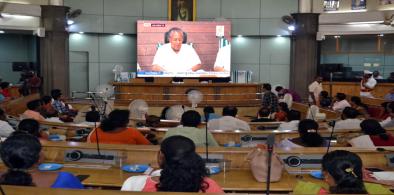
There is a need for a radical attitudinal change in governance and also among Malayalees. Skilling graduates, who are mostly unemployable, should be top priority, writes K S Nayar for South Asia Monitor
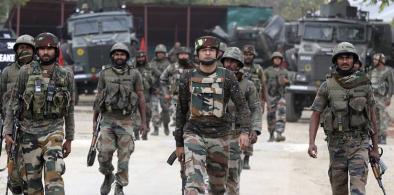
The shift in the approach towards terrorism is mildly indicative of India's assertive and uncompromising stance in dealing with terrorism, writes Jay Maniyar for South Asia Monitor
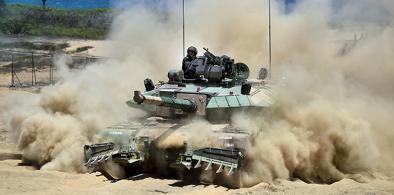
India’s political establishment seems to have utterly failed to appreciate the need for self-sufficiency in military hardware. Consequently, no roadmap or grand strategy has ever been drawn up, for attaining autonomy in defence-production, writes Admiral Arun Prakash (retd) for South Asia Monitor
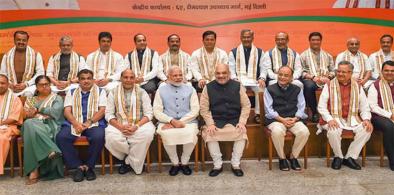
The pandemic has revealed the Jana Sangh-BJP’s basic faultline which marks the breach between the affluent and the non-trader lower castes and the lower middle and working classes, writes Amulya Ganguli for South Asia Monitor
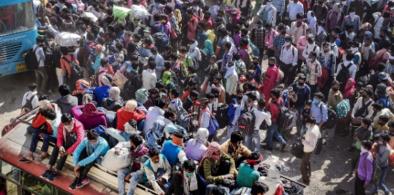
With livelihoods suddenly coming to an end due to the lockdown, the option left for the migrant workers was to make a hasty retreat to their home towns. The presence of some form of Universal Basic Income (UBI) could have mitigated their uncertainties to a certain extent, writes Partha Pratim Mitra for South Asia Monitor
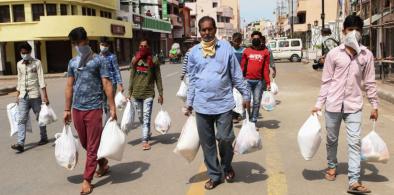
This is Modi’s moment to transform India. He has the ability to not waste this opportunity to make the migrants stay in their safe homes and not allow them back to the cities., writes Rajendra Shende for South Asia Monitor

Kerala certainly has reasons to be proud of its record so far and the praise showered on it is well deserved. But the real test is yet to come, writes Amb T. P. Sreenivasan (retd) for South Asia Monitor
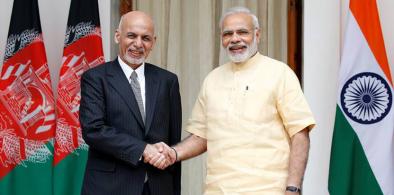
India is one of the key actors to have contributed to the post-war redevelopment of Afghanistan. So far, India has contributed USD 3 billion to it, which makes Delhi the largest donor to Afghanistan in South Asia and the fifth largest in the world, writes Chayanika Saxena for South Asia Monitor

Bhutan’s energetic and collective response under the personal leadership of King Jigme Khesar Namgyel Wangchuck helped to deal with the crisis. Bhutan has the advantage of both the Prime Minister Lotay Tshering and Foreign Minister Tandi Dorji being medical doctors with a background of public health, writes Shubha Singh for South Asia Monitor
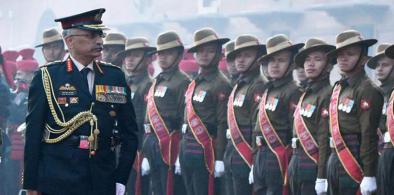
The Modi government is methodically trying to resolve the Kashmir issue, which is lingering since the partition of the Subcontinent in 1947. India and Pakistan have already fought three wars, including the Kargil conflict of 1999, on Kashmir, writes Jai Kumar Verma for South Asia Monitor
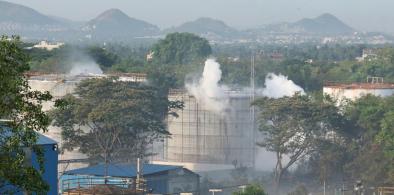
While in these difficult times when there is a need for more workers' protection, relaxation of labour laws may not be in the overall interest of workers and there is a need for a rethink on the entire issue, particularly after incidents such as the Visakhapatnam gas leak, writes Partha Pratim Mitra for South Asia Monitor

Major power interest in Sri Lanka despite the COVID-19 pandemic was noticed earlier this year when Russian Foreign Minister Sergey Lavrov, US Principal Deputy Assistant Secretary of State for South and Central Asia, Alice G Wells, and China’s Foreign Minister Wang Yi, all visited Sri Lanka in January to hold bilateral talks with the Sri Lankan government, writes Lt Gen P. C. Katoch (retd) for South Asia Monitor