The biggest challenge for governments in South Asia is to fight this pandemic like a first-world country but with the limited resources of a third-world country, writes Dr. Jitender Bhandari for the South Asia Monitor


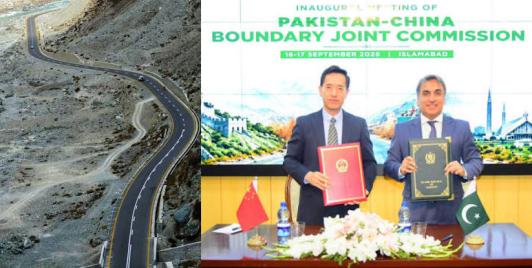
The Pakistan-China Boundary Joint Commission needs to be viewed in backdrop of the fast-changing geopolitics of South Asia and its military implications. The Shaksgam Valley sits immediately north of the Siachen Glacier and just west of Aksai Chin under China's control. By controlling Shaksgam, China can jointly monitor Indian military movements from the north while Pakistan does so from the south.
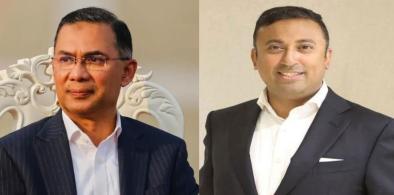
The question, therefore, is not whether Bangladesh could have secured a particular agreement simply by attending. There is no guarantee that participation in a summit automatically produces investment or diplomatic breakthroughs. The question is whether Bangladesh benefited by being absent.
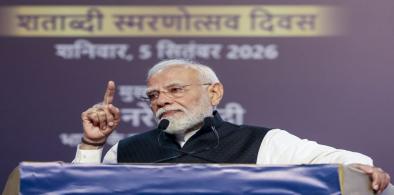
For China to achieve its hegemonic ambitions in Asia, weakening democracies is essential. India, therefore, stands as an iron wall against illiberal encroachments, positioning itself as both a regional hegemon and a defender of democratic order.
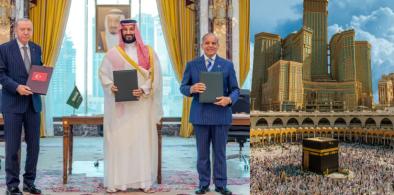
The Mecca Pact, barely a month old, has already been discredited. Its authenticity is in question, its efficacy doubtful. The very notion of an “Islamic Nato” has been exposed as a mirage. Collective defence requires not just declarations but capabilities, coordination and political will. None of these are evident in the pact’s functioning.
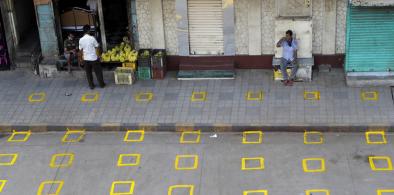
The biggest challenge for governments in South Asia is to fight this pandemic like a first-world country but with the limited resources of a third-world country, writes Dr. Jitender Bhandari for the South Asia Monitor

The world community reacted tardily and instead of shoring up the defenses, it is now dousing the fires. The world in the future would warrant systems that are more alert to impending pandemics and crises, better prepared and strong leadership writes R Adm Vineet Bakhshi (retd) for South Asia Monitor
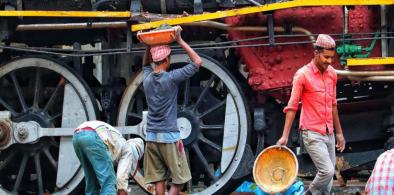
The legislation enacted way back in 2008, known as The Unorganised Workers'Social Security Act (mentioned as the Act hereafter) which entered the statute book on December 31, 2008, if implemented seriously, could have come to the rescue of the unorganised workers, which stand to lose enormously both in terms of livelihood opportunities and social security at the present juncture due to the health pandemic, writes Partha Mitra for South Asia Monitor

It would not be surprising if American troops are also attacked after part withdrawal has taken place, with blame, apportioned to Islamic State, as was done in the case of the recent attack on Kabul gurdwara, while China and Pakistan laughed all the way home, writes Lt Gen P. C. Katoch (retd) for South Asia Monitor
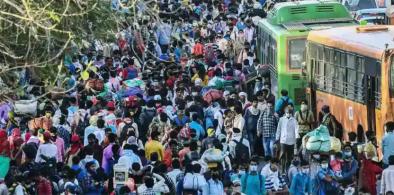
The census data of 2011 reflects that the four states - Uttar Pradesh (UP), Bihar, Rajasthan, and Madhya Pradesh -account for 50 percent of India's total inter-state migrants, write Suresh Kumar Patel, Abhishek Kumar & Noorul Quamer for South Asia Monitor

Launch of China Virus/COVID-19 - which only India had guts to name biological weapon - had decades of preparation to deny/mitigate global response, writes Lt Gen P. C. Katoch (retd) for South Asia Monitor
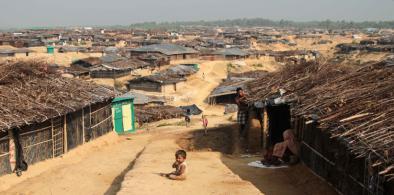
The Rohingya refugees staying inside and outside camps in Bangladesh and India are worth mentioning in the South Asian context. Their already slum-like dwellings, lack of fresh water and sanitation, densely-crowded living conditions and hunger puts them in a more perilous situation, writes Sariful Islam for South Asia Monitor
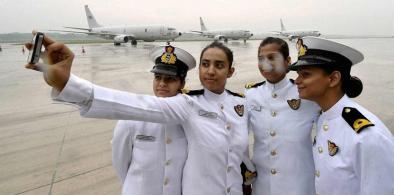
In the Indian context, the Indian Air Force and the Indian Navy have granted a permanent commission to women officers even as both have opened up some combat roles for women, write Subhranil Ghosh & Sayantan Bandyopadhyay for South Asia Monitor
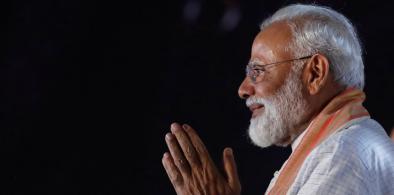
While Trump and Bolsonaro are worried about the virus' impact on their nation's markets, economies and, by extension, their political future, Modi was open enough to admit that the pandemic would have economic costs, but saving lives was more important for him and his government, writes Tarun Basu for South Asia Monitor
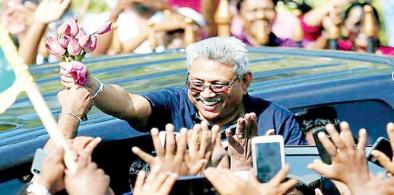
The return of a Rajapaksa to the island’s highest office coincides with a potent form of majoritarianism in Sri Lanka, driven simultaneously by jingoism and fear among the electorate, writes Arman Sidhu for South Asia Monitor
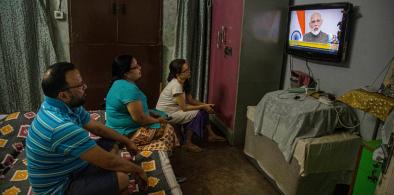
After independence, this is perhaps the first time India is being put to such a test, with every part of the country affected. Not confined to India alone, but the entire neighbourhood of South Asia is being engulfed by this pandemic, writes Brig Anil Gupta (retd) for South Asia Monitor
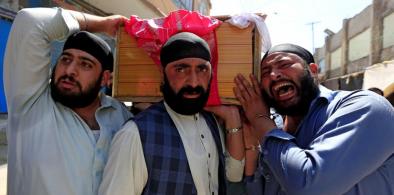
Afghanistan has become an extremely dangerous country for its residents, especially religious minorities. After surviving there for hundreds of years, the Sikhs virtually don’t even have a right to exist anymore, writes Sanchita Bhattacharya for South Asia Monitor
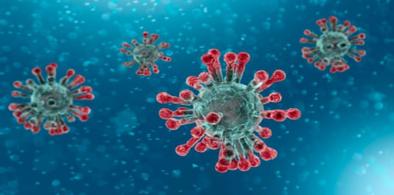
The disruption of supply chains coupled with an unprecedented economic disaster waiting for the world due to the pandemic, the pertinent question is - has the time come for the world to have a rethink for globalization, asks Pranay Kumar Shome for South Asia Monitor
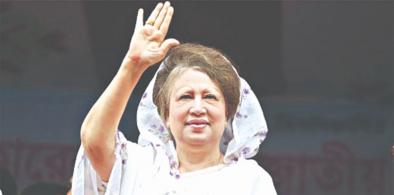
Despite Khaleda Zia’s suspended sentence and release from jail, no news except about the coronavirus is attracting the people’s attention in Bangladesh, writes Swadesh Roy for South Asia Monitor
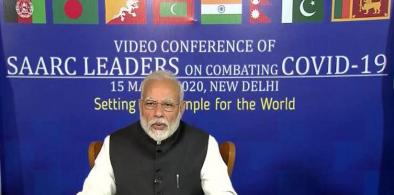
If the habits of cooperation and mutual understanding developed while fighting together against COVID-19 allow the member countries to regain the lost pedestal of SAARC, it will augur well for peace and prosperity of the region, writes Monish Tourangbam for South Asia Monitor