
Atma Jayaram (1915-1990)

Atma Jayaram: India’s Gentleman Spymaster who loved Sri Lanka

Recently declassified documents from the National Archives in Colombo have shed light on Jayaram's involvement in assisting Sri Lanka during the leftist guerrilla insurrection that engulfed the island nation.  Acting on Jayaram's advice, 150 Indian Gurkha soldiers were reportedly deployed to protect Colombo International Airport.

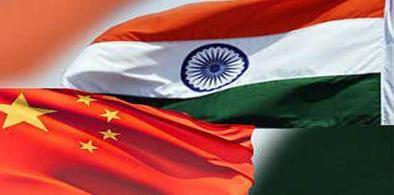
Managing India--Border Tensions - and the 'New Normal'

It is an  elegantly worded statement and impossible to disprove. It turns a dispute about differing LAC perceptions,  acknowledged since 1993,  into a story of Chinese compliance and Indian deviation.  This is the new China that India must manage, not the old one.  

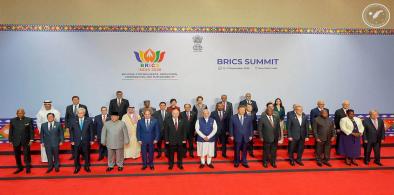
India's BRICS Legacy: Did 2026 Produce Something More Durable?

India achieved this in a group that has changed a great deal. BRICS now has 11 members and 10 partner countries, with very different political systems and, at times, sharply different views. In May 2026, a meeting of BRICS foreign ministers in New Delhi ended without a joint statement because of differences among members over the conflict in West Asia.

Is India-Pakistan Peace Possible? Need to Erase Religious Differences, Embrace Common Humanity

We must approach peace in the same way: One school screening, one honest history lesson, one interfaith friendship, one community conversation, and one courageous act at a time. We cannot change the past, but we can decide what we pass on to the next generation

More on Geopolitics, Security and Strategic Affairs

The power of social media: It can win or lose a war today

India's immediate neighbours, especially China, and its client state Pakistan, are conducting social media war against it. Countering them is a challenge, especially against opaque, digitally isolated China, writes   Lt Gen P R Kumar (retd) for South Asia Monitor

Democracy in Nepal is under threat

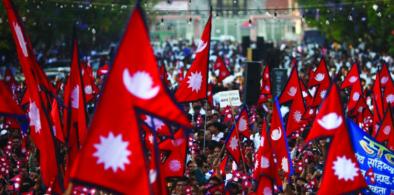
The present regime in Nepal has been blamed for attempting to push through several controversial bills, including the Media Council Bill and Information Technology Bill, among others. The intention and some provision of the bills are against the basic notion of democracy, writes Ravi Nayak for South Asia Monitor

Aurangabad tragedy a scar on the Indian consciousness: Migrant workers need more State empathy

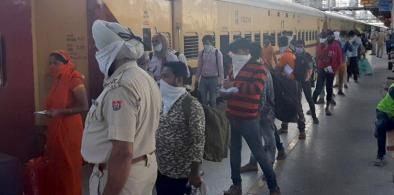
The 2011 census had revealed that India has as many as 453 million internal migrants and this includes both inter-state migrants and those within each state.  Absent credible national data for the last few years, some studies have suggested that this figure may now be in excess of 600 million, writes C Uday Bhaskar for South Asia Monitor

Bangladesh lowest in press freedom rankings in South Asia

Bangladesh ranked the worst position in any country in South Asia. Even it’s worse than war-ravaged Afghanistan, which has been placed at 122, Pakistan (145), India (142), Sri Lanka (127), Nepal 112, Bhutan (67), and Maldives (79), writes Aashish Kiphayet for South Asia Monitor

India needs to hit Pakistan economically; carry out limited military operations

With Pakistan in an economic mess more should be done to hurt its economy. Limited military means to do so remains a viable option, with all other unstated options open, writes  Lt Gen Syed Ata Hasnain (retd)  for South Asia Monitor

Bangladesh's paradox of reopening its garment industry: Time to end dangerous working conditions

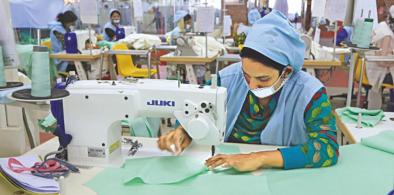
Considering the working environment and densely populated area combined with shabby living conditions of the workers, Dhaka and its neighboring districts of about 2.87 million people could be the next hotspot of the coronavirus outbreak, write Dr. Mohammad Rezaul Karim and Dr. Mohammad Tarikul Islam for South Asia Monitor

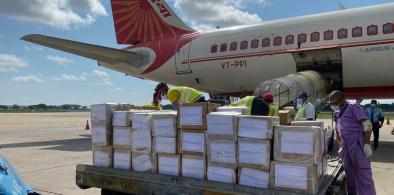
India scores big with medical diplomacy, prepares to play larger role

In the wake of COVID-19, India, with its medical diplomacy, struck the right chords and made the best use of its soft power stature in this crisis and has been trying to fill the global leadership vacuum, writes V K Samudrala for South Asia Monitor

Strengthening of rural institutions a must to revive economy

The economic discourse in India in a little over two months has changed from one of confidently steering the economy through investment and consumption measures to one of the stimulus packages for the needy and the vulnerable by government and liquidity infusion by RBI for businesses and jobs to survive, writes Partha Pratim Mitra for South Asia Monitor

With theatres shut, artistes need urgent help for survival

We have to reach out across the country to help these performing artistes, backstage technicians, designers, cultural entities and their employees to endure the economic hardships caused by the forced closure of their operations due to the spread of COVID-19, writes Gautam Bhattacharya for South Asia Monitor

With Facebook-Jio mega deal, retailing in India enters a digital future

The future of India’s retail thus is increasingly digital. Post COVID-19, consumers especially in urban India are bound to change their behaviour, avoiding crowded bazaars and malls and preferring to shop online. Kiranas -- there are 12 million small and medium retailers employing 40 million people, writes Nadella Chandra Mohan for South Asia Monitor 

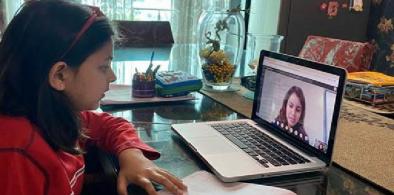
Will one see a paradigm shift in education? Virtual classrooms the new norm

With such positive initiatives towards a totally technology-driven and -leveraged communication culture, the day seems to be not very far when one will see a paradigm shift in education - from a brick-and-mortar education to a click-and-portal one, writes Ashim Kumar Goswami for South Asia Monitor

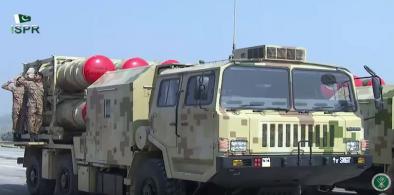
Why has Pakistan deployed LY-80 missiles near the India border?

Pakistan wants to fulfill several objects by placing LY-80 missiles near Indian borders, writes Jai Kumar Verma for South Asia Monitor

As China faces world's ire, time for India to rise

As many nations relocate their industries to newer locations, India should play its cards well and, with alacrity,  could be one of the preferred destinations for replacing China, writes Lt Gen Kamal Davar(retd)  for South Asia Monitor
South Asian nations should enhance public spending on health, scientific research

There is a need to invest in scientific research in the South Asian region so that disease control measures could be taken in the right earnest, writes Shubham Singh for South Asia Monitor

COVID-19 and the growing vulnerability of overseas Bangladeshis

Due to COVID-19, Bangladeshi  workers abroad are caught jobless, quarantined in shabby living places, mentally disturbed because of their family crisis of getting no money, fear of being affected by the coronavirus aftermath and uncertainties of being back in Bangladesh, write Dr. Mohammad Rezaul Karim and Dr. Mohammad Tarikul Islam for South Asia Monitor

Newsletter Subscription

The subscriber's email address.
Stay informed - subscribe to our newsletter.