In view of China’s build-up all along the Line of Actual Control (LAC) till Arunachal Pradesh, it is just as well that India is pursuing efforts to equip its armed forces with AI-backed systems


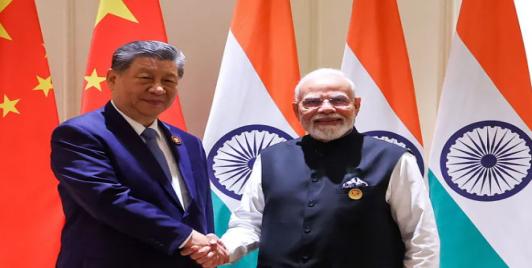
Why not begin by reopening serious discussions with Chinese conglomerate BYD about an Indian factory? BYD is now one of the world’s dominant EV manufacturers. Its Indian ambitions were caught in the post-Galwan investment freeze. Invite it back to the table—but on Indian terms
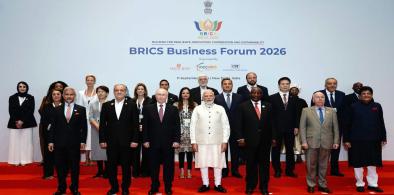
But the choice test applies to India as much as to the countries it hopes will follow its lead. If BRICS genuinely widens India's menu of markets, technology partners and financing sources without deepening its dependence on any one of them, it becomes a credible model for the rest of the Global South.
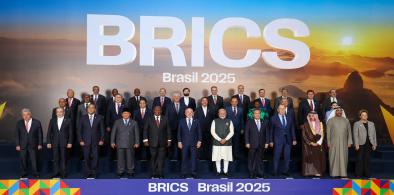
India’s stand for a dollar-based system is not a rejection of BRICS alignment or unity, but it is a determined choice to act in favour of self-interest like any other founding member. The key difference is India’s position has been the most transparent of all founding members rather than standing behind the collective rhetoric.
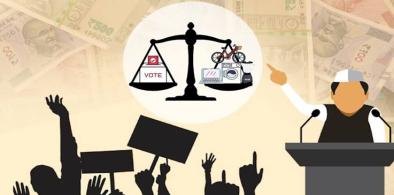
The evidence indicates that the increase in state borrowing over the past decade is best understood as the outcome of a changing fiscal federal system rather than simply an expansion of welfare politics.
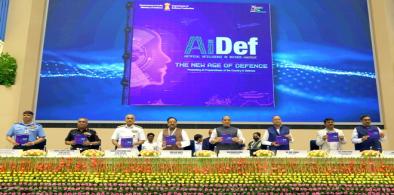
In view of China’s build-up all along the Line of Actual Control (LAC) till Arunachal Pradesh, it is just as well that India is pursuing efforts to equip its armed forces with AI-backed systems

A new spectrum of tactical competition has begun in the Indo Pacific, and it requires more than threats and deterrence to determine the path and pattern of the conflict; it needs wisdom and strategic foresight by all the players in playing both the short and long game with both conventional and new tools of war and diplomacy

The Indian Army’s notification in July 2022 inviting applications from persons fluent in Mandarin to properly communicate with the Chinese military along the Line of Actual Control (LAC) is a beginning in fulfilling a decades-long important requirement

Regardless of future leadership transitions in Washington, the pivot to the Indo-Pacific will be here to stay in safeguarding America’s status quo and primacy, writes Collins Chong Yew Keat for South Asia Monitor

Interestingly, despite gaining significant influence and footprint in Sri Lanka, China’s failure to assist the crisis-hit country has left analysts baffled about Beijing’s thought process. The restructuring of loans, which Colombo sought repeatedly, was ignored by China
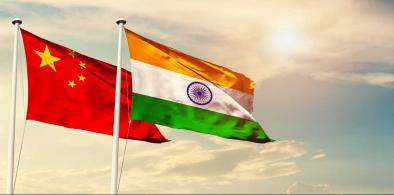
During the military commanders' meeting, the Indian side asked for the PLA to move back from all the “friction points”, which is a euphemism for "intrusions" used by India to avoid acknowledging it has lost control of some 1,000 sq km of territory during the 2020 Chinese aggression. For the same reason, India keeps asking of more military-to-military talks, with each round continuing 12-13 hours without any progress, writes Lt Gen P.C. Katoch (retd) for South Asia Monitor
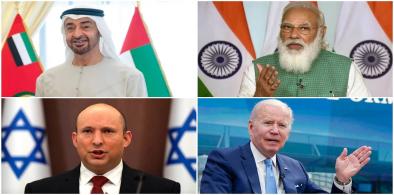
The I2U2 is an attempt to replicate in a different environment the Indo-Pacific Quad of India, the US, Japan and Australia, the goal of which is developing a bulwark of democracies against China

The punitive mood against Chinese firms is not reflected in a diminishing dependence on Chinese goods on the trade front or telecom technology. The dragon remains one of our largest trade partners, writes N. Chandra Mohan for South Asia Monitor

Apart from engaging in projects for upgrading India highways that go all the way till the Bangladesh border, Japan could also collaborate with India in the constantly deferred Agartala (India)-Akhaura (Bangladesh) rail link, something that provides scope for Indo-Japan collaboration under India’s Act East Policy and Japan’s Free and Open Indo-Pacific Strategy, writes Prarthana Sen for South Asia Monitor

Abe was among the first to envision with then-Prime Minister Manmohan the group of democracies as a potential counterweight to China in the Indo-Pacific taking forward the cooperation of the four countries in providing relief during 2004 tsunami

China has harmed Tibet, massacred innocent Tibetans and is occupying Tibet for the last several decades with a vice-like grip and suppressing freedom of the Tibetans
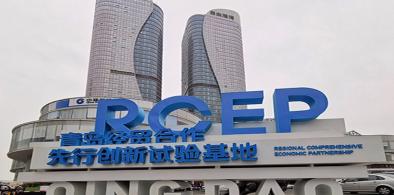
There are several ways whereby the IPEF will outbid China in the Indo-Pacific region and outweigh India’s China dependency, writes S. Majumder for South Asia Monitor

The short game might be Beijing’s to lose for now, but the long game is certainly Washington’s to squander away, writes Collins Chong Yew Keat for South Asia Monitor

Vietnam, an important country of the ASEAN (Association of Southeast Asian Nations), has territorial disputes with China in the South China Sea region. India has oil exploration projects in the Vietnamese waters in the South China Sea. India and Vietnam have been boosting their maritime security cooperation in the last few years to protect common interests.
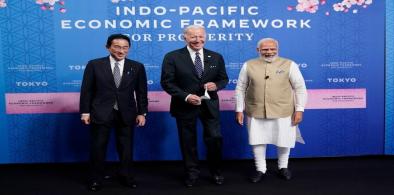
Since the US is not a member of RCEP, the collaborative approach of the US and India will pose a big challenge to RCEP, which falls under Chinese influence, writes S. Majumder for South Asia Monitor