Since the US is not a member of RCEP, the collaborative approach of the US and India will pose a big challenge to RCEP, which falls under Chinese influence, writes S. Majumder for South Asia Monitor


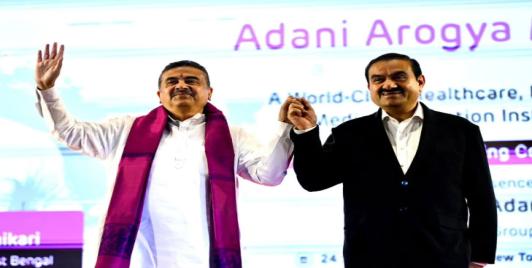
The larger opportunity before West Bengal is therefore not another round of infrastructure creation in isolation. It is the creation of an ecosystem in which infrastructure, private capital, local enterprise and skilled labour reinforce one another.
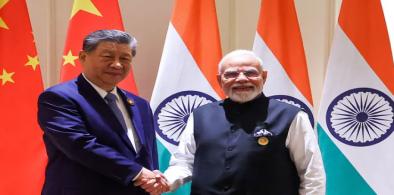
Why not begin by reopening serious discussions with Chinese conglomerate BYD about an Indian factory? BYD is now one of the world’s dominant EV manufacturers. Its Indian ambitions were caught in the post-Galwan investment freeze. Invite it back to the table—but on Indian terms
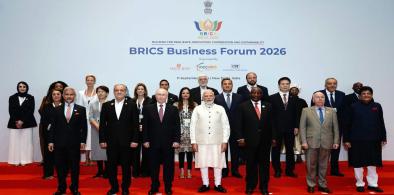
But the choice test applies to India as much as to the countries it hopes will follow its lead. If BRICS genuinely widens India's menu of markets, technology partners and financing sources without deepening its dependence on any one of them, it becomes a credible model for the rest of the Global South.
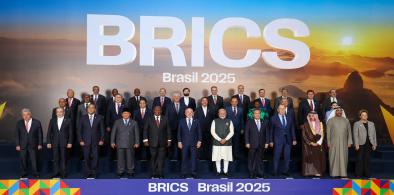
India’s stand for a dollar-based system is not a rejection of BRICS alignment or unity, but it is a determined choice to act in favour of self-interest like any other founding member. The key difference is India’s position has been the most transparent of all founding members rather than standing behind the collective rhetoric.
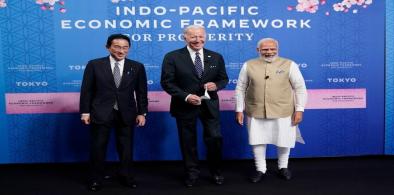
Since the US is not a member of RCEP, the collaborative approach of the US and India will pose a big challenge to RCEP, which falls under Chinese influence, writes S. Majumder for South Asia Monitor

Michael Kugelman, a senior fellow at the Washington-based Wilson Centre, noted in a Foreign Policy Brief that the Biden administration’s growing engagement with countries like Sri Lanka, Nepal, and the Maldives, “marks a shift for Washington, which in recent decades has expended most of its diplomatic capital in the region on India, Pakistan, and Afghanistan.”

Beijing also seems nervous as its earlier run, largely on the back of support of the now-discredited Rajapaksa brothers, appears to have come to an end. Unlike earlier, a crisis-hit Sri Lanka in need of assistance is more eager than any time before in recent years to embrace India, the West, and the United States.
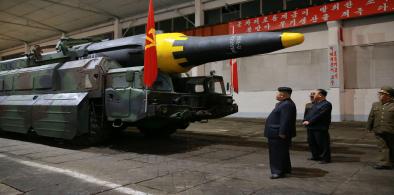
Kim Jong-un's new strategy shifts the region's counter-reaction to a new level of risk that will invite changes in the dynamics of the military spectrum, writes Collins Chong Yew Keat for South Asia Monitor

The summit is taking place under the shadow of the Russia-Ukraine conflict. It is also taking place at a time when relations between China and the Quad member countries have become fraught, with Beijing increasingly challenging democratic values and resorting to coercive trade practices.

A review of Quad initiatives is one of the key agendas for the four world leaders, an Indian government statement quoted the prime minister as saying before his departure. The grouping includes the world’s oldest and largest democracies — Japan, India, Australia and US — and represents a combined GDP of $34 trillion, or 40 per cent of the global total.

Bachelet, during her China visit between 23-28 May, will “meet with a number of high-level officials at the national and local levels, civil society organizations, business representatives, academics, and deliver a lecture to students at Guangzhou University,” the statement released by her office said on Friday

But what came as surprise amid this report was the Chinese state media's defence of India after criticism from Group of Seven (G7) nations, ANI news agency said. Global Times, a Chinese government outlet said, "Blaming India won't solve the food problem."

Chinese firms also raised objections to Pakistan’s new draft renewable energy policy, which, interestingly, calls for international competitive bidding—something the Chinese have been advocating in the Sri Lankan power sector, mainly to counter Indian influence
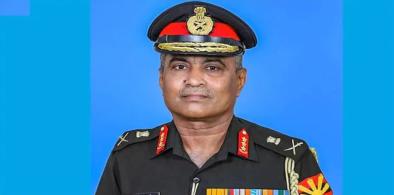
In his book "India-China Boundary Issues", late Indian diplomat R S Kalha observed that, "China will continue its policy of keeping India strategically confined to South Asia with the active assistance of Pakistan, and strategically imbalanced by continuing incursions across the LAC.In such an event, there is little change that there will be any meaningful forward movement in the settlement of the boundary dispute between India and China."
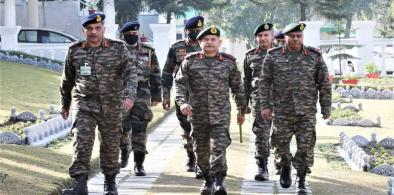
“Earlier, we used to say Chinese have strategic patience. They are ready to wait. Now, the present India has come up a long way and we also have strategic patience and we are also ready to wait,” he said
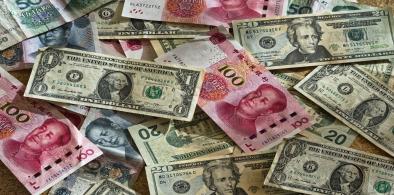
Currently, the total trade between India and China is exchanged through US dollar per se. As the Chinese yuan is not a global currency, it is more stable than the US dollar, writes S. Majumder for South Asia Monitor
Significantly, Colombo is also seeking bridge financing through bilateral means from India and China as the negotiations with the IMF will take at least three-four months. So far, New Delhi has provided assistance worth $2.4 billion dollars in form of lines of credits and loan repayment deferment.
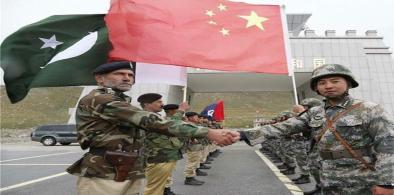
“Conventional security for CPEC projects is essential, but state institutions cannot ignore the strategic and political context. Cursing external elements alone cannot solve the problem,” Muhammad Ameer Rana, a security expert, wrote in Dawn. He suggested engaging with the Baloch people to address their concerns, the most prominent among them are the cases of missing people.
Xiaomi India is a trader and distributor of mobile phones in India under the brand name MI. It procures the completely manufactured mobile sets and other products from the manufacturers in India. "It has not availed any service from the three foreign-based entities to whom such amounts have been transferred," the ED said.