

Bangladesh’s Lord Ram Statue Controversy fuels Renewed Debate over Religious Freedom and Social Cohesion
The controversy surrounding the proposed Lord Ram statue has emerged at a time when the BNP government has been in office for only 100 days. Some political observers believe that certain groups may be attempting to exploit the issue to deepen existing tensions between Bangladesh and India
 Jun 23, 2026
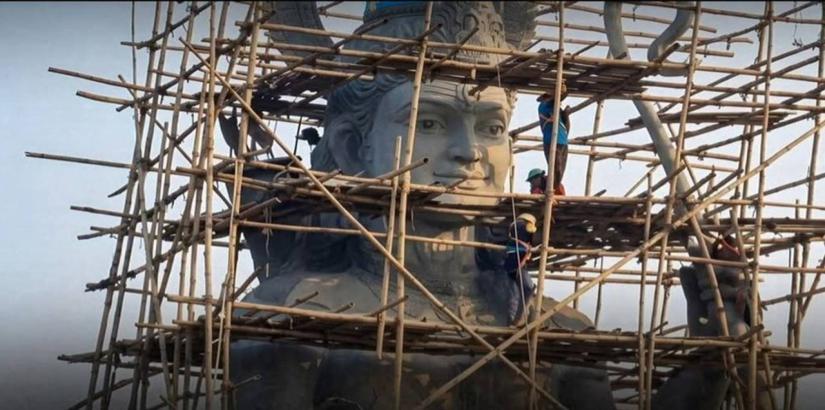
The suspension of construction work on what was planned to be Bangladesh's tallest statue of Lord Ram has sparked a nationwide debate about religious freedom, minority rights, communal harmony, and the role of the government in addressing religious sensitivities.
The proposed 81-foot-tall statue of Lord Ram, a revered deity in Hinduism, was being constructed within a temple complex in Madhyarampur village under Palashbari Upazila of Gaibandha district in northern Bangladesh. However, construction was temporarily halted following directives from local authorities amid growing controversy and security concerns surrounding the project.
According to Shyamal Kumar Mahanta, an adviser to the temple committee, the decision to suspend construction was taken voluntarily for the time being in the interest of maintaining social harmony. He stated that the committee did not wish the project to become a source of fresh tensions or provoke conflicts among different religious communities. The committee also emphasized that it wanted to avoid any situation that could potentially hurt the sentiments of people belonging to other faiths.
Despite these assurances, many members of Bangladesh's Hindu community view the suspension differently. They argue that halting the construction of a religious monument due to pressure from extremist groups undermines the constitutional rights of religious minorities and sets a troubling precedent for freedom of worship in the country.
Questions Over Minority Rights
The controversy has emerged at a politically sensitive time. Following the parliamentary elections held on February 12, the Bangladesh Nationalist Party (BNP) secured a two-thirds majority and formed the government. After taking office as Prime Minister, Tarique Rahman pledged that Bangladesh would be a safe and inclusive nation for all citizens regardless of political affiliation, ideology, or religious identity.
Only a few months into the new administration, however, questions are being raised regarding the government's ability to ensure equal religious rights for minority communities. Critics argue that the suspension of the Ram statue project has cast doubt on those promises and created concerns among both domestic and international observers.
Opposition to Lord Ram Statue
The temple complex where the statue was being built has a long history. Approximately eleven years ago, local Hindu devotee Sri Haridas Babu established a temple in Brindaban Para of Madhyarampur village. Initially, the complex featured idols of Goddess Kali and Radha-Govinda. Over time, the site expanded and became an important religious center for local Hindus.
Subsequently, a 30-foot-tall statue of Lord Shiva and a 50-foot-tall statue of Lord Krishna were installed at the temple. The Krishna statue attracted considerable attention and was officially inaugurated on November 25, 2025, by Manoj Kumar, the Assistant High Commissioner of India in Rajshahi.
Encouraged by the growing prominence of the temple complex, organizers launched an ambitious project to construct an 81-foot-tall statue of Lord Ram, which would become the tallest such monument in Bangladesh. However, as the structure gradually became visible, opposition to the project began to emerge.
In May 2026, objections were reportedly raised by an Islamist group known as Insaf Kayemkari Chhatra Sramik Janata. The group allegedly threatened to oppose the project and called for the construction to be stopped. As the controversy grew, several other Islamist political organizations also voiced concerns about the statue.
On June 12, local authorities ordered a temporary suspension of construction, citing security considerations and the need to maintain public order. Officials stated that the measure was intended to prevent potential unrest and ensure the safety of all communities in the area.
Hindu Community Protests
Following the suspension of construction work on the Lord Ram idol, Hindu community members from various districts across Bangladesh began organizing protests demanding that the project be allowed to continue. The controversy intensified after reports emerged from a protest rally in Gaibandha where demonstrators allegedly threw shoes at an image of Lord Ram, an act that many Hindus viewed as deeply offensive and disrespectful to their religious beliefs. In response, members of the Hindu community organized protest marches and a torchlight procession in Shahbagh, Dhaka, on June 19, calling for the protection of religious rights and demanding legal action against those responsible for the alleged insult.
Addressing the gathering at the conclusion of the procession, several speakers urged Prime Minister Tarique Rahman to take immediate action regarding the controversy. They warned that continued inaction on issues affecting the Hindu community could have political consequences and claimed that the movement, which began in Dhaka, would expand to all 64 districts of the country in the coming days. The speakers also demanded the immediate arrest and exemplary punishment of those accused of disrespecting an image of Lord Ram during the recent protests in Gaibandha.
Following the political changeover in Bangladesh on August 5, 2024, which resulted in the fall of the Awami League government and the emergence of an interim administration led by Dr. Muhammad Yunus, concerns were raised by various groups regarding the country's law-and-order situation. Critics of the administration alleged that a number of convicted militants escaped from prisons during the period of political unrest, while members of banned organizations such as Ansar al-Islam, Jama'atul Mujahideen Bangladesh (JMB), and Harkat-ul-Jihad were granted bail in several cases.
Hindu organizations and minority rights activists also claimed that incidents targeting minority communities increased during this period. They pointed to the arrest of Hindu religious leader Chinmoy Das Prabhu and other developments as examples of growing concerns among the Hindu community.
At the same time, supporters of the Lord Ram idol project have questioned why similar objections were not raised against the large Lord Krishna and Lord Shiva statues already standing within the same temple complex in Palashbari, Gaibandha, despite the broader political and security tensions that existed at the time.
Potential Impact on Bilateral Ties
The controversy surrounding the proposed Lord Ram statue has emerged at a time when the BNP government has been in office for only 100 days. Some political observers believe that certain groups may be attempting to exploit the issue to deepen existing tensions between Bangladesh and India and to place the government under political pressure. Supporters of the statue project have alleged that threats to vandalize or prevent the completion of the monument are part of a broader effort to inflame communal sentiments and generate controversy.
Meanwhile, opponents of the project have circulated claims that the temple complex could be linked to Indian interests, including unverified allegations regarding the presence of activities connected to India's external intelligence agency, RAW. No credible evidence has been publicly presented to substantiate such claims. Geopolitical analysts warn that the spread of unverified allegations and inflammatory rhetoric could further complicate bilateral relations between Bangladesh and India and contribute to unnecessary diplomatic tensions between the two neighboring countries.
Need to Address Communal Tensions
Hindus make up approximately 8 percent of Bangladesh's population and constitute the country's largest religious minority. Minority rights organizations and community leaders have expressed concern over what they describe as a recent increase in incidents targeting Hindus and other minority groups. According to available reports, 133 incidents of communal violence were recorded between January 1 and March 31 this year.
Bangladesh's Constitution guarantees all citizens the right to freely practice their religion and protects religious freedom as a fundamental right. Critics of the government's handling of recent controversies argue that authorities must ensure equal protection for all communities and avoid actions that could be perceived as discriminatory or one-sided.
Political observers warn that if tensions surrounding religious issues are not addressed through dialogue, impartial law enforcement, and adherence to constitutional principles, they could contribute to social unrest and affect public confidence in Tarique Rahman's government.
(The author is a senior Bangladeshi journalist who writes for local and international media. Views expressed are personal. He can be contacted at tajulblitz.bd@gmail.com. Follow him on X @tajulraj1 )





Post a Comment