Bangladesh is trying to utilize megaprojects as a lever to turn the country into a lucrative investment destination, writes Kazi Mohammad Jamshed for South Asia Monitor


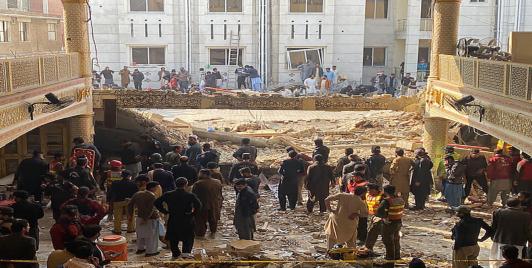
India must also recognise that Pakistan's internal security crisis has wider regional implications. Escalating Pakistan–Afghanistan tensions could create additional uncertainty along the western frontier, while attacks on Chinese projects could affect regional connectivity and investment.

India has demonstrated that it can develop and manufacture modern artillery systems. What needs reassessment is how quickly we acquire, integrate and field them, and how effectively we ensure that new technologies communicate and operate together.

If India says the security of its Northeast, border management, trade and connectivity matter, Bangladesh can equally say that water sharing, deaths at the border, market access, energy security, river management and sovereign equality matter to it.
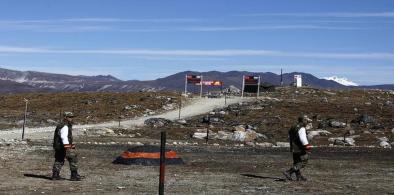
The Indian military views no disengagement in Arunachal Pradesh as part of a wider strategic recalibration, prompting India to match Chinese force rebalancing by shifting strike corps and resources equally across both northern and eastern fronts.

Bangladesh is trying to utilize megaprojects as a lever to turn the country into a lucrative investment destination, writes Kazi Mohammad Jamshed for South Asia Monitor
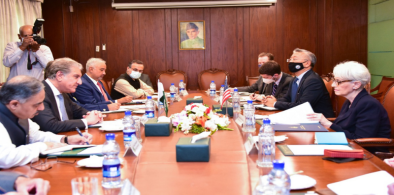
The world has moved on, but Pakistan - and its ideological fellow traveler, the Taliban - seem to be caught in a regressive time warp from which it is unable to extricate itself, writes Tarun Basu for South Asia Monitor

India’s dependence on China in the telecom sector is unlikely to reduce in the foreseeable future, writes N Chandra Mohan for South Asia Monitor
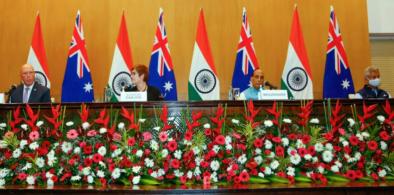
While forging these dialogues, India should not forget Bangladesh as the interests of the two neighbors are increasingly converging in recent times, writes Shubham for South Asia Monitor
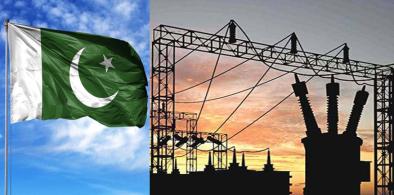
The Pakistan government has set a target of generating at least 20 percent renewable energy by 2025 and at least 30 percent in the next five years, writes Haris Mushtaq for South Asia Monitor
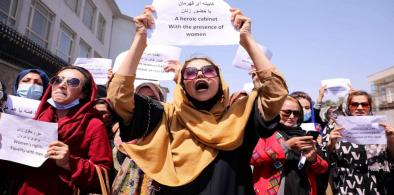
It is in India’s strategic interest to continue its engagement with the Taliban, but withhold any official recognition, and continue to wait and watch to see if the regime’s assurances are matched by its deeds, writes Nisha Sahai Achuthan for South Asia Monitor
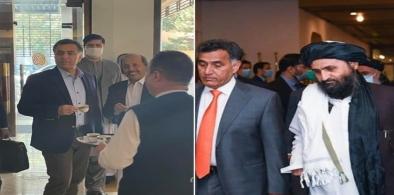
Engagement with the Taliban and the latter’s return to the driver’s seat in Afghanistan allows Pakistan to bring the Afghanistan issue to the forefront of the ‘South Asia regional security architecture’, writes Anuttama Banerji for South Asia Monitor
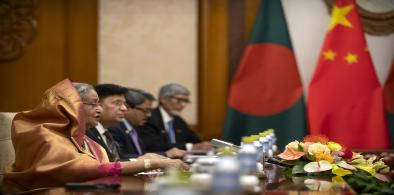
China’s growing investment and expanding economic activities in Bangladesh do not necessarily enable it to influence Dhaka’s foreign policy decisions, or seize infrastructure if loans are not repaid, or even potentially secure its support in a regional conflict, writes Rupak Bhattacharjee for South Asia Monitor
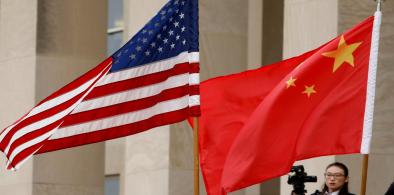
The bond between US intelligence agency CIA and Pakistan’s Inter-Services Intelligence (ISI) is well known and recently declassified British documents reveal MI-6 connived with Pakistan and Taliban in Afghanistan, writes Lt Gen P. C. Katoch (retd) for South Asia Monitor
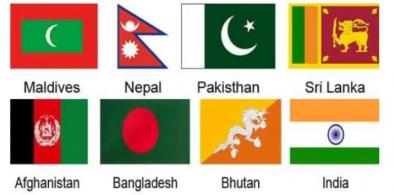
The most important challenge for South Asia is to revive livelihoods, which the crisis has devastated across the region, writes Partha Pratim Mitra for South Asia Monitor

Paradoxically, but not surprisingly, over the last six decades, the collective commitment to truth as a principle to be adhered to with Gandhian conviction has been diluted progressively, writes Cmde C Uday Bhaskar (retd) for South Asia Monitor

Gandhi believed in all-inclusive growth and felt that India can only become a great nation when its teeming and impoverished rural masses become better off, writes Anil K. Rajvanshi for South Asia Monitor

Terrorists and extremists need discourses in the inculcation of eternal moral values and practicing of yoga and meditation that can contribute immensely to attaining a perfect and balanced personality as described in ancient Indian classical texts, writes Prof. Sudhanshu Tripathi for South Asia Monitor

If Lata’s ‘Allah, Karam Karna’ and ‘Allah Reham” are popular among the Muslims, two of the Indian cinema’s best bhakti (devotional) songs, “Allah Tero Naam Ishwar Tero Naam” and “Prabhu Tero Naam” are sung six decades after she rendered them in Hum Dono, writes Mahendra Ved for South Asia Monitor
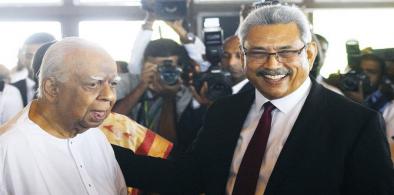
A section of the diaspora has taken a line that it needs to bury the past and open a line with India, which many blame for the plight of the Sri Lankan Tamils, writes M.R. Narayan Swamy for South Asia Monitor