Biden's speech had an eerie echo of former President George Bush's September 20, 2001, address to Congress when he set the course for what became the 20-year war, writes Arul Louis for South Asia Monitor


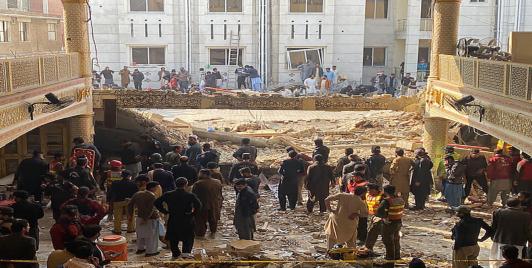
India must also recognise that Pakistan's internal security crisis has wider regional implications. Escalating Pakistan–Afghanistan tensions could create additional uncertainty along the western frontier, while attacks on Chinese projects could affect regional connectivity and investment.
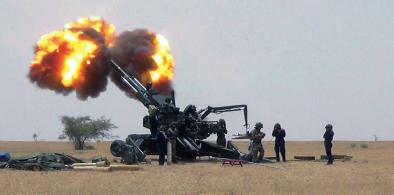
India has demonstrated that it can develop and manufacture modern artillery systems. What needs reassessment is how quickly we acquire, integrate and field them, and how effectively we ensure that new technologies communicate and operate together.
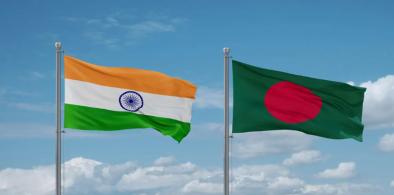
If India says the security of its Northeast, border management, trade and connectivity matter, Bangladesh can equally say that water sharing, deaths at the border, market access, energy security, river management and sovereign equality matter to it.
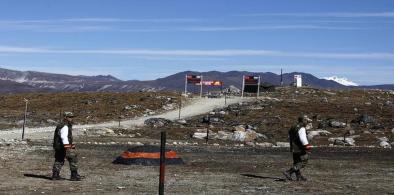
The Indian military views no disengagement in Arunachal Pradesh as part of a wider strategic recalibration, prompting India to match Chinese force rebalancing by shifting strike corps and resources equally across both northern and eastern fronts.

Biden's speech had an eerie echo of former President George Bush's September 20, 2001, address to Congress when he set the course for what became the 20-year war, writes Arul Louis for South Asia Monitor

If a free trade agreement is signed, then only the sky would be the limit for Bangladesh-Sri Lanka business relations, writes MD Pathik Hasan for South Asia Monitor

The Asian Development Bank has stated that in South Asia the new wave of Covid-19 between March and June 2021 has somewhat dampened the economic outlook of the region, writes Partha Pratim Mitra, for South Asia Monitor

Al Qaeda is leading a scattered existence along the Afghan-Pakistan border and its leadership is undergoing a constant shift, writes Anuttama Banerji for South Asia Monitor

India won’t let the developments in Afghanistan affect its interests, more so because Pakistan and China are rubbing their hands in glee, waiting to move in to fill the vacuum in Afghanistan left by the United States, writes Mehraj udin Bhat for South Asia Monitor

It is hardly surprising that in a mockery of the so-called US intelligence projection that Kabul could fall in 30 to 60 days, the capital caved in within 48 hours, writes Mayank Chhaya for South Asia Monitor
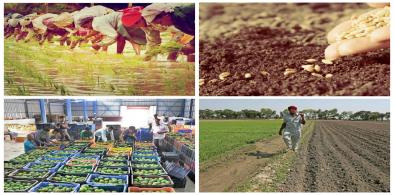
Indian industry must have a conducive environment to invest and employ more workers from farms, writes N Chandra Mohan for South Asia Monitor
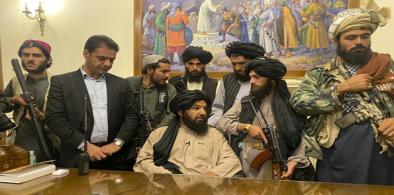
The Taliban are aware that if they shelter foreign militants with transnational agenda. It could turn neighboring powers like China, Russia, Iran, India, or Pakistan against them, writes Ainur Khan for South Asia Monitor

Today many Israeli universities have departments of Buddhist studies and South Asian philosophies as interest among Jewish scholars on Buddhist meditation continues to grow, writes Punsara Amarasinghe for South Asia Monitor
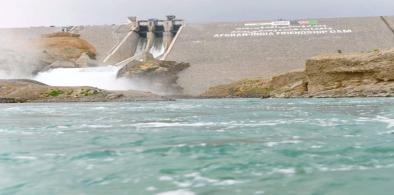
Pakistan has checkmated India to some extent, though the Taliban has recognized India’s role in the reconstruction projects and Salma Dam, writes Brig Dinesh Mathur (retd) for South Asia Monitor

To the extent that the Taliban keeps its word both on not letting it soil be used as a terrorist launch pad and keeping off Kashmir, there is a possible window for the Modi government in India to engage with it, writes Mayank Chhaya for South Asia Monitor

India's poor record of implementing infrastructure projects in neighboring countries has pushed them even more towards China, writes Anup Sinha for South Asia Monitor
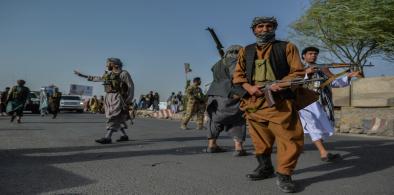
Can the US pose as the champion of human rights after abandoning the Afghan population to this horrendous human tragedy? writes Lt Gen P. C. Katoch (retd) for South Asia Monitor
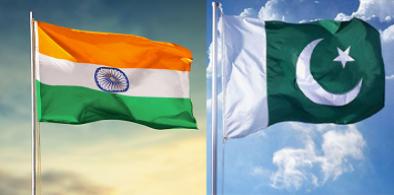
For India and Pakistan, therefore, which were once a single country, the anniversaries of their independence days are burdened with thoughts of what might have been, writes Amulya Ganguli for South Asia Monitor

The document seeks to achieve Sri Lanka’s foreign policy objective vis-à-vis India while coming closest to admitting that China has cast a long shadow over Colombo-New Delhi ties, writes M.R. Narayan Swamy for South Asia Monitor