

Constitution of India and Parliament

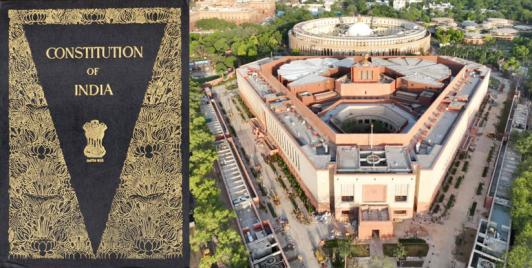
Constitutional Supremacy vs. Parliamentary Sovereignty Debate: Parliament is a Creature of the Constitution, not its Master

India’s constitutional design operates on the line of a fully functional parliamentary democracy anchored in constitutional supremacy rather than parliamentary sovereignty. In an era of evolving challenges, the supremacy of the Constitution continues to serve as the ultimate safeguard of Indian polity.

Born Together, Governed Apart: How India and Pakistan Became Two Different Political Civilizations

Eighty years after Partition, the overarching lesson of this comparative history of India and Pakistan is that national trajectories are not preordained by culture, talent, or geography. They are determined by the rules and values a state enshrines for itself in its formative years.

Re-engineering India's Grassroots Administration: A New Bottom-Up Development Model

It is time the Indian district administration’s focus shifts to economic development and prosperity-building through strategic planning, resource mobilisation, and effective resource allocation; productivity enhancement, competitiveness, skill-building, employment generation and ensuring the security of life and property.

Imran Khan, the Cricketing World and the Paradox Confronting Pakistan

The man who once led Pakistan to its only World Cup triumph has now become the subject of an international cricketing appeal for humane treatment. The more the authorities try to keep his story behind prison walls, the more the cricketing world appears determined to take it beyond them.

More on Governance, Public Policy and Law

India’s Economic Self-Reliance Is A Strategic Necessity

India’s economic self-reliance is not about shutting the doors to the world. It is about standing firm during crises, reducing vulnerabilities, and becoming globally competitive. The philosophy of Atmanirbhar Bharat represents a pragmatic approach: be self-reliant in areas where dependence is dangerous, and globally integrated in sectors where India can lead.


When An Opportunity Became A Trap: Exploitative With Little Innovation, Indian IT Sector Caught In A Bind

The Indian software and IT services giants have for long been accused of running body shops, a business fashioned out of what essentially is labour arbitrage turned into a fine art. The sector has consistently denied this, arguing that they have moved up the value chain and that they compete on quality, not price.

Imagining A New South Asia - and Its Unrealised Freedoms

When I think back to Wagah, what stays with me is not the barbed wire, but the wind -- the same wind moving across the border without asking permission. I think of rivers that carry stories of children whose laughter sounds the same in Lahore, Delhi, Dhaka, and Kathmandu.

Pillorying Those Who Visited Israel: Sri Lankans Should Not Be Denied Alternative Perspectives

On the face of it, the misplaced hysteria surrounding the visit made by Sri Lankan journalists to Israel is fuelled by shadowy factors intending to promote a one-sided narrative in which the State of Israel stands as the perennial villain. The beguiling picture planted in Sri Lankan society is portrayed through the moral binaries: good vs evil, victim vs oppressor, and Palestine Vs Israel. 

Accelerating Gun Production in India: ATGS Can Become The Mainstay of Indian Artillery

India has moved from being a buyer to a designer of world-class artillery. ATAGS exemplifies that shift. To convert design success into strategic mass production, India needs synchronized demand signals, targeted metallurgy R&D, modular manufacturing lines, automation, and rapid validation corridors — all underpinned by ACCCS-style digital integration. With these measures, ATAGS can transition from a technological showcase into the backbone of an Indian artillery corps

Feminism and the Global South: Beyond borrowed narratives of Western feminism

Western feminism often sees the family as an oppressive or repressive structure. But in South Asian or African societies, the family is the main place of social security. Therefore, feminism here does not want to break up the family, but to build a new family and create a partnership between men and women.

Is There A Hidden Hand of Anti-Semitism in Sri Lankan Politics?

However, in Sri Lanka, discussions about Gaza rarely consider this perspective. Instead, they consistently reflect an anti-Israeli sentiment. If we examine the situation closely, it becomes clear that the pro-Palestinian narrative, along with its discourse, works to weaken the relationship between Israel and Sri Lanka

An Emerging Tool for Terror: The lurking danger in the explosive growth of DeFis

In its 2023 Mutual Evaluation Report on India, FATF recommended that India should broaden access to its National Risk Assessment and consider releasing a public version. Considering that the cross-border risks from DeFi are real and affect every citizen, an updated assessment of the DeFi sector would help flesh out a strategy in collaboration with the industry participants. It is time to prevent DeFi from becoming a weapon of mass destruction

Bengaluru Antenna: A New India-UAE Bilateral Initiative in Joint AI Innovation and Development Technology Agenda

The Bengaluru Antenna™, coined by me to define this strategic engagement, is both a metaphor and a practical roadmap. By leveraging Bengaluru’s deep-tech ecosystem and the UAE’s AI ambition, it transforms opportunity into action. The Bengaluru Tech Summit 2025 provides the perfect platform to bring this vision to life

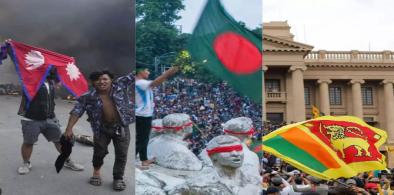
Lessons From Mass Uprisings: Governments Ignore Warning Signs At Their Own Peril

Mass uprisings have become a fine-tuned instrument for destabilizing governments – and are likely to occur more frequently. Some hail them as an expression of “people’s power” and a revolutionary force for change. But sustained instability is not healthy for any nation. The only real safeguard is good governance: policies that promote social equity, protect livelihoods, and are seen as fair and transparent. If governments ignore the warning signs, they take a calculated risk – one that could end in their overthrow. 

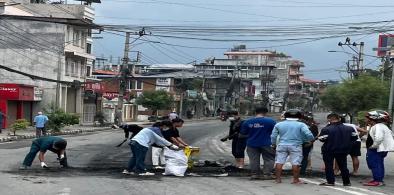
As Nepal limps back to normal after mayhem and regime change, questions aplenty but few answers

The burning of Kantipur TV points towards a troublesome point in Nepal’s history, where journalism has been vilified. Yes, some journalists do take shortcuts, and all legacy media is funded by businesses. But they’re also run by journalists who believe in truth-telling. Free and fair journalism is the foundation of democracy, and pulling down a media house like Kantipur TV signals the close of a period that trusted independent media.

Remembering 1965 War Heroes: Indian Army Regiment, Where Ayub Khan’s Father Served, Wreaked Havoc On Pakistan Army

By the end of the war, Pakistan had lost 3,800 personnel killed, over 400 tanks destroyed or captured, more than 40 aircraft shot down, and suffered a sharp drop in morale. The Indian Army captured the vital 2,637-meter (8,652-foot) high Haji Pir Pass, reached the outskirts of Lahore, captured Phillora, and created “Patton Nagar,” a graveyard of nearly 100 destroyed Pakistan's famed Patton tanks at Khem Karan.

India's Gandhian Resolution on Trumpian Tariffs

This is aiming for a high moral ground, but Gandhian satyagraha will demand much more from India. It will challenge India on aligning with Israel while it bleeds Gaza. And it will raise many other difficult questions that if followed through will help India stand erect and tall in a world that still bows to Gandhi.

Rethinking the EV Push: India's Transition to Electric Mobility Must Factor Socio-Economic Realities

The transition to EVs also introduces geopolitical challenges, particularly concerning critical minerals like lithium, cobalt, nickel, and rare earth elements (REEs). China plays a dominant role in the global supply chain for these REEs, not only as a leading extractor but also as the largest processor and refiner. This centralized control gives China significant strategic leverage over countries that depend on these resources, including India.

Message from Tianjin: Balance of Power Issues Can Upset SCO Applecart

Despite the public display of bonhomie at Tianjin, however, the SCO is ridden with major differences in harmonising national interests of member States, with some entering into active skirmishes, trade barriers or imbalances, equations with major powers and double standards on issues such as countering terrorism or protecting sovereignty and territorial integrity.