

Robert A.F. Thurman, an academic with a Buddhist monk’s soul
Thurman said that Tibet was not an individual nation-state question but something that goes far beyond that. “It is not about a people yearning for freedom from an invading state. It is about a very valuable society struggling to keep its centuries-old tradition of intellectual evolution alive.” He said that while he was hopeful that the problem would be resolved soon, “and during His Holiness’ lifetime,” it was hard to put a timeframe to it.
 Jun 17, 2026

As a leading scholar of Buddhism generally and Tibetan Buddhism particularly, Professor Robert A.F. Thurman, who died on June 16 at 84, was immersed lifelong in his idea of the need for an inner human revolution.
In his celebrated book Inner Revolution: Life, Liberty, and the Pursuit of Real Happiness, Thurman writes, “The peaceful influence of meditative realization a civilization has the two-sided effect of making that society happier, wealthier, gentler, but also militarily weaker, an attractive target for aggressive outsiders.” The fact that he recognized the perils of a meditative civilization becoming militarily weaker was something he understood from his lifelong association with Tibet and Tibetan Buddhism as well as the 14th Dalai Lama.
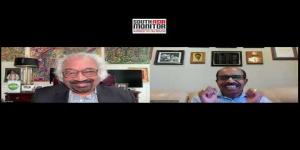
In an interview with this writer, Dr. Thurman reaffirmed his conviction about the need for an inner human revolution, “particularly during a time when we seem to be at each other’s throats out of ignorance and prejudice.”
As a boy he questioned everything in the aftermath of the second world war. He met a Mongolian monk called Geshe Wangyal who lived just down the lane in New Jersey. He wrote that during the first Tibetan lesson Wangyal spoke of suffering as the core idea of Buddhism and that shifted his world dramatically.
He described his attaining state of bliss in the early 60s, particularly between 1962 and 1966 as a new Buddhist renunciate, rather strikingly. He wrote, “When I look back at my experience during this time, I feel as if I existed in a state of orgasm that was diffused throughout my body and throughout my day, rather than concentrated in the genitals and focused on fleeting moments of excitation.”
What began in the early 1960s out of his ever-questioning mind, became Dr. Thurman’s professional and intellectual calling as a Buddhist scholar.
Meeting with Thurman
It was in August of 1997 when I first met him in McLeod Ganj, Himachal Pradesh in India where I was conducting interviews with the Dalai Lama for a biography that he authorized and which was eventually published in more than 20 languages worldwide, including in the U.S. by Doubleday/Random House in 2007, titled “Dalai Lama: Man, Monk, Mystic.”
The following are excerpts from the biography of my conversation with Dr. Thurman.
It is hard to decide whether Robert Thurman is an academic with a monk’s soul or a monk with an academic’s intellect. Widely regarded as one of the world’s most respected scholars of the Tibetan and Sanskrit languages, he was ordained a Buddhist monk in 1964 by the Dalai Lama. About one and half years later he gave up the life of a novice and returned to the world of academia “because in that position I could not expect to teach people since as an American Buddhist monk, and perhaps the first one to be so ordained, I was seen as somehow defective, a bit of an oddity.”
“Even today, when the cause of Tibet generally and the Dalai Lama particularly are so well known, there is no real understanding of the position of a monk in a Western society,” Thurman said in an interview.
During his visit to McLeod Ganj in August 1997, I too happened to be in town. Thurman was then working on a documentary and was traveling with a group of people, many of them in complete awe of him. When I sought an interview with him, one of his minders sounded incredulous that I had the gumption to seek an audience with “the Robert Thurman.” By that time, I had already conducted several interviews with the Dalai Lama and I had to let him know that fact with contrived humility.
I remember having said, “Purely as a matter of record, the Dalai Lama has authorized me to do a book on his life and times. His secretariat suggested that I speak to Professor Thurman.” Thurman’s minder looked at me quizzically and after some rumination said, spreading his four fingers and thumb like a fan, “Five minutes. That’s all he can grant you. It could be pretty late tonight. Shall we say 11 p.m. in the coffee shop?”
The coffee shop in question was at Hotel Surya -- barely 30 feet away from the edge of the steeply declining mountain it sat on -- where both Thurman and I were staying. It is a hotel from whose windows you can see the Dalai Lama’s official bungalow with some effort. That night I quickly discovered that the good professor himself was nowhere near as self-absorbed as his staff had projected him to be. If anything, he was professorial in a monkish sort of way – curious to engage his interlocutors but not too worried whether he would convince them as to his point of view. The five minutes stretched to a good hour and a half. We spoke about a wide range of subjects, from the future of Tibet to Buddhism and why he gave up the life of a renunciate.
Value of Dalai Lama's Teachings
We began with his views on whether the Tibet of the Dalai Lama’s vision could be realized through his nonviolent campaign. “It must be realized through a nonviolent campaign. The Dalai Lama says, and I agree with him 100 percent, the only way to peace is peace. In the Indian context he is following the tradition of Mahatma Gandhi and in the U.S. context Martin Luther King. While Gandhi and King operated within their own nations, the Dalai Lama has charted a new territory. Since he is not in his own homeland and is in exile, he is doing it in the international context.
“Very much like the ridicule that Gandhi faced from the British or King faced from many in America, the Dalai Lama’s steadfast insistence on pursuing nonviolent ways too has been laughed at by many like Henry Kissinger or Deng Xiaoping. However, I think that is the right way to go,” Thurman said. By this time the five minutes were already over. His minder did shuffle in his chair and cleared his throat to remind Thurman that the time was over. That did not work as the professor and I continued talking about other issues.
Thurman believes that the Dalai Lama is in a “unique” position, unlike other comparable religious or spiritual leaders, to change the way the world thinks and operates. “Most religious and spiritual leaders do demand that we accept their way of life as the only way of life. The Dalai Lama does not. What he offers is something so basic and yet so profound. Love and compassion are not the preserves of a particular religious philosophy. You don’t have to be a Buddhist or even religious to practice what he talks about,” he said.
While it is important for the world as a whole that the question of Tibet is resolved in accordance with the wishes of the Dalai Lama and Tibet, Thurman also said what the Dalai Lama stands for as of great value outside Tibet as well. “Of course, China needs to urgently settle the issue. His Holiness has now lived the better part of his life outside the land he is so attached to. However, it is equally important to recognize that the Dalai Lama now is a man of international consequence. What he stands for is good not just for Tibet but for the rest of the world,” he said.
Relevance of Buddhism
Thurman also sees great merit in the basic principles of Tibetan Buddhism and its relevance to the non-Buddhist world. “Tibetan culture is based on a set of principles from the heart of the Buddha’s movement — individualism, nonviolence, educationalism, altruism, and egalitarianism. All this is worthy of preservation not jus for the sake of Tibet but for the sake of the rest of the world,” he said.
In his book Inner Revolution: Life, Liberty, and the Pursuit of Real Happiness, Thurman writes:
"The tradition of nonviolence, optimism, concern for the individual, and unconditional compassion that developed in Tibet is the culmination of a slow inner revolution, a cool one, hard to see, that began 2,500 years ago with the Buddha's insight about the end of suffering. What I have learned from these people has forever changed my life, and I believe their culture contains an inner science particularly relevant to the difficult time in which we live."
Thurman said that Tibet was not an individual nation-state question but something that goes far beyond that. “It is not about a people yearning for freedom from an invading state. It is about a very valuable society struggling to keep its centuries-old tradition of intellectual evolution alive.” He said that while he was hopeful that the problem would be resolved soon, “and during His Holiness’ lifetime,” it was hard to put a timeframe to it.
(The author is a Chicago-based journalist, writer, and biographer of the Dalai Lama. The views expressed are personal. He can be reached at mcsix@outlook.com)






Post a Comment