Indian Navy’s Stellar Role in Securing India’s Energy Supplies During Gulf Crisis

Indian Navy’s Stellar Role in Securing India’s Energy Supplies During Gulf Crisis

India is managing intense US pressure about its involvement in the Chabahar port, with Washington providing only a six-month sanctions waiver set to expire in April 2026. While India has officially stated that exiting the project is "not an option" due to strategic interests in connecting with Afghanistan and Central Asia, it is actively negotiating for a long-term waiver to the sanctions. 

Technology and War: Shaping Future Wars, Battles, and Conflicts

The battlefield is no longer defined by geography alone. It extends into space, into networks, into supply chains, and into the human mind. Conflict today is as much about disruption as it is about destruction; as much about perception as it is about position. Lines are blurred, between soldier and system, between civilian and combatant, between war and peace.

Human Control and India’s Nuclear Doctrine in Age of AI: Significance of UNGA Resolution 80/23

The relationship between Resolution 80/23 and India’s 2026 CD statement illustrates a recurring challenge in contemporary arms control: how to build durable global norms in a world of divergent security contexts. Both documents share a foundational conviction — that human judgment must remain at the core of nuclear decision-making, and that AI introduces risks that demand urgent, coordinated attention.

How Communities Behave or Respond: The Architecture of Religious Identity in a Plural World

Across all these traditions, a small minority of extremists sometimes distort religious teachings to justify violence. This is not unique to any one faith. In recent decades, for example, some fringe groups have invoked highly selective interpretations of jihad to justify suicide attacks, claiming spiritual reward. Mainstream Islamic scholars overwhelmingly reject these interpretations. Similar distortions have appeared in other traditions as well

More on Perspective

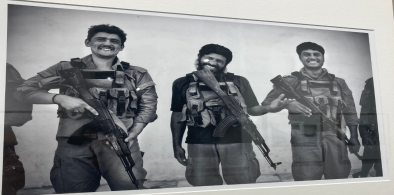
The Dalit community in Pakistan battles fear and discrimination

While Dalits in India face atrocity, abuse and exploitation, in Pakistan there is "discrimination and distancing in the social and economic domains," Khangarani said. 

India's basmati rice exports at risk over Red Sea attacks

India’s basmati exports are significantly affected as over one-third of production is shipped to West Asia, Europe, North Africa and North America via the Red Sea.

INDUS-X 2024 marks a new high in India-US defence industry cooperation

India-US defence cooperation has made fair headway leading to  INDUS-X which has initiated the information network and regulatory mechanisms to deepen defence technology collaboration that is poised to strengthen the bonds of US-India partnership, innovation and deterrence.

Promotion of faith-based knowledge is undermining scientific temper in India

The Indian Science Congress has for the last many years been accepting papers that have no scientific basis and are based on mythology. Pained by this all prominent scientists came together and issued a statement calling upon the government to stop the undermining of scientific methods and thinking

India's 8.4 per cent GDP growth: More than what meets the eye

The overall contribution of agriculture to GDP growth this year will be below 1 percent as per the latest estimates. This is worrying for various reasons, most importantly for what it means for the livelihoods and incomes of rural families.

Is Manipur lurching towards civil war again?

Manipur appears to be veering toward massive armed attacks against the tribals – both the Kuki-Zo and Naga, with the state administration remaining ambivalent.  This is a dangerous development - civil war in a state bordering Myanmar which itself is experiencing rising violence.  

Are India's government employees justified in going on strike?

While the government employees belong to organized class, there are an estimated 300 million people in India who belong to the unorganized class living on daily wages or are self-employed without economic and social security. 

Gandhi’s extraordinary idea of trusteeship of wealth at a time of vulgar ostentation

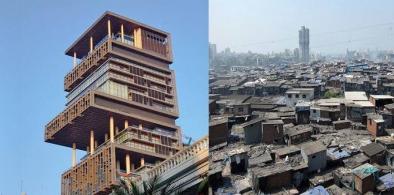
In a chapter titled “Choice before Capitalists”, Gandhi writes, “At present, there is no proportion between the wholly unnecessary pomp and extravagance of the moneyed class and the squalid surroundings and the grinding pauperism of the ryots in whose midst the former are living.”

South Asia's lack of integration: Is a union of minds at least possible? | South Asia Monitor

At present, there aren’t even any direct flights between Pakistan and Nepal, even as Kathmandu promotes itself as the meeting place of South Asia, noted journalist Kanak Mani Dixit.

India's defence modernisation goes apace; but are China, Pakistan getting the right messaging?

While the Army, Navy and Air Force are doing whatever is required to maintain their battle effectiveness, there is a dichotomy that prevails in how New Delhi is dealing with China and Pakistan.

Temple inaugurations are not decolonization; Indian culture is much broader

India did not get subdued by colonial culture in totality. What we are facing today is the promotion of religiosity and conservatism. Since politics is stalking the streets in the garb of religion, India's traditional syncretic culture is coming under attack from conservative and orthodox values. 

India must Involve urban local bodies in climate governance

But what cannot be rejected is the increasing need to recognise the role of cities and make them the vanguard in combating climate change.

India's development path does not take care of its marginalised population

Unless there is a quantum jump in the expenditure on (quality) education and a massive generation of productive employment, the youth and the poor will remain marginalised and excluded. 

Exercise MILAN 2024 will demonstrate India's arrival as a naval power

This exercise which began with just four countries and has now reached a participation level of over twelve times that number goes to show the recognition of India as a naval power and as a regional maritime security provider.

The Shankaracharya's significant dissent: Hinduism's high priests challenge prevailing politico-religious discourse

It is noteworthy that a strong and vociferous point of view against the developments in Ayodhya has come from religious leaders rather than the political opposition, which has struggled to frame its line of argument clearly.