The pandemic has laid bare some fault lines and vulnerabilities in the domains of education and health, and the lessons need to reflect in the SDGs as fresh strategies, writes Ram Krishna Sinha for South Asia Monitor


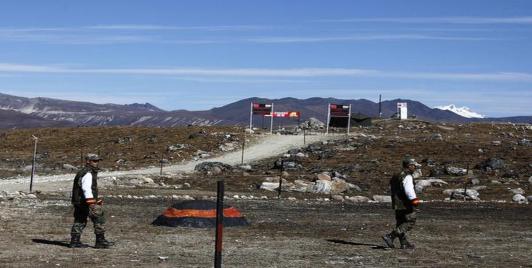
The Indian military views no disengagement in Arunachal Pradesh as part of a wider strategic recalibration, prompting India to match Chinese force rebalancing by shifting strike corps and resources equally across both northern and eastern fronts.
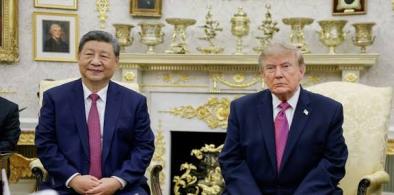
BRICS is acquiring greater visibility, while countries of the Global South continue to seek a greater voice in the international system. The desire for a more multipolar world is becoming increasingly evident. Over the next decade, this could produce a geopolitical configuration rather different from the one we have known since the end of the Cold War.
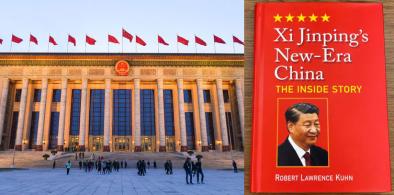
Kuhn says if the first half of this century is being defined by USA-China relations, the second half may well be defined by India-China relations and, in the New World Order, "India-China relations will likely become the most pivotal.....for the entire world".
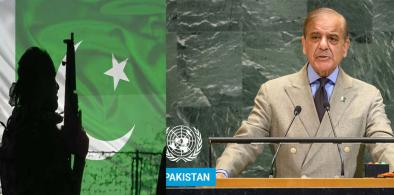
The strategic equation has irrevocably shifted. Pakistan’s long-standing attempt to separate itself from its proxies has failed, replaced by the reality of a state struggling with the infrastructure it created. As these groups operate with increasing autonomy, the world community is left with a clear conclusion
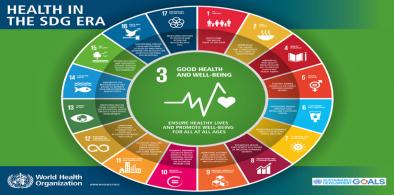
The pandemic has laid bare some fault lines and vulnerabilities in the domains of education and health, and the lessons need to reflect in the SDGs as fresh strategies, writes Ram Krishna Sinha for South Asia Monitor
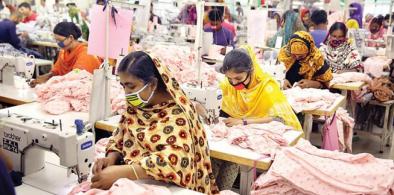
Bangladesh’s export-led model of development is the major factor behind its growth dynamism and has altered its status from being a bottomless basket case to an Asian tiger in the making writes N Chandra Mohan for South Asia Monitor

The wealth of a country comes from its land. Around 55 percent of India’s population is connected with farming, writes Anil K Rajvanshi for South Asia Monitor
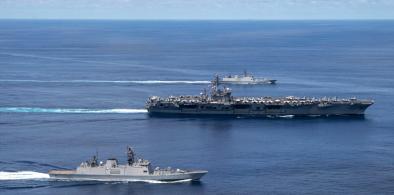
An Indo-US Charter with a lend-lease clause on the lines of the Atlantic Charter in 1941 is the need of the hour, writes Cmde Ranjit B Rai (retd) for South Asia Monitor

Till such time that mothers, as well as families in India, don’t cease to feel a little less obsessed about that beloved male child, or they don’t bring an end to that entitled treatment showered on him more than he deserves, daughters of India will never be safe within the domestic boundaries or beyond, writes Anuja Saha for South Asia Monitor

Pakistani media and celebrities from the entertainment world cannot help but follow Bollywood shenanigans, writes Mahendra Ved for South Asia Monitor
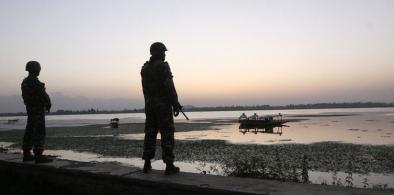
Pakistan has begun introducing new pawns in its old chessboard through The Resistance Front (TRF); intending to trigger mass unrest in the valley by enhancing the insurgents' legitimacy through a 'secular' approach and creating strong militant footholds while keeping the Indian armed forces pre-occupied, writes Aditya Gowdara Shivamurthy for South Asia Monitor
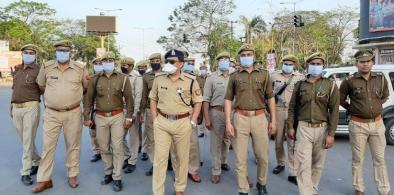
All is not well with India's police forces – in fact, there has been professional incompetence and callous insensitiveness in handling critical situations. The police leadership did not rise to the occasion, writes Prakash Singh for South Asia Monitor
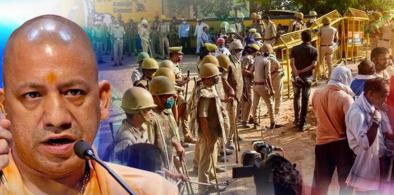
What now appears pretty loud and clear is that the tables have turned in the manner most foul, and the official guns are trained on the victim and her family instead of perpetrators of the monstrous crime, writes Sharat Pradhan for South Asia Monitor
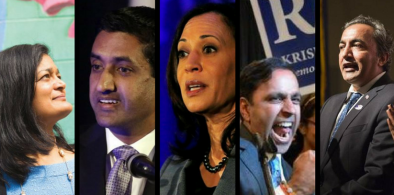
The Indian American community has propelled its way to relevance in American politics over the past two decades. The representation of the community has increased at every level with each election cycle, writes Frank F. Islam for South Asia Monitor
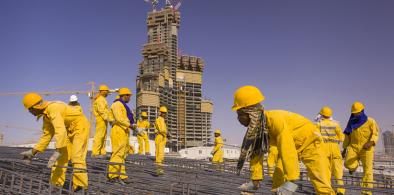
South Asians account for 15 million workers in these countries. The prospect now is for return migration back to India, Pakistan, Bangladesh, Nepal, and Sri Lanka which can only deepen the existing economic gloom in the region, writes N Chandra Mohan for South Asia Monitor
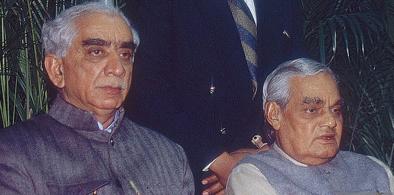
One of Jaswant Singh's finest meetings was with the New York Times editorial board, where members extensively asked about the Indian nuclear programme and why India wasn’t signing the Non-Proliferation Treaty. He patiently and firmly placed India’s position, writes Sanjoy Hazarika for South Asia Monitor
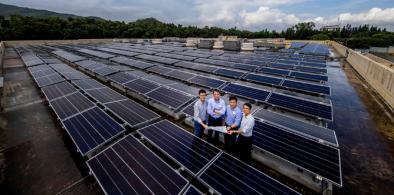
The energy situation in South Asia has been that it is primarily energy fuel deficient as all countries in the region are dependent on substantial imports of fuel, including coal, oil, and natural gas, to meet their growing energy needs, writes Partha Pratim Mitra for South Asia Monitor
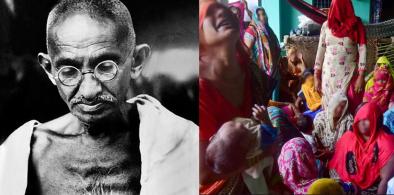
Even as India has marked 70 years of the Republic in January, the closure of the 150th birth anniversary of Bapu reveals the degree to which the nation has moved away from the Gandhian spirit and ethos, writes C Uday Bhaskar for South Asia Monitor
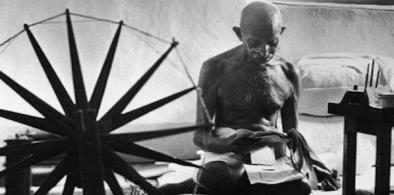
In the past few years, radical extremists have countered Mahatma Gandhi and his teaching and his preaching with acts of ‘war,’ ‘hate,’ and ‘violence,’ writes Frank F. Islam for South Asia Monitor