
Representational Photo

Bangladesh's Trade Pact With US: A Strategic Shift By An Interim Administration?

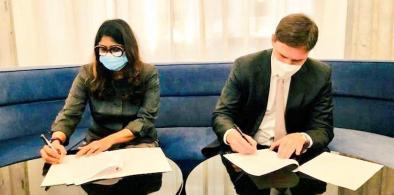
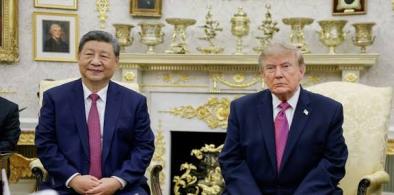
All of this would be consequential even under a fully elected government with a clear popular mandate. It becomes more troubling when done by an interim administration. Trade and security alignments of this magnitude shape a nation’s geopolitical posture for decades. They influence relations with China, Russia, India, the European Union, and ASEAN. They affect bargaining positions in multilateral forums. They alter perceptions among investors and strategic planners. After the national election on February 12,  the elected government will inherit this architecture. They will face a choice: comply and accept narrowed autonomy, or attempt renegotiation and risk economic retaliation.

Mohammad Deepak: A Beacon of Fraternity in an Age of Manufactured Hate

The Constitution of India enshrines fraternity as a foundational value alongside liberty, equality, and justice. Yet fraternity cannot survive on parchment alone; it requires everyday acts of courage. Deepak Kumar’s gesture — simple, instinctive, humane — stands in contrast to the flood of rhetoric that seeks to divide citizens along religious lines. It reminds us that the long history of Hindu-Muslim interaction in food, literature, architecture, festivals, and everyday life cannot be erased by slogans.  

Will A Rightwing Victory Transform Bangladesh? Jamaat's Rise Raises Uncomfortable Questions

If Jamaat comes to power it will likely begin with populist moves such as anti-corruption drives, predicts Ahmedur Chowdhury, a Bangladeshi writer and editor who has been living in Norway since surviving a 2015 attack. He says he fears  mobilisation of religious groups to push for declaring Bangladesh an Islamic republic and enforce Sharia law. The result would be shrinking freedoms for women, curbs on cultural life, and serious threats to freedom of expression, religious minorities, and secular political and cultural spaces.

Pakistan Mosque Blast: ISIS' Growing Shadow In The Subcontinent

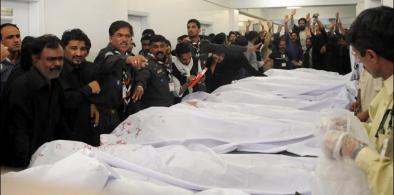
The threat from ISIS-K is real and growing. A resurgence in Pakistan would have serious implications for the broader region, including India. The danger is compounded if Pakistan once again attempts to clandestinely redirect ISIS-K towards Kashmir. What may appear as an isolated terror incident is, in fact, part of a wider pattern that demands sustained vigilance. Pakistan’s internal security instability risks creating openings for cross-border terror movements, potentially hardening new militant modules aimed at India and beyond.

More on Spotlight

Post-COVID 19: Needed a brave new world, not chasing shadows

The world community reacted tardily and instead of shoring up the defenses, it is now dousing the fires. The world in the future would warrant systems that are more alert to impending pandemics and crises, better prepared and strong leadership writes R Adm Vineet Bakhshi (retd) for South Asia Monitor

Unorganised workers in India: The COVID-19 crisis has highlighted their utter neglect

The legislation enacted way back in 2008, known as The Unorganised Workers'Social Security Act (mentioned as the Act hereafter) which entered the statute book on December 31, 2008, if implemented seriously, could have come to the rescue of the unorganised workers, which stand to lose enormously both in terms of livelihood opportunities and social security at the present juncture due to the health pandemic, writes Partha Mitra for South Asia Monitor

Leaving Afghanistan's fate to the Taliban

It would not be surprising if American troops are also attacked after part withdrawal has taken place, with blame, apportioned to Islamic State, as was done in the case of the recent attack on Kabul gurdwara, while China and Pakistan laughed all the way home, writes  Lt Gen P. C. Katoch (retd) for South Asia Monitor

India needs to be fair to its own migrants, the city builders and sustainers

The census data of 2011 reflects that the four states - Uttar Pradesh (UP), Bihar, Rajasthan, and Madhya Pradesh -account for 50 percent of India's total inter-state migrants, write Suresh Kumar Patel, Abhishek Kumar & Noorul Quamer for South Asia Monitor

The Wuhan virus and China's biological warfare: Warnings the world ignored

Launch of China Virus/COVID-19  - which only India had guts to name biological weapon - had decades of preparation to deny/mitigate global response, writes  Lt Gen P. C. Katoch (retd) for South Asia Monitor

COVID 19: South Asian nations must take care of refugees, or we all are vulnerable

The Rohingya refugees staying inside and outside camps in Bangladesh and India are worth mentioning in the South Asian context. Their already slum-like dwellings, lack of fresh water and sanitation, densely-crowded living conditions and hunger puts them in a more perilous situation, writes Sariful Islam for South Asia Monitor

The final frontier: Women in combat roles must become the new normal

In the Indian context, the Indian Air Force and the Indian Navy have granted a permanent commission to women officers even as both have opened up some combat roles for women, write Subhranil Ghosh & Sayantan Bandyopadhyay for South Asia Monitor

Why Modi broke ranks from his nationalist 'friends' abroad

While Trump and Bolsonaro are worried about the virus' impact on their nation's markets, economies and, by extension, their political future, Modi was open enough to admit that the pandemic would have economic costs, but saving lives was more important for him and his government, writes Tarun Basu for South Asia Monitor

Rajapaksa’s Redux: Jingoism 1, Justice 0

The return of a Rajapaksa to the island’s highest office coincides with a potent form of majoritarianism in Sri Lanka, driven simultaneously by jingoism and fear among the electorate, writes Arman Sidhu for South Asia Monitor

The lockdown is India’s only hope

After independence, this is perhaps the first time India is being put to such a test, with every part of the country affected. Not confined to India alone, but the entire neighbourhood of South Asia is being engulfed by this pandemic, writes Brig Anil Gupta (retd) for South Asia Monitor 

Afghanistan a dangerous place for religious minorities, particularly Sikhs

Afghanistan has become an extremely dangerous country for its residents, especially religious minorities. After surviving there for hundreds of years, the Sikhs virtually don’t even have a right to exist anymore, writes Sanchita Bhattacharya for South Asia Monitor

Coronavirus pandemic should promote globalization, not reverse it

The disruption of supply chains coupled with an unprecedented economic disaster waiting for the world due to the pandemic, the pertinent question is - has the time come for the world to have a rethink for globalization, asks Pranay Kumar Shome for South Asia Monitor

Bangladesh: The corona pandemic has eclipsed Khaleda’s release from jail

Despite Khaleda Zia’s suspended sentence and release from jail, no news except about the coronavirus is attracting the people’s attention in Bangladesh, writes Swadesh Roy for South Asia Monitor

Modi’s outreach: SAARC can regain lost pedestal if its leaders fight Covid-19 together

If the habits of cooperation and mutual understanding developed while fighting together against COVID-19 allow the member countries to regain the lost pedestal of SAARC, it will augur well for peace and prosperity of the region, writes Monish Tourangbam for South Asia Monitor

COVID-19 fear grips densely populated South Asia

In the South Asian region, only Maldives and Sri Lanka fare relatively better in global rankings of quality of healthcare system. Pakistan, which spends the least on health, has only 0.6 beds per 1000 people compared to 8.5 beds per 1000 people in Germany, writes Kavita Bajeli Datt for South Asia Monitor