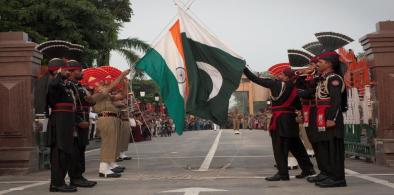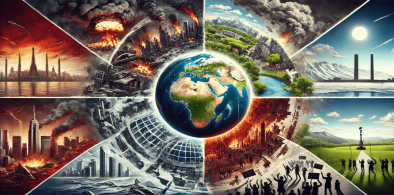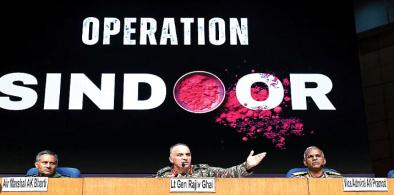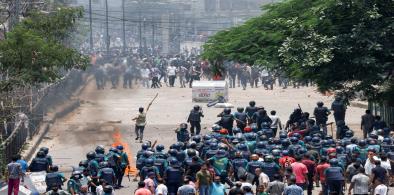


China, however, continues with its efforts to restrict India in the South Asian region. Pakistan is virtually China’s colony and in recent years China has redoubled its infamous endeavours to rope in Bangladesh in its area of influence.
The strikes on Iran are not just another flashpoint in the Middle East. They are a reminder that the rules of the system are applied through hierarchy. Law speaks the language of equality; power writes the terms of enforcement. For smaller states, this is not a philosophical dilemma — it is a strategic one. Their sovereignty is rarely absolute. It must be guarded, bargained, and constantly recalibrated in response to forces beyond their control.
In shaping foreign policy toward India, the people of Bangladesh expect a relationship based on mutual respect, sovereignty, and fairness. Public opinion often emphasises resolving border-related tensions, preventing cross-border push-in incidents, and ensuring humane management of migration and security issues. There is also a domestic expectation for constructive dialogue regarding political matters, including discussions surrounding the status or repatriation of former Prime Minister Sheikh Hasina, if relevant under legal and diplomatic frameworks.
History offers a consistent lesson: the difficulty is rarely in beginning a conflict; it lies in defining its limits. Sovereignty can be defended. Regimes can be challenged. Alliances can be activated. Yet none of these guarantee clarity about the end state. Without a defined objective and a disciplined exit, events gather their own momentum.
A prominent feature of this election is the massive influx of youth participation. Approximately 800,000 first-time voters are preparing to cast their ballots, and over 1,000 candidates under the age of 40 are contesting, signaling a profound generational shift. The political landscape is witnessing fierce competition between established traditional parties and emerging youth-centric forces. A key contest is unfolding in the Jhapa 5 constituency, a traditional stronghold where 35-year-old former Kathmandu mayor Balendra "Balen" Shah, representing the Rastriya Swatantra Party (RSP), is challenging former Prime Minister KP Sharma Oli of the Communist Party of Nepal (UML).
China, however, continues with its efforts to restrict India in the South Asian region. Pakistan is virtually China’s colony and in recent years China has redoubled its infamous endeavours to rope in Bangladesh in its area of influence.
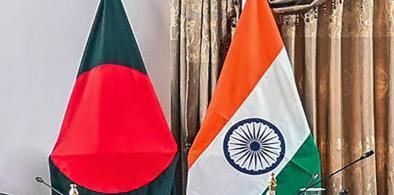
The partnership between India and Bangladesh may get a lot of attention since it demonstrates a dynamic and evolving collaboration that goes beyond basic infrastructural assistance. A healthy and stable relationship serves both countries' interests and promotes peace and prosperity both regionally and globally.
It is therefore no surprise that in the recent general elections the people of Manipur voted for Congress for all three Lok Sabha seats. This was also because the Modi government kept painting a rosy picture of normalcy in Manipur and the prime minister, who is generally omnipresent across India, did not visit Manipur even once or even mention it.
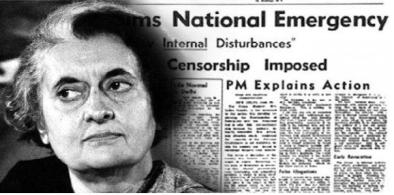
The voters' message was widely seen to be against the "excesses" of the Modi era -- just like it was against Mrs Gandhi 47 years ago.
Bangladesh's journey in UN peacekeeping stands as a testament to unwavering dedication, professionalism, and sacrifice. The nation's commitment to global peace and security is evident in its consistent troop deployments and active participation in the international discourse on peacekeeping.
In many ways, once the final figures are certified, the 2024 election will be remembered as one where India’s hundreds of millions of ordinary people, a large percentage of them in grave economic distress, voted to create a stronger opposition of the kind they would like against an out-of-control prime minister.
India is the origin of Sanatana Dharma (later Hinduism) philosophy, which also gave birth to Jainism, Buddhism and Sikhism. India, since millennia, has absorbed Zoroastrianism and Judaism. The other two Abrahamic religions Christianity and Islam came to the shores of India within decades of their founding in the Middle East and took root. With such pluralistic beliefs and one culture, India needs to debate religions to make societies aware of their evolution.
Interestingly, a comparison was drawn by Israel between the October 7 attack and the 26/11 Mumbai terror attack in the hope that there would be an unqualified understanding of Israel’s action. What this supposed comparison fails to recognize is that there is a significant difference.
This judgment not only addresses the immediate concern of protecting the GIB but also provides a strategic framework for balancing ecological conservation with sustainable development.
Apart from the substantial loss in revenue, international students, especially from India who are aspiring to study abroad, are seeking out alternative destinations that are more welcoming, such as Germany, Japan, Ireland, Israel and Russia.
Just twenty years ago, India's neighboring countries, apart from Pakistan, were solely dependent on India. But now all the small countries except Bhutan are trying to identify themselves as neutral countries in the India-China rivalry.
Even so, Bhansali’s project has evoked considerable interest in Pakistan since the word went out that he was once considering casting Fawad Khan and Mahira Khan, two of the top stars who have acted in Bollywood films. “Then, politics entered,” one of them rued.
Despite the myriad challenges faced by Western journalists in covering South Asia, maintaining journalistic integrity is non-negotiable. This entails a rigorous commitment to fact-checking, corroborating information from diverse sources, and challenging ingrained biases.
India and China represent the future, America (West) the present, and Europe the past; Islam has a long way to go.
The growing camaraderie between Pakistan’s military and the ISK poses a threat to the entire South Asian region.