

Gulf War Strains Bangladesh's Economic Fragility

Gulf War Strains Bangladesh's Economic Fragility, Test for New Government

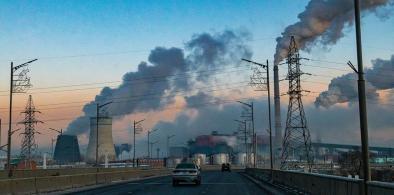
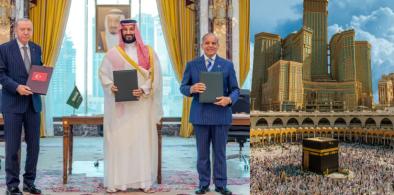
The current war has exposed Bangladesh’s structural vulnerabilities: dependence on imported energy, fragile reserves, and narrow fiscal space. For the new government, the stakes are clear—stabilize fuel and food supplies now while building resilience through diversified energy, broader exports, and stronger social protection. Wars in the Gulf may be fought thousands of miles away, but their economic shockwaves reach Bangladesh within days. In the end, the crisis will be felt in three simple pressures shaping everyday life: oil prices, food costs, and migrant jobs.

Re-imagining Pakistan’s Human Capital Crisis: It Must Dismantle Policy Structures That Serve Elite Interests

This crisis did not emerge overnight. It is a product of neglecting the foundational capacity to invest in human capital, where Pakistan hardly puts less than 2% of its national GDP on human capital factors. Meanwhile, the regional peers like Bangladesh and India invest more in education and health, and Pakistan is still trapped in a cycle of short-term fiscal thinking, political instability, and elite capture that is systematically hollowing out the nation’s potential to rise and grow.

The Delhi Tightrope: Can India Lead BRICS without Triggering a Trumpian Trade War?

In 2026, the “strategic autonomy” that we so often discuss must evolve from a defensive crouch to a balanced offensive infrastructure play. India’s success will be measured by its ability to convince the Trump administration that a stable, digitally-sovereign BRICS is actually a better trade partner than a chaotic, bankrupt one.

Bangladesh’s International Crimes Tribunal Under Fire: Serving Justice or Political Retribution?

Yunus created a suffocating atmosphere in Bangladesh by pushing the country towards the fate of a Caliphate, threatening the nation’s Bengali soul. Simultaneously, he weaponized the ICT and turned it into an instrument of targeting Sheikh Hasina by appointing Jamaat-e-Islami leaders into key positions in it. As a result, Hasina was handed death penalty in two cases, while she faces hundreds of murder charges—most of which were lodged by the activists of Bangladesh Nationalist Party (BNP) and Jamaat. 

More on Spotlight

A tale of two Indias: The Ambani wedding highlighted the nation's yawning wealth disparity

The contrast between the Ambani wedding and the lives of millions of Indians struggling to meet basic needs is a stark indictment of this inequality. While the former was a celebration of excess, the latter is a grim reality marked by poverty, hunger, and lack of access to essential services.

Battle to dominate global communications: Pakistan should leverage US-China rivalry for national benefit

For South Asia, particularly Pakistan, this fragmentation poses challenges but also opportunities. Pakistan’s strategic investments in its digital infrastructure, supported by both Chinese and Western technologies, could position it as a bridge between these emerging digital spheres. By fostering regional connectivity and digital cooperation, Pakistan can mitigate the risks of fragmentation and ensure that its digital economy continues to thrive in a multipolar world.

Why climate change needs to figure more prominently in Indian political discourse

India needs to have a robust competitive framework where political parties ideate, brainstorm and debate on how to give more teeth to the Ministry of Environment Forest and Climate Change(MoEFCC), create bodies like the USA's EPA and ensure all environmental laws, disaster management work in tandem under the Gaia’s hypothesis highlighting the “One-Health Approach”.

The potential of regional social spending in India's soft power projection

Apart from being the largest country in the region in terms of geography and economy, New Delhi’s responsibilities as an important player in South Asia also rest on its efforts to improve the region's social and economic parameters. 

Challenges in building a new Bangladesh: Yunus has his work cut out

India offered unqualified support to Hasina over the last decade or so. For India, it will be a major challenge to see how it builds a relationship when a new democratic government emerges in Bangladesh. China had invested more in infrastructure in Bangladesh in the last decade or so; and the relationship was improving. But it did not interfere in domestic political issues.

The Kamala Harris story personifies rising Indian American aspirations in a changing America

M R Rangaswami, Silicon Vally entrepreneur, angel investor and philanthropist, and a community leader who founded Indiaspora, said: "I never thought in my wildest dreams that we would have an Indian American running for President of the United States but this is now a reality".

Hasina’s legacy: Stellar growth marred by political stagnation, stalled democracy

The considerable economic progress under Hasina's governance starkly contrasts with the stagnation in political reforms. Persistent issues such as limited press freedom, corruption, and inadequate improvements in democracy, rule of law, and human rights have marred her administration’s record

Bangladesh at crossroads: Expectations high from interim government on restoration of democracy

The interim government is led by civilian leadership. However, the extent of military control in this government remains unclear. According to some political observers, even if not officially present, the military will have a significant influence on this government. 

After Olympian rivalry, a lesson in civility from Indian and Pakistani mothers

At a time when unvarnished animus for one another is often the norm in India and Pakistan, not to mention Bangladesh now, the two simple women have offered a lesson in decency, dignity and civility.

The unending agony of Afghan women: Caught in the stranglehold of a deeply patriarchal society

Rural women have said that the physical and sexual security of women was strongly protected under the Taliban regime. The women in Afghanistan are caught in a conundrum. While they resent systemic social repression and denial of gender rights under the Taliban regime, the return of political instability in the country they fear can increase their physical and sexual insecurity.

Rampant smuggling across Afghan-Pak border jeopardising regional security

Smuggling activities along the Afghan border are often linked with militant groups and organized crime. The illegal trade of arms has contributed to the proliferation of the "Kalashnikov culture" across the length and breadth of Pakistan. 

Nightmare returns in Bangladesh: Extremists aim to destabilise country under guise of student protest

Given the nature of these 'student' demonstrations, it is apparent that Bangladesh faces serious danger from a network of underground political activists and extremists aiming to destabilise the country. These issues are putting Prime Minister Sheikh Hasina's leadership to the test

Securing the digital frontier: India needs to adopt a holistic strategy to strengthen cybersecurity

Google and Facebook, which collect vast amounts of user data, will be required to overhaul their data-handling practices to meet the stringent requirements of the bill. Critics argue that certain provisions grant excessive power to the government, potentially undermining the very privacy protections the bill seeks to establish.

The growing salience of India’s state governments in expansion of India-UAE ties

A growing area of cooperation between India and the UAE is agriculture. UAE has committed to setting up three food parks in India - in the states of Haryana, Gujarat and Madhya Pradesh - at an estimated cost of $2 billion to address the issue of food security as both countries had also agreed to set up a food corridor. 

Bangladesh's quota movement: From peaceful protests to attempt at 'Bengali Spring'?

It is undeniable that although the movement was initially for quota reform, it later took the shape of a movement to overthrow the government. It was an attempt to taste power through undemocratic, back-alley, violent means. An attempt was made to create a "Bengali Spring: in Bangladesh in the style of the Arab Spring.