Khamenei and his successor Mojtaba Khamenei, Trump and Netanyahu

Khamenei's Assassination and a Fractured Iran: Regional and Global Ramifications of a War of Attrition

Khamenei’s assassination terminates an epoch of ideological confrontation, yet inaugurates profound uncertainty. Legally and normatively, it imperils protections for sovereign leaders; strategically and politically, it probes Iran’s institutional fortitude; religiously and narratively, it unveils unifying and divisive societal forces. Diplomatic containment—through intermediaries such as Oman or Qatar—must prioritise the transition's fragility without incitement. Absent such prudence, this strike risks catalysing a wider regional conflagration, where initial tactical triumphs yield enduring strategic costs.

Reimagining a Cooperative South Asia: A Next-Gen Agenda to Revive SAARC

The revival of SAARC will not come from dramatic diplomatic breakthroughs. Instead, it will emerge through incremental cooperation in education, digital infrastructure, disaster response and trade facilitation. Crucially, the future of South Asian regionalism may depend on a generation that increasingly experiences the region not through borders but through shared digital, economic and cultural networks.

US–India Tariff Framework: Trade Concessions Should not Dictate Foreign Policy Choices

Trade adjustments between major economies inevitably reverberate beyond bilateral channels. Bangladesh’s potential tariff advantages in textiles could redirect labour-intensive supply chains. Pakistan, operating within the China-Pakistan Economic Corridor framework, may use India’s perceived alignment with Washington to advance its own strategic narratives. China itself will interpret these developments within the broader context of great-power competition and recalibrate its economic and strategic posture accordingly.

Why Nepal’s Gen Z Succeeded Where Bangladesh’s Failed

A more comprehensive lesson about 21st-century youth politics can be learned from the story taking place between Kathmandu and Dhaka. Gen Z has extraordinary mobilization skills. Protests can grow quickly and upend established power structures thanks to social media networks. But mobilization is insufficient on its own. Successful political transformation requires organization, leadership, and institutional strategy. Nepal’s youth built those structures quickly. Bangladesh’s did not.

More on Spotlight

Who can take on Narendra Modi in 2024? Contradictions and ego hassles mar opposition unity

Given these roadblocks, it is not a surprise that the BJP, led by Prime Minister Narendra Modi, is a runaway winner in every opinion poll to the dismay of its adversaries who wonder why the economic difficulties of inflation and unemployment are not holding it back

India’s coastal security challenge - and preventing another 26/11

While this exercise was a long overdue and necessary measure, the whole gamut of India’s coastal security in view of terrorist threats and other crimes must function effectively and consistently as there have been instances of breaches in coastal security after 26/11

Sri Lanka allays Indian concerns, says it believes in regional solidarity; extra regional powers have no strategic leeway in South Asia

Defence sources said it was significant that the Dornier was handed over to Sri Lanka by India a day before the high-tech Chinese satellite tracking ship docked at Hambantota

Indian outreach to Latin America and Caribbean: Needed more frequent and diversified interactions

India should also project the values and aspirations of the Indo-Pacific into Atlantic waters to help global development. The SAGAR (Security And Growth for All in the Region) model can be extended to a much larger canvas of mutual cooperation and benefit

International education as a building block in growing India-Australia relations

If Australia is to emerge as the destination of choice for Indian students, its India strategy needs to be rethought. If this were to happen, international education and institutional collaboration would emerge as a critical building blocks in the bilateral space

Will Michelle Bachelet’s visit to Bangladesh expedite Rohingya repatriation?

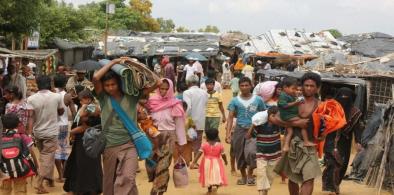
The world must remember the refugees’ lives depend on how the international community responds to caring for them as Bangladesh alone cannot afford to support this huge Rohingya population

Pakistan@75 does some welcome introspection on minority persecution

The question being raised in Pakistan@75 should be welcomed, that how come Pakistan, carved out as a safe home for the Muslim minorities of the Indian subcontinent, has failed to provide safety to its own minorities? Only Pakistan has the answer

India's weak-kneed response to Beijing's bullying sets a bad example for neighbours

We need to learn a lot from China’s foreign policy; and when our own response to China is weak-kneed, how do we expect Sri Lanka to take up cudgels with Beijing?

Starvation, poverty and all-round despair: Afghanistan and its people face a bleak future

If the Taliban’s original purpose in taking over Kabul last year was to gradually gain some international recognition for what it calls the Islamic Emirate of Afghanistan, it now stands fully destroyed

India@75 : Much to be proud of, amid some worrisome trends

The ideological shift in politics towards prioritizing the majority religious denomination that has morphed into assertive political Hindutva goes against the fabric of the 'Idea of India' enshrined in the constitution

India@75: On right path, but some drags on growth

During the last eight years, Prime Minister Modi has elevated the quality of governance to a higher level  and has introduced several imaginative schemes,  keeping in view the requirement of the people at the lower economic level as well as the compulsive need to forge ahead in terms of technology and productivity

Make in India in defence manufacturing: Significant initiatives but still a long way to go

In recent years there has been a paradigm shift in the manner in which the government is bringing about significant policy measures to make India self-reliant and instituting mechanisms to overcome bureaucratic bottlenecks which had plagued the system for long

India-Maldives ties set for consolidation, but China remains elephant in the room

Although the Solih visit went off very well, concerns remained over domestic politics in the Maldives.

Bhutan, the 'world’s happiest country’, needs a peace and reconciliation process

To reconcile the people of Bhutan and bring peace, we need collaborative efforts. Community agencies, local organizations, religious leaders, politicians, the King of Bhutan and businesses, all can play essential roles in this process

The importance of fraternity in India’s social democracy

The challenges in the path of the fraternity project are many. But we must overcome them, as it is on the pillar of fraternal relations that a well-functioning and healthy democracy rests