Although the results will change the government in Punjab, a politically important province of 110 million people, its implications may not be limited to the province, writes Shraddha Nand Bhatnagar for South Asia Monitor
Khamenei’s assassination terminates an epoch of ideological confrontation, yet inaugurates profound uncertainty. Legally and normatively, it imperils protections for sovereign leaders; strategically and politically, it probes Iran’s institutional fortitude; religiously and narratively, it unveils unifying and divisive societal forces. Diplomatic containment—through intermediaries such as Oman or Qatar—must prioritise the transition's fragility without incitement. Absent such prudence, this strike risks catalysing a wider regional conflagration, where initial tactical triumphs yield enduring strategic costs.
The revival of SAARC will not come from dramatic diplomatic breakthroughs. Instead, it will emerge through incremental cooperation in education, digital infrastructure, disaster response and trade facilitation. Crucially, the future of South Asian regionalism may depend on a generation that increasingly experiences the region not through borders but through shared digital, economic and cultural networks.
Trade adjustments between major economies inevitably reverberate beyond bilateral channels. Bangladesh’s potential tariff advantages in textiles could redirect labour-intensive supply chains. Pakistan, operating within the China-Pakistan Economic Corridor framework, may use India’s perceived alignment with Washington to advance its own strategic narratives. China itself will interpret these developments within the broader context of great-power competition and recalibrate its economic and strategic posture accordingly.
A more comprehensive lesson about 21st-century youth politics can be learned from the story taking place between Kathmandu and Dhaka. Gen Z has extraordinary mobilization skills. Protests can grow quickly and upend established power structures thanks to social media networks. But mobilization is insufficient on its own. Successful political transformation requires organization, leadership, and institutional strategy. Nepal’s youth built those structures quickly. Bangladesh’s did not.
Although the results will change the government in Punjab, a politically important province of 110 million people, its implications may not be limited to the province, writes Shraddha Nand Bhatnagar for South Asia Monitor
India can also help Bhutan to realize its green goals by promoting hybrid CNG/electric powered passenger and goods transport vehicles. These vehicles may be based at an EV park at Phuntsholing. Goods received there after customs clearance can then be distributed by Bhutan's own transport systems, employing their own nationals as drivers, helpers, mechanics and loaders, writes Amb Sarvajit Chakravarti (retd) for South Asia Monitor
What can we learn from Sri Lanka's disastrous style of ruling, intensification of sectarian divides, marginalization of minorities and power concentrated in autocrats is there for all to see, writes Dr Ram Puniyani for South Asia Monitor
India also no longer capitalizes adequately upon her best known international icons such as Mahatma Gandhi, writes Amb Sarvajit Chakravarti (retd) for South Asia Monitor
Instability in Sri Lanka is not in India’s interests but at the same time it offers New Delhi an opportunity to help its strategic neighbour emerge from the epic mess it finds itself in, writes Mayank Chhaya for South Asia Monitor
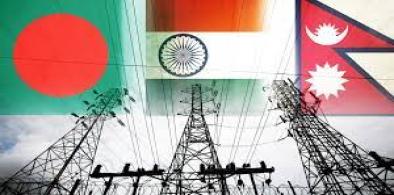
As South Asia is now better connected, ensuring BBIN food security will become even easier with packaging centres set up in each country with its own distribution, writes Amb Sarvajit Chakravarti (retd) for South Asia Monitor
Fifty years after the separation of what was then East and West Pakistan in 1971, the exchange of mangoes is a sign that friendly ties between Pakistan and Bangladesh are possible, writes Samina Akhter for South Asia Monitor
Barring India, no other supposed ally has so far come forward to help assist Colombo in a big way. New Delhi, with its obvious strategic stakes and interests in keeping the country afloat, has so far extended assistance worth around $4 billion -- something China has also acknowledged, writes Shraddha Nand Bhatnagar for South Asia Monitor
The chars formed as the Brahmaputra, Ganga and other rivers brought silt down from the Himalayas. The river islands are so fertile that they have been fought over for centuries
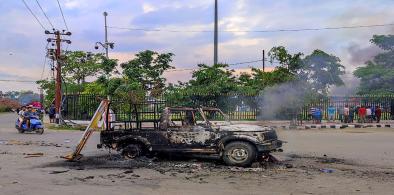
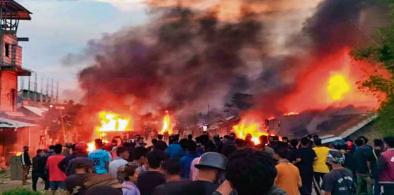
Today, while a large section of the Muslim community lives in intimidation and fear, at the same time there are elements like Riyaz Ansari and Ghouse Mohammad whose insanity is not only a blot on Indian Muslims but also is totally contrary to the sayings in Koran that if you kill a single innocent person, it is like killing the whole humanity, writes Dr Ram Puniyani for South Asia Monitor
Solar roofed buses may be handy in providing mobile primary healthcare, primary and adult education, agricultural extension services and training, even telecom and TV connectivity in rural and far-flung areas across South Asia and Africa, writes Amb Sarvajit Chakravarti (retd) for South Asia Monitor
This year, an early and hotter start to the summer has forced a change in the crop cycle in Gilgit-Baltistan, high up in the Hindu Kush Himalayas
Despite public statements by a few senior Taliban leaders supporting girls' education, there has been little indication of any progress. The group's core leadership, dominated by hardline clerics, seems bent on pushing through gender discriminatory policies, writes Shraddha Nand Bhatnagar for South Asia Monitor
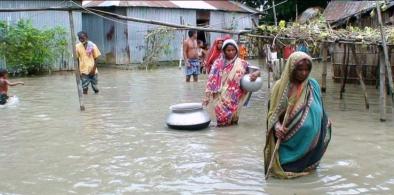
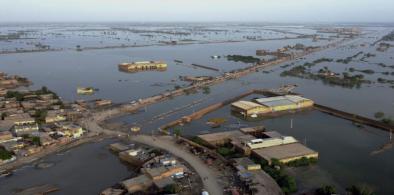
Over 54 major watercourses draining excess water from South Asia into the Bay of Bengal flows through Bangladesh, to which is added its own share of rainfall, writes Ambassador Sarvajit Chakravarti (retd) for South Asia Monitor
For Sri Lanka's tourism industry, the worst is yet to come. Experts say the downfall will continue as the energy crisis is unlikely to ease for months, writes Shraddha Nand Bhatnagar for South Asia Monitor