Khamenei and his successor Mojtaba Khamenei, Trump and Netanyahu

Khamenei's Assassination and a Fractured Iran: Regional and Global Ramifications of a War of Attrition

Khamenei’s assassination terminates an epoch of ideological confrontation, yet inaugurates profound uncertainty. Legally and normatively, it imperils protections for sovereign leaders; strategically and politically, it probes Iran’s institutional fortitude; religiously and narratively, it unveils unifying and divisive societal forces. Diplomatic containment—through intermediaries such as Oman or Qatar—must prioritise the transition's fragility without incitement. Absent such prudence, this strike risks catalysing a wider regional conflagration, where initial tactical triumphs yield enduring strategic costs.

Reimagining a Cooperative South Asia: A Next-Gen Agenda to Revive SAARC

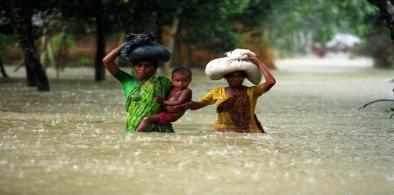
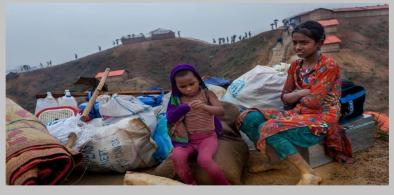
The revival of SAARC will not come from dramatic diplomatic breakthroughs. Instead, it will emerge through incremental cooperation in education, digital infrastructure, disaster response and trade facilitation. Crucially, the future of South Asian regionalism may depend on a generation that increasingly experiences the region not through borders but through shared digital, economic and cultural networks.

US–India Tariff Framework: Trade Concessions Should not Dictate Foreign Policy Choices

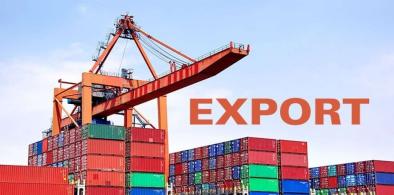
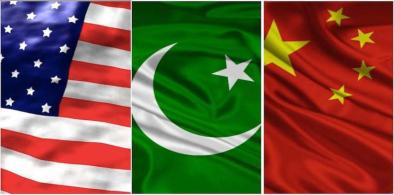
Trade adjustments between major economies inevitably reverberate beyond bilateral channels. Bangladesh’s potential tariff advantages in textiles could redirect labour-intensive supply chains. Pakistan, operating within the China-Pakistan Economic Corridor framework, may use India’s perceived alignment with Washington to advance its own strategic narratives. China itself will interpret these developments within the broader context of great-power competition and recalibrate its economic and strategic posture accordingly.

Why Nepal’s Gen Z Succeeded Where Bangladesh’s Failed

A more comprehensive lesson about 21st-century youth politics can be learned from the story taking place between Kathmandu and Dhaka. Gen Z has extraordinary mobilization skills. Protests can grow quickly and upend established power structures thanks to social media networks. But mobilization is insufficient on its own. Successful political transformation requires organization, leadership, and institutional strategy. Nepal’s youth built those structures quickly. Bangladesh’s did not.

More on Spotlight

Megaprojects of Bangladesh: Competitive opportunities for its development partners

Unlike many other South Asian countries, Bangladesh's prudent and selective engagement with China's BRI has helped Dhaka avoid debt problems, writes Sheikh Abdur Rahman for South Asia Monitor

Sri Lankan economic catastrophe has a message for Bangladesh

Bangladesh may not face the same situation as Sri Lanka in the near future but it has considerable weaknesses in its economy and good-governance processes, writes Aashish Kiphayet for South Asia Monitor

To buy or not to buy Russian oil: Uncertainties ahead for India’s energy security

The allure of Russian oil for India, however, is more than the imperatives of energy security. It also has deep stakes with $16 billion of investments in various oil and gas projects in Russia, writes N. Chandra Mohan for South Asian Monitor

With street protests mounting, time running out for Sri Lanka's Rajapaksas

Given that Sri Lanka has a post-independence history of episodic JVP militancy in 1971 and 1987, there is concern about the direction the street protests may take, writes N. Sathiya Moorthy for South Asia Monitor

A 'Kaptan' makes an inglorious exit: Who will now be the Establishment's proxy in Pakistan?

On two counts – annoying Army and America, two of the three pillars on which Pakistan’s polity stands -- may block Imran Khan's future comeback. Only the third, Allah, can help, writes Mahendra Ved for South Asia Monitor

Why Bangladesh won’t become a Sri Lanka or Pakistan

Bangladesh has very strong leadership, pragmatic fiscal policy and foreign reserves. The Sri Lankan case is totally different, writes Mehjabin Bhanu for South Asia Monitor

Is hate speech becoming the ‘new normal’ in India?

From within the Muslim community there are extremist elements who in the name of Islam provide much-needed provocations to majoritarian politics, writes Dr Ram Puniyani for South Asia Monitor

India has a deal with Australia: Will it be a precursor to more FTAs?

The ECTA with Australia will boost India’s confidence in signing similar trade pacts with the UK and EU, writes N. Chandra Mohan for South Asia Monitor

A land of plenty reduced to penury: Can Sri Lankans carve a new future?

Amid Sri Lanka’s crippling shortages, Hirunika Premachandra Yatowita, daughter of a slain SLFP MP and herself a former MP from Colombo, is being seen as a new leader, writes P. Jayaram for South Asia Monitor

South Asian nations need structural adjustment to step up growth

Some major countries of South Asia have recently had Article IV consultations with the IMF since the onset of the pandemic in early 2020, writes Partha Pratim Mitra for South Asia Monitor

Wang Yi's South Asia tour: Seeking a new world order with Chinese characteristics?

Xi has been quick to grab the opportunity to launch his own diplomatic blitzkrieg by sending his Foreign Minister Wang Yi to South Asia, writes Amb Dilip Sinha (retd) for South Asia Monitor 

China needs to roll back 2020 invasion and settle border issue with India

China needs to seriously think whether it wants to continue the confrontation with India or settle the border with irrevocable guarantees, writes Lt Gen P.C. Katoch (retd) for South Asia Monitor

Blasphemy: The curse of South Asia

Governments across South Asia need to display stronger political will against violence and unrest over communal and religious issues, writes Shubham for South Asia Monitor

Kashmir Files: It will have a negative impact on carefully nurtured Kashmiriyat

The film lives to its own dialogue that showing wrong is as dangerous as hiding the truth; it totally hides the murders and exodus of Muslims, writes Dr Ram Puniyani for South Asia Monitor

The new polarizing instrument of Hindi cinema

The film has soured Hindu-Muslim relations to an extent in Kashmir - and also in the rest of the country - that the Pandits will be unable to settle down as before in close proximity with their Muslim neighbours, writes Amulya Ganguli for South Asia Monitor