It is a no-brainer that Arvind Kejriwal’s victory speech was sharply focused on issues of governance, writes Jagdish Rattanani for South Asia Monitor


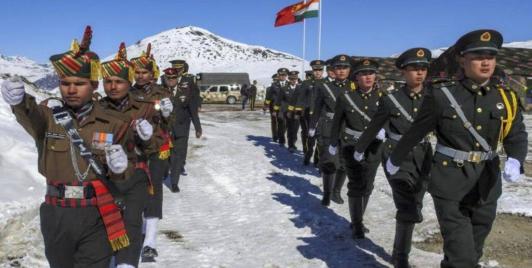
Hopes for Sino-Indian relations centre on a cautious diplomatic thaw, institutionalised border stability and renewed high-level engagement. Indian negotiators and defence planners are well aware that “trust must be verified”. While the activation of these eight points provides valuable channels to prevent an accidental kinetic clash on the ground, the real test of China’s sincerity will not be the joint statements signed in Beijing, but whether it ceases infrastructure build-ups and respects the historical patrolling rights of Indian troops along the LAC.
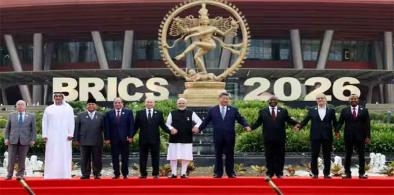
By removing the ‘Indo’ prefix from Indo-Pacific the US implicitly acknowledges that it no longer unilaterally defines the eastern strategic landscape. Regional organisations like BRICS continue to redefine the lexicon of ‘rules-based order’ to insulate themselves from western domination.
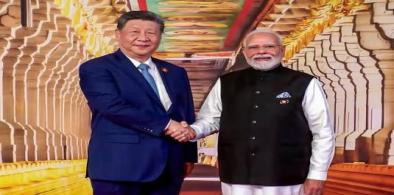
The bilateral discussion between Prime Minister Narendra Modi and Chinese President Xi Jinping on the sidelines of the 18th BRICS Summit indicates surge in mutual ties, particularly by way of trade. However, little can be expected by way of full settlement of the boundary dispute.
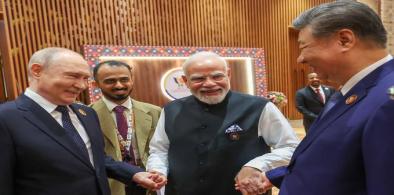
The timing of the EU announcement coincided with the BRICS+ Summit in New Delhi, creating speculation about whether the EU was seeking to reinforce its strategic engagement with India amid the growing influence of the BRICS grouping.

It is a no-brainer that Arvind Kejriwal’s victory speech was sharply focused on issues of governance, writes Jagdish Rattanani for South Asia Monitor
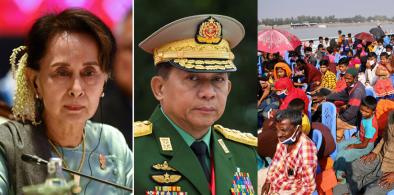
Tatmadaw, the Myanmarese junta, must be pressured to allow the Rohingya in Bangladesh to return to their homes with full dignity and civil rights, writes Kyaw Min for South Asia Monitor

The mystical traditions of South Asia transcend apparently rigid religious boundaries, write Priyanka Singh and Beena Sarwar for South Asia Monitor

In the wake of the result in Uttar Pradesh, it is clear that 2024 is for Modi to lose since there does not appear to be any comparable singular figure who can defeat him, writes Mayank Chhaya for South Asia Monitor
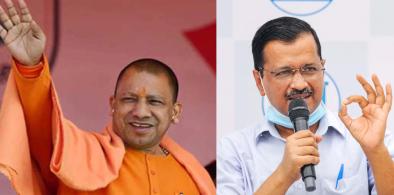
It is now almost a certainty that the AAP will replace the Congress as the BJP’s main challenger in Gujarat later this year, marking its emergence as a major alternative to the BJP at the national level, writes Amulya Ganguli for South Asia Monitor

The US and its allies will never lose sight of Afghanistan's strategic importance in a vital region, writes Saed Mansoor Sadat for South Asia Monitor

Criminal justice has its own logic at present and its discrepancies are not matching with the democratic ethos of India's secular constitution, writes Ram Puniyani for South Asia Monitor

Aurat March in Pakistan has proved to be a phenomenal success, forcing society to acknowledge women’s efforts, writes Nadra Huma Quraishi for South Asia Monitor

The ‘unforeseen’ would become a frightening reality, recalling what the victims of Hiroshima and Nagasaki had whispered piteously: "The living will envy the dead", writes Cmde C. Uday Bhaskar (retd) for South Asia Monitor

Bangladesh can neither ignore the US and India nor China in the light of the changing global geopolitical situation, writes Emilia Fernandez for South Asia Monitor

For India, an aggressive Russia does not cause concern; many here believe it to be a more reliable and effective check on China than the United States, writes Amb Dilip Sinha (retd) for South Asia Monitor
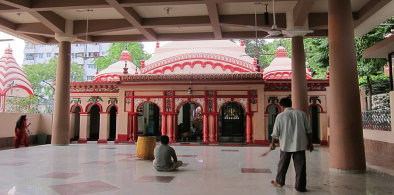
Bangladesh is being depicted unfairly - and without evidence - as a country that discriminates against its minorities, particularly Hindus, writes Anup Sinha for South Asia Monitor
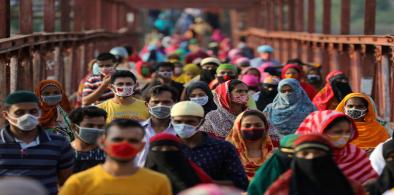
Bangladesh settled for a humanistic approach, focusing on people and their wellbeing, taking steps to minimize infection and death rates, besides ensuring the availability of food, writes Dr. Mohammad Rezaul Karim for the South Asia Monitor
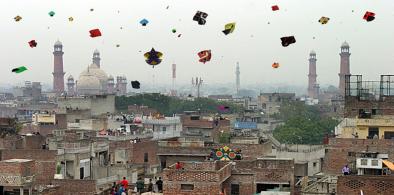
With the ban on kite flying in force, Basant, a celebration of nature and culture, may soon become a matter of the past in Pakistan, writes Mahendra Ved for South Asia Monitor
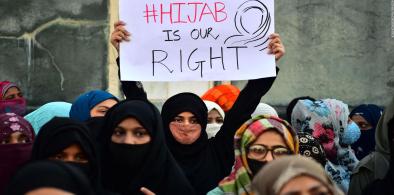
With the help of pliant media, saffron powers have discredited Muslims as an obstacle to the country's development and an enemy of equality, secularism and women's rights, writes Sohail Ahmad for South Asia Monitor