India, Nepal and Bangladesh should have a holistic diplomatic approach to bolster their connectivity project, writes MD. Pathik Hasan for South Asia Monitor


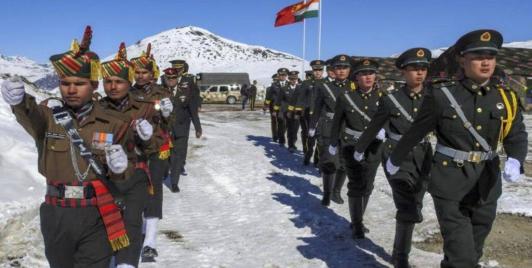
Hopes for Sino-Indian relations centre on a cautious diplomatic thaw, institutionalised border stability and renewed high-level engagement. Indian negotiators and defence planners are well aware that “trust must be verified”. While the activation of these eight points provides valuable channels to prevent an accidental kinetic clash on the ground, the real test of China’s sincerity will not be the joint statements signed in Beijing, but whether it ceases infrastructure build-ups and respects the historical patrolling rights of Indian troops along the LAC.
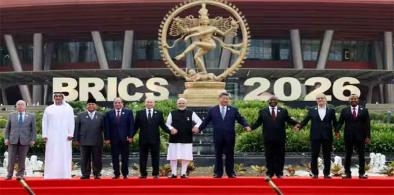
By removing the ‘Indo’ prefix from Indo-Pacific the US implicitly acknowledges that it no longer unilaterally defines the eastern strategic landscape. Regional organisations like BRICS continue to redefine the lexicon of ‘rules-based order’ to insulate themselves from western domination.
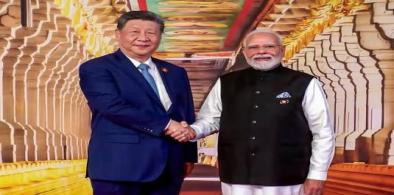
The bilateral discussion between Prime Minister Narendra Modi and Chinese President Xi Jinping on the sidelines of the 18th BRICS Summit indicates surge in mutual ties, particularly by way of trade. However, little can be expected by way of full settlement of the boundary dispute.
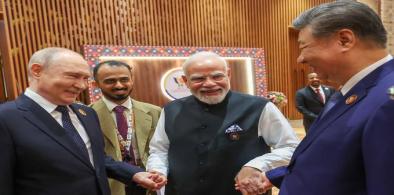
The timing of the EU announcement coincided with the BRICS+ Summit in New Delhi, creating speculation about whether the EU was seeking to reinforce its strategic engagement with India amid the growing influence of the BRICS grouping.

India, Nepal and Bangladesh should have a holistic diplomatic approach to bolster their connectivity project, writes MD. Pathik Hasan for South Asia Monitor

Given the Taliban's growing need to be recognized, and to receive international aid, this time around the US and the international community, backed by the World Bamk, International Monetary Fund (IMF) and the United Nations are in a much better position to together pin down the Taliban on its assurances and also hold it accountable, writes Nisha Sahai Achuthan for South Asia Monitor
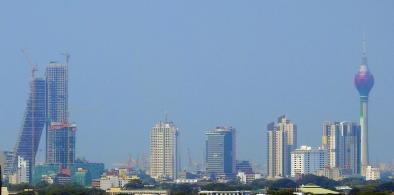
Neither SLPP nor SJB has a major reform agenda to breakout from Sri Lanka’s endemic economic problems, which are deeply rooted in the country’s inability to earn enough foreign inflow to sustain itself and to bring in sound fiscal policies, writes Indika Hettiarachchi for South Asia Monitor

The question will be what kind of “consequences” the US can impose on those it considers veering off from the democratic path Biden and his supporters set, writes Arul Louis for South Asia Monitor
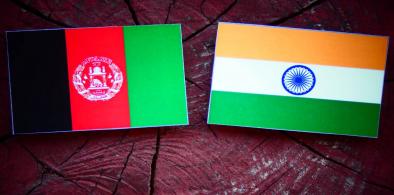
India’s approach towards Afghanistan should be dictated by its economic and strategic interests and it needs to judge the Taliban by its actions while being flexible enough to leave room for numerous divergences, writes Tridivesh Singh Maini for South Asia Monitor

For India and Indians, one of the most enduring Afghan connections that developed, rather accidentally, was in the form of “Afghan Snow”, the first beauty crème, writes Mahendra Ved for South Asia Monitor

After all, how can a major political and military force like India stay on the sidelines when the US, the Chinese, of course, the Pakistanis, and even the Russians begin talks, open business and prepare for collaborations with the Taliban? writes Jagdish Rattanani for South Asia Monitor

Amid the thorny political and diplomatic issues, sports can act as the much-needed balm to remove distrust and promote understanding between India and Pakistan, writes Sirshendu Panth for South Asia Monitor

A Taliban-run Afghanistan that eschews support for international terrorism and global Islam and follows a Sharia regime like that of US ally Riyadh – in effect an oil-less Saudi Arabia – and, as it happened this week, both cooperating to fight common enemies may be Biden's dream scenario, writes Arul Louis for South Asia Monitor

The Afghan conflict has already turned shelterless a massive number of people, and it will not end until a morally inclined humanitarian intervention takes place, write Azeemah Saleem and MD. Imtiyaz for South Asia Monitor

Implications for India are more worrisome since the Taliban now has overt support of China and Russia apart from its patron Pakistan, writes Brig Deepak Sethi (retd) for South Asia Monitor

Among many commonalities, South Asian nations have a large hi tech-savvy young population, and the asset management companies should tap this section to deepen mutual fund penetration significantly, writes Ram Krishna Sinha for South Asia Monitor
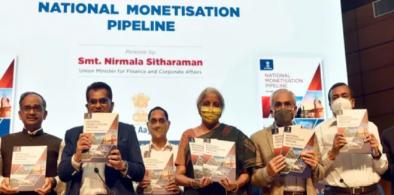
If asset monetization is undertaken with strict oversight, it can be the most effective remedy to dispel the pervading gloom of an ailing economy, writes N Chandra Mohan for South Asia Monitor

Beijing will quickly establish a ruthlessly transactional and pragmatic relationship to exploit Afghanistan’s rich mineral resources as well expand its much-cherished Belt and Road Initiative (BRI) from Pakistan, writes Mayank Chhaya for South Asia Monitor

Finally, the US has given the biggest boost to global terrorism - and will eventually have to face the consequences. A coupling between the ISIS and Taliban should not be considered an impossibility, writes Lt Gen P. C. Katoch (retd) for South Asia Monitor