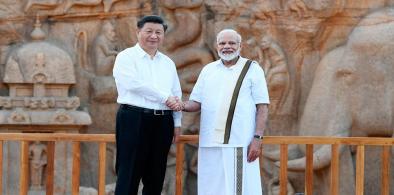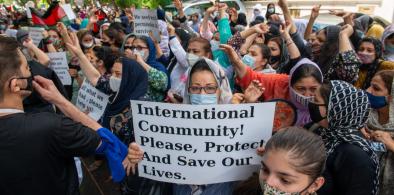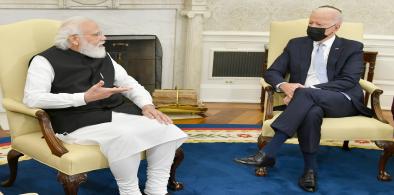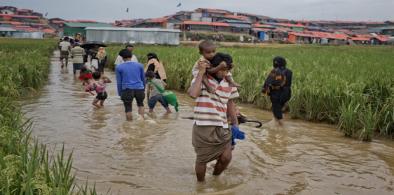
With SAARC stalled, India must prioritize regional and sub-regional alternatives to recalibrate its neighborhood strategy and its overall foreign policy, writes Don McLain Gill for South Asia Monitor
According to realist paradigms, nuclear weapons can be seen as the ultimate guarantee of national security and when there will be no restrictions, states will strive to dominate or achieve parity. Lapse of New START can thus create worsening security dilemmas, where efforts of any state to enhance its deterrent value is seen as a threat, and the state retaliates. The position of nuclear weapons as power projectors will, therefore, be more intense.
Some analysts are of the view that Sri Lanka’s differential access — full executive level for India versus foreign ministry level for China — may reflect Sri Lanka’s carefully calibrated foreign policy. Sri Lanka is leveraging India for urgent, high-impact assistance and wider policy coordination and engaging China for strategic reassurance and medium-to-long-term cooperative alignment that is less intertwined with immediate executive decisions.
India’s challenge, and opportunity, lies in mastering torque rather than seeking a mythical centre of gravity. In a world defined by flux, leverage matters more than alignment, and agility matters more than allegiance. Strategic autonomy will not be preserved through rigid doctrines, but through continuous recalibration anchored in national interest, economic resilience, and confidence in India’s civilisational depth.
India’s response to Iran’s crisis illustrates the dilemmas facing middle powers navigating a polarised global order. While reaffirming principles of sovereignty, non-intervention and dialogue, New Delhi has largely confined itself to cautious diplomacy. For a country that positions itself as a voice of the Global South and a defender of strategic autonomy, such restraint invites scrutiny. Silence at moments of legal strain is never neutral. It contributes to the gradual normalisation of coercive precedent.
With SAARC stalled, India must prioritize regional and sub-regional alternatives to recalibrate its neighborhood strategy and its overall foreign policy, writes Don McLain Gill for South Asia Monitor
The rapid growth of the BJP in West Bengal since the 2014 parliamentary elections can unquestionably be seen as a turning point in the state's turbulent politics, writes Asif Rameez Daudi for South Asia Monitor
The most crucial justification for acquiring home-grown and home-built hardware is the military’s expectation that overhaul and replacement of parts, as well as repair of battle damage will be undertaken by the domestic industry in a most expeditious manner, writes Admiral Arun Prakash (retd) for South Asia Monitor
The upshot of an inward-looking regime is a diminishing extent of trade openness - a sharp contrast with the East Asian miracle economies that prospered with export-orientation, writes N Chandra Mohan for South Asia Monitor

The most significant thing at the several ‘jalsas’ (protest rallies) that opposition have been organising across the country in Pakistan is to challenge the army’s role and, for the first time, the top brass is being named, writes Mahendra Ved for South Asia Monitor
According to the EIU, for a decade Bangladesh has been in the middle of an autocratic and flawed democratic system, known as the hybrid regime, writes Mahmudul Hasan for South Asia Monitor
It is clear, therefore, that the politics of polarization which divides the citizens of a country - whether in the US, India or countries in Europe - between nationalists and anti-nationals is here to stay, writes Amulya Ganguli for South Asia Monitor
Drawing on his experience of working with New Delhi, Burns wrote in what could be his roadmap for relations between New Delhi and Washington, emphasising continuity saying that it was bigger than the ties between President Donald Trump and Prime Minister Modi, writes Arul Louis for South Asia Monitor
Nepal’s story is not much different than that of India’s. Nepal’s prime ministers - Girija Prasad Koirala (1994), Manmohan Adhikari (1995), and K P Sharma Oli (2020-) have taken steps to dissolve the house despite their parties’ being in majority, write Jivesh Jha & Alok Kumar Yadav for South Asia Monitor
If white supremacism is the basis of right-wing politics in America and Europe, Hindu supremacism is in India. Both have their roots in the concept of the "Master Race" and the "Chosen Land", writes Amulya Ganguli for South Asia Monitor
South Asia’s diverse topography lends itself to greater cross-border power trade, but political inhibitions have ensured that actual progress has been less than the potential, writes N Chandra Mohan for South Asia Monitor
Polarization over the prevailing socio-political orientation since Prime Minister Narendra Modi assumed office has been marked and a bitter sectarian fissure has emerged in India, writes Cmde C Uday Bhaskar (retd) for South Asia Monitor
India is now a non-permanent member of the Security Council from January 2021. Following this, India has expressed interest in holding talks with Bangladesh and Myanmar on safe, dignified, and sustainable repatriation of Rohingya, writes Mohammad Rubel for South Asia Monitor

Nepal scarcely has political ground prepared for the king to return to the throne. The monarch also blatantly failed to deliver and fulfill their promises even when it had absolute power in the country's economic development, writes Bishesh Joshi and Laavesh Thapa for South Asia Monitor

Presently, there are almost two million seafarers worldwide with a significant number from the South Asian sub-continent. Indians in fact constitute the third-largest number of seafaring officers in the world, writes Cmdre Anil Jai Singh (retd) for South Asia Monitor