The net impact of the overall Rs.32.12 lakh crore currency in circulation at present is that the benefit of demonetisation stands undone, resulting in a disturbing level of growth of a parallel economy and corruption in the country.


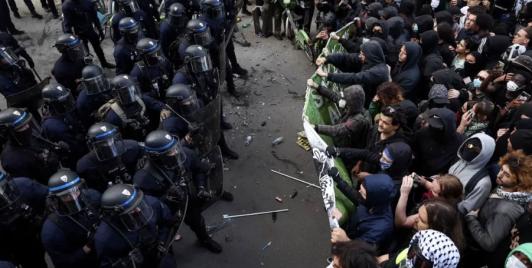
Southern Europe shows that mobilisation can reshape political agendas while leaving difficult economic questions unresolved. South Asia shows that a narrow grievance can become a challenge to the legitimacy of a governing system when trust has already been eroded. The real test of governance is whether institutions learn between storms—before the next generation concludes that the street is the only place where its voice can be heard.
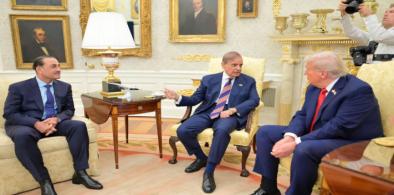
At independence, Pakistan's economy was competitive with India's. Today India's is more than ten times larger, and Pakistan is on roughly its 25th IMF program. Investors rarely abandon a country simply because it is poor. They leave when they cannot tell who actually decides.
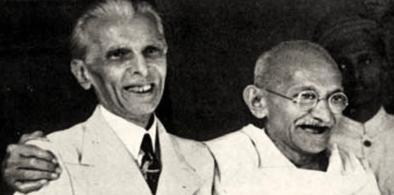
The young need not become another opposition. They could become an independent democratic force that questions every government but belongs to none; that protests when necessary but constructs continuously; that demands accountability from institutions while practising accountability itself.
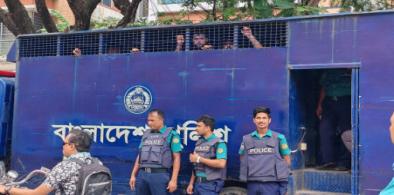
To what extent has the current BNP government been able to realise the vision that drove the 2024 mass uprising in Bangladesh? Will the BNP government, too, manipulate state mechanisms and law enforcement agencies to serve its own interests, much like the previous Sheikh Hasina regime, to suppress the opposition and silence critics? The government must therefore take serious steps to amend police laws and prevent deaths in police custody. This is one of the crucial reforms facing the administration.
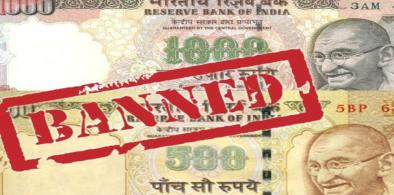
The net impact of the overall Rs.32.12 lakh crore currency in circulation at present is that the benefit of demonetisation stands undone, resulting in a disturbing level of growth of a parallel economy and corruption in the country.
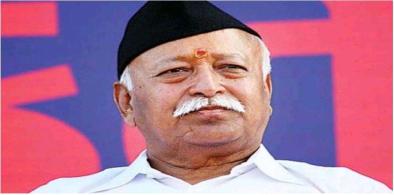
Why has the language of the RSS chief seemingly changed from his 2018 speeches at Vigyan Bhavan? There may be many reasons for Bhagwat to be more forthright than sugarcoating his agenda earlier. Many state elections are due in 2023 and general elections are due in 2024. The polarization around identity issues seems to be the main instrument in its hands.
The present delay in conducting the national census, when even some of our South Asian neighbours have conducted theirs, despite covid difficulties, is cause for concern.

Bangladesh has two laws on forest protection, only one of which, the 2019 revision of the 1927 Forest Act, makes even a glancing mention of infrastructure projects inside forests. It prohibits making any changes to a restricted forest, and threatens violators with up to five years in prison and up to 50,000 taka ($490) in fines. That hasn’t stopped the state from building multiple-lane roads through protected forests.

‘Third World’ and ‘Developed Nation’ are terms that are derogatory and ethnocentric in concept. The terns 'Global North' and the 'Global South' can offer researchers, columnists, as well as development partners a politically balanced perspective.
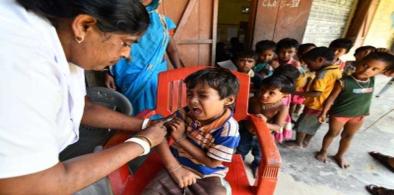
Interestingly, strategies employed during the Covid pandemic are being replicated. Much like the Cowin app was used to track and monitor Covid vaccinations, the Indian government plans an app to monitor every eligible child to ensure that they are up to date with their vaccination schedules

The port can grow to be one of the key hubs of trade and business in South Asia as a result of its geographic advantages and deep-sea port capabilities.

If India focuses on improving bilateral economic and connectivity initiatives with Bangladesh, the economic development of this region is inevitable.

The manner in which bulldozers as tools of retaliatory State violence and punishment are being normalised now is akin to illegal 'encounter' (extra-judicial) killings which have now been normalised by police forces across the country.

I learned, too, that on average, the Gulf countries send half a dozen coffins a week to Nepal with the remains of somebody’s beloved family member. This didn’t just apply to Nepal — workers from India, Bangladesh, Pakistan, and African countries faced a similar fate.
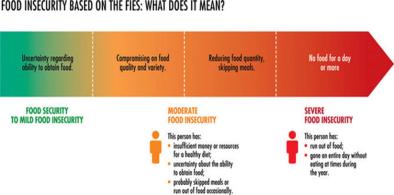
The root causes behind the food insecurity status of Sri Lanka are two-fold. Short-sighted policies such as the chemical fertilizer ban imposed by the Rajapaksa government generated a domino effect on agricultural production. Additionally, foreign exchange constraints severely limited food imports.

As Mahatma Gandhi said we should be the change that we want to see or in other words we should practice what we preach. That is never the case. So we heard pontification on how we should reduce the carbon footprint to make this world sustainable by people who never practice sustainable living in their personal life.

If trade and cultural relations between Bangladesh and Northeast India improve, the picture of the entire region will change.

Writers of the three winning entries, one from Pakistan and two from India, read their works out online at the Spelt conference to a full auditorium. The meritorious list included four stories from Pakistan, three from India, two from Nepal and one from the Philippines.

The ranking process is a vicious circle wherein higher-ranking institutions can mobilize more resources and vice versa. Unfortunately, those institutions which are not part of this frenzy competition will eventually be excluded from the higher education space dominated by the current neoliberal discourse.